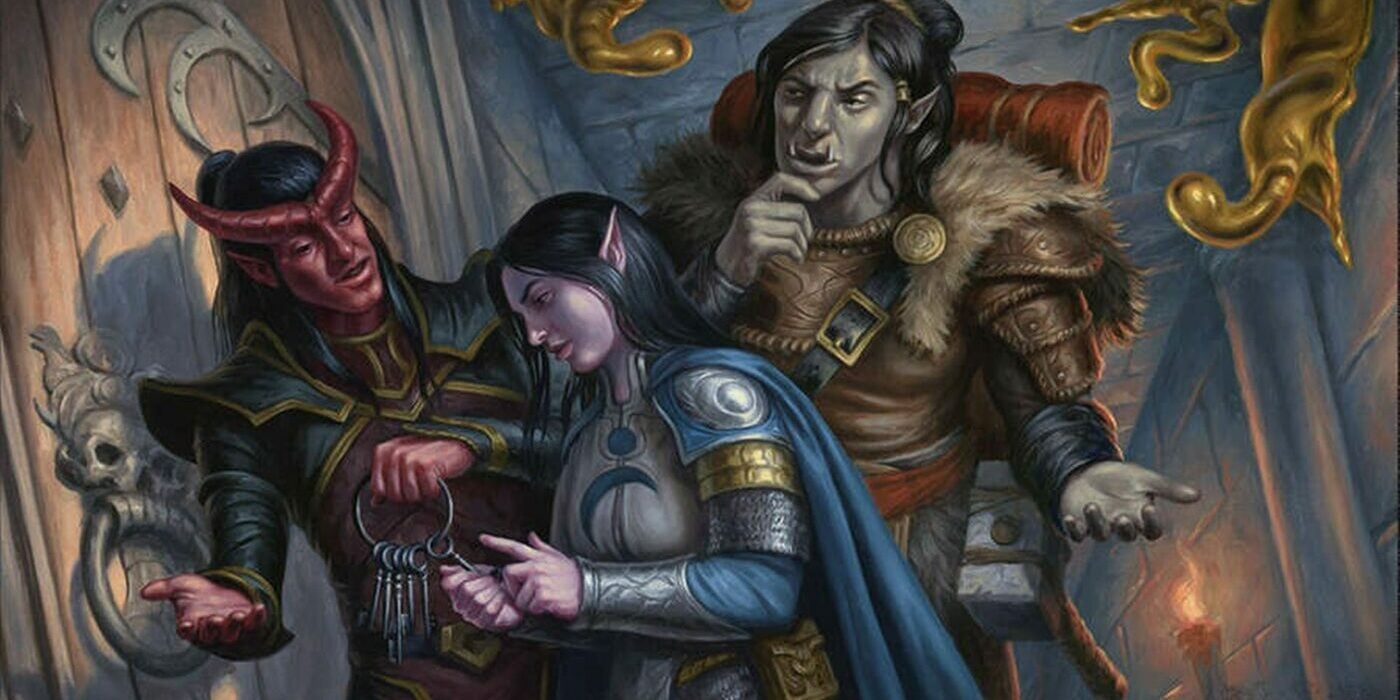
House rules can do a lot of things for a game. In this case, we’re looking at house rules to help the game run more smoothly.
D&D house rules pop up for a lot of reasons. You might want to make the game a lot more high-powered. Or maybe you want to run things grittier. Sometimes, though, you just want to make the game run a little smoother.
One of the wonderful things about house rules is that you can just about always find one that works for what you want. And if you can’t, you can always give making one yourself a try. Here are five house rules that people claim help the game run more smoothly.
Taking 10/20
This one’s straight out of editions past. In 3.X D&D, there was a rule about being able to treat a skill check as though you’d rolled a 10 on the die if you weren’t pressed for time or threatened. And if you had enough time to give something the utmost care (and could take ten times the amount of time it would normally take) and there was no penalty for failure, you could treat the check as though you’d rolled a 20 on the die.
People still often do some flavor of this in D&D 5.5E. You can even see an echo of that in the official rules in the form of Passive Perception, which is 10 + your Perception modifier. One way to make the game run a little smoother is to just let players “take 10” if the pressure isn’t on, but you’re still calling for checks.
Healing Potions To Maximum

Another way to speed the game up (while also boosting players a little) involves healing potions. They can sometimes slow the game down whenever you roll the healing dice when you quaff a potion. So some tables just streamline the rolling and the randomness out and have healing potions do maximum healing (or 10 points for minor, 20 points for medium, and so on).
This makes healing potions a little more valuable to players, since it’s a guaranteed 10 hit point restoration. But that can make it more exciting to find ’em littered in the treasure anyway. Definitely worth a try.
Taking Initiative

Initiative is another place where things tend to jumble up. Part of the excitement of D&D is that moment when the DM says, “roll initiative.” Unfortunately, it’s often followed up with players fumbling around trying to remember how to calculate initiative and three people yelling conflicting numbers at the DM all at once.
So one thing some tables do is pre-roll initiative. You do it at the start of the session when everyone’s focused, before the neurodivergence sets in. Then you’ve got it written and ready to go in case combat or any other situation where tracking initiative might be helpful, comes up.
Pick One Player To Make A Skill Check

This one might be a little contentious. But when a character makes a skill check, it can be helpful to speed up/smooth out the game, to have only that character be the one to make the check. Or as a DM, you can call for a particular character to make a check, and then only have that one character make it, instead of the usual rigamarole of everyone with proficiency in Arcana deciding to roll, “just in case” they can get a higher result than whatever the player in question got.
It can be tricky to employ at first, but it also keeps the spotlight from bleeding too much.
Ignore Encumbrance
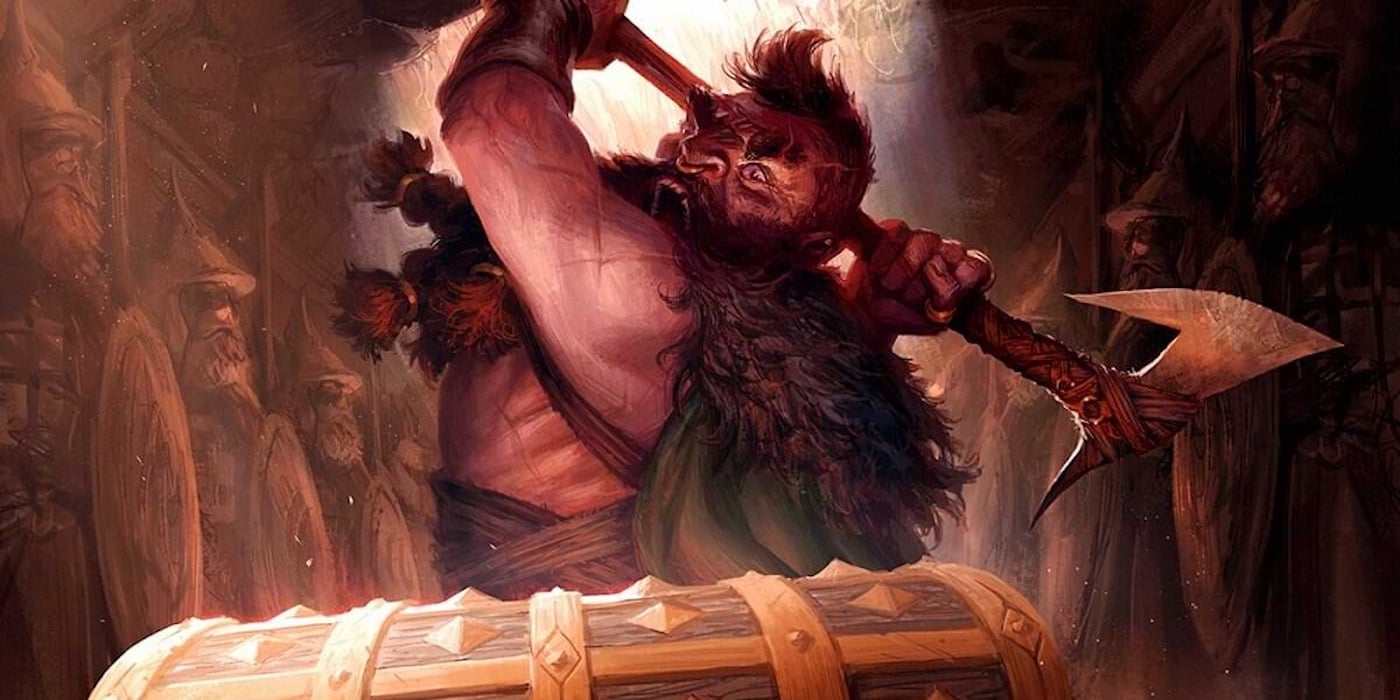
Finally, a houserule so common and so prevalent I’ll bet 90% of you are already doing this. Even if you aren’t aware you’re doing it, you’re probably doing it. Because when was the last time you thought about how much the stuff your character is carrying weighs?
Especially for things like the weight of the coinage you’re hauling around? If you’ve ever played at a table with encumbrance, though, you know exactly what you give up for a little extra smoothness, though.
What are some of your favorite house rules for making the game run better?
Don’t Miss:


Source: Bell of Lost Souls