


 Ever play a game that you want to love, that you think you should love, but when you play it, you don’t, and you keep playing anyway, hoping you’ll fall in love with it?
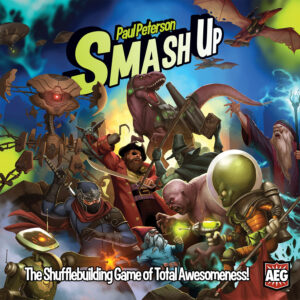
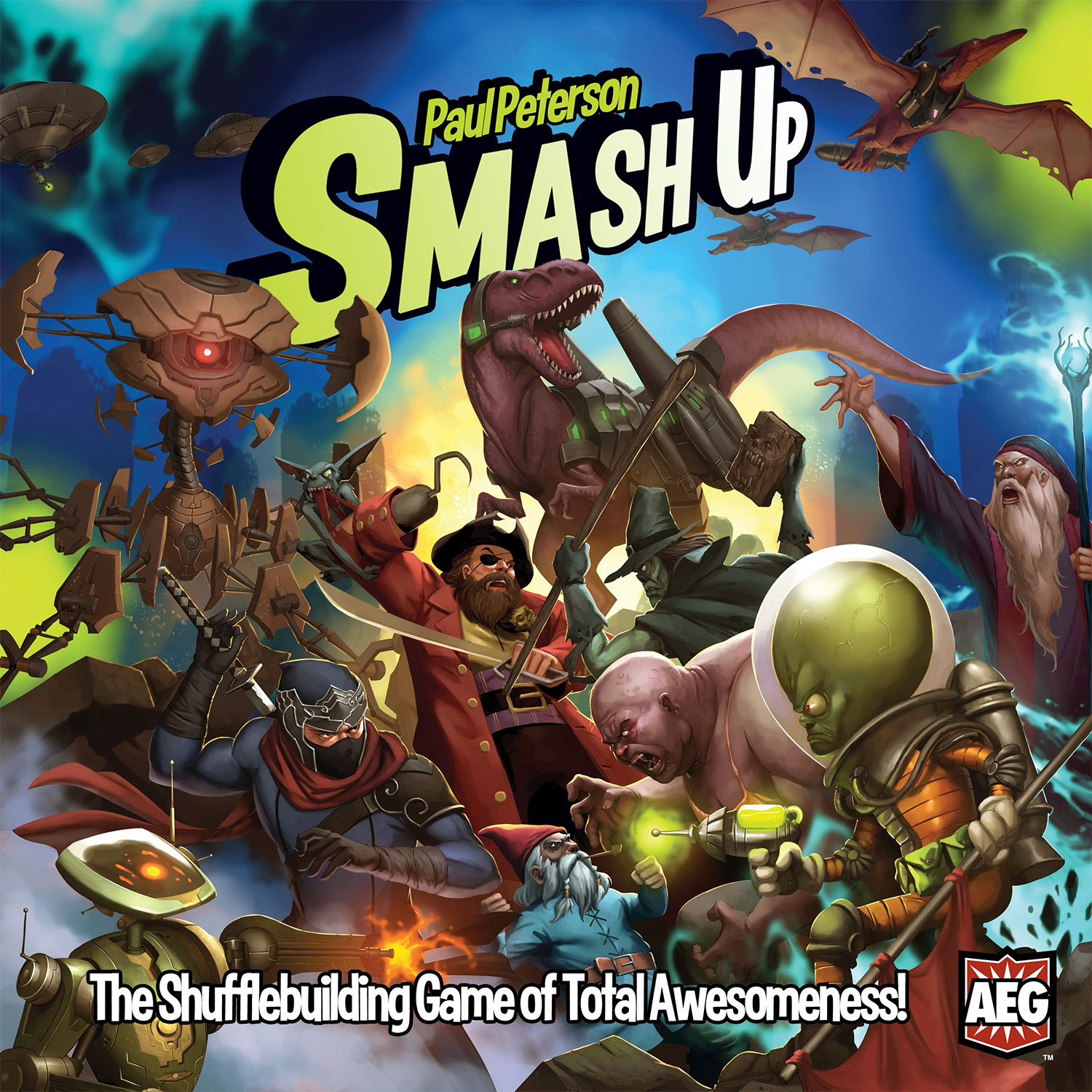
For me, that game is Smash Up by Alderac Entertainment Group (AEG). On paper, the concept is fantastic. The “shufflebuilding” premise is simple: you take two totally different faction decks, smash them together into one big deck, and use them to fight other players to win bases that score you points.
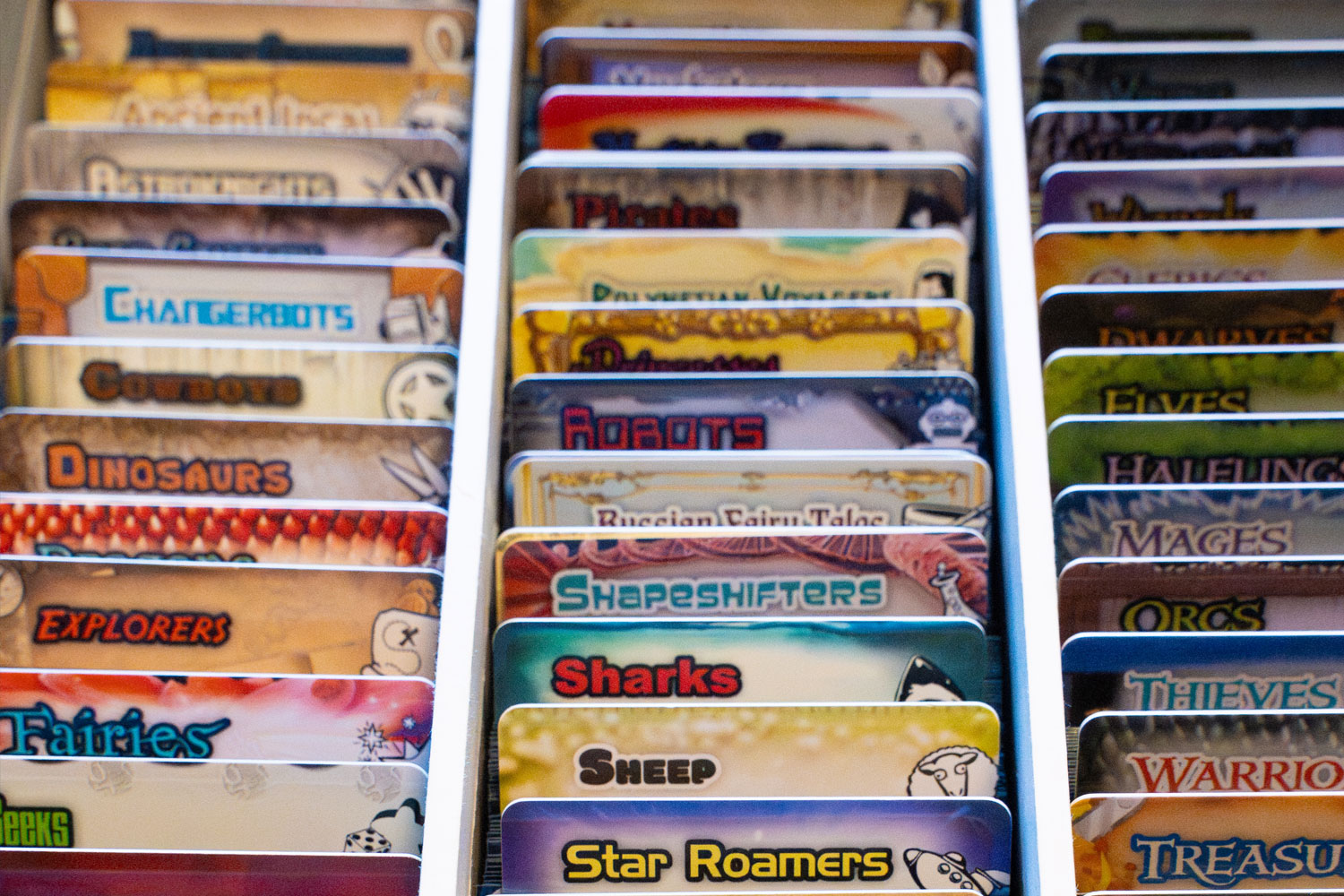
I am a total sucker for the theme and artwork. There is something genuinely fun about mixing a classic Disney Princess deck with Marvel Heroes, or smashing the Luchadors together with the Kitty Cats.
The core appeal is how each faction gives you a unique way to break the rules of the game to defeat your opponent(s). Some strengthen your minions, others let you chain together rapid card plays, move minions to different bases, or directly weaken an opponent’s squad. It is surprisingly well-balanced, too—while you occasionally hit a matchup where you realize you don’t have the right counter for your opponent’s deck, most factions have a built-in answer to the madness.
But once the game actually hits the table? That’s where the love tends to end for me.
Gameplay Overview:
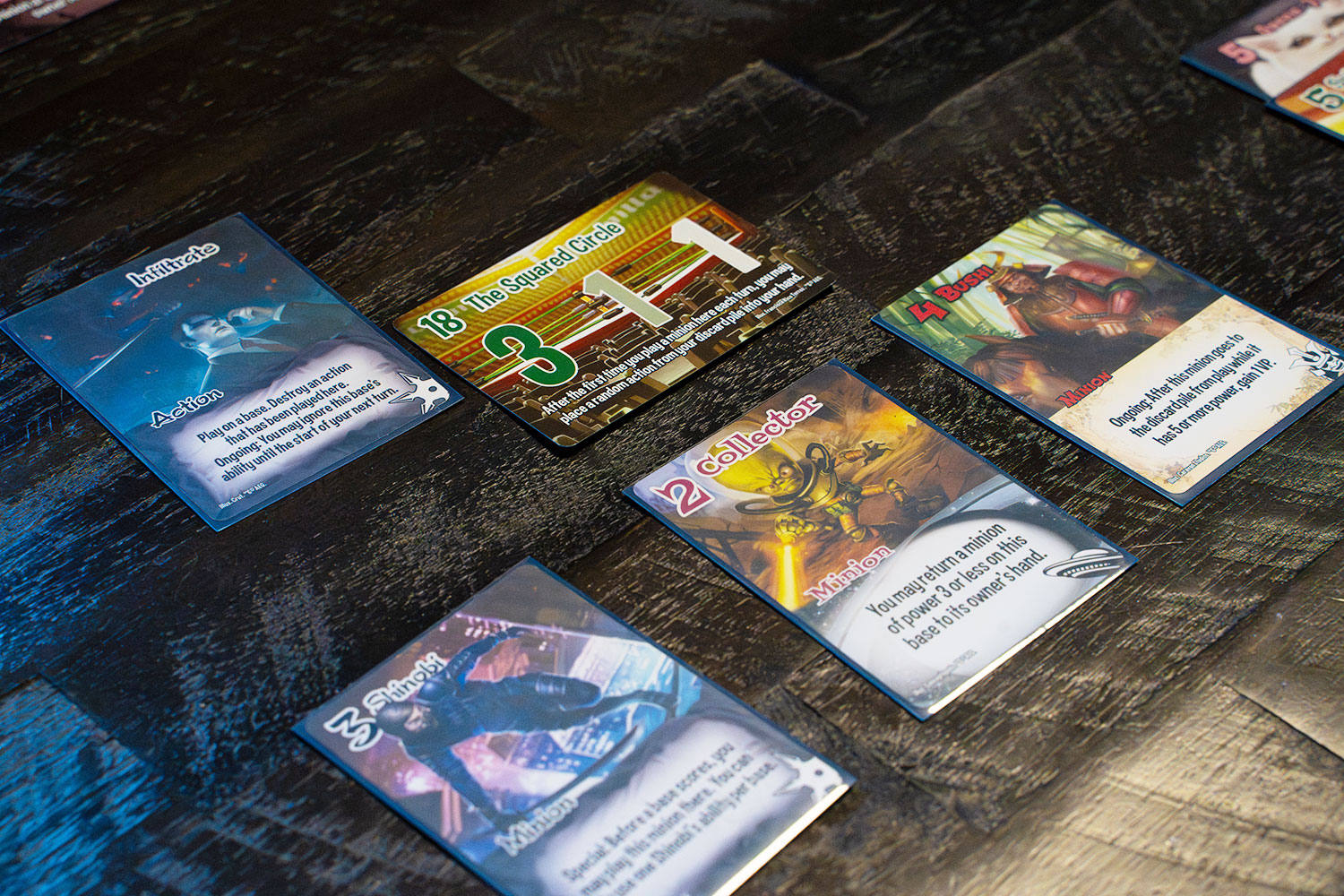
In Smash Up, players take turns playing one minion and one action card from their hand onto various face-up Base cards in the center of the table. Every minion has a power value, and every base has a “breakpoint” number.
The math is constant. You are perpetually adding up the total power of all minions sitting on a base. The second that total meets or exceeds the base’s breakpoint, the base fractures. Players in first, second, and third place on that base claim victory points according to their relative power; the base is discarded, and a new one replaces it. The first player to reach 15 victory points wins.
Game Experience:
While the concept sounds fun, the execution is a brain-burner. I’ve been known to say that there’s too much reading for Smash Up to be called a board game. Every single card has a unique, conditional text. On top of that, you have to consider how it might interact with other cards on the table, again, more reading.
Then there is the accounting. Keeping track of the current score across multiple different bases at the same time—each with its own game-breaking rules—is exhausting. The core game famously lacked a good built-in scoring tracker for the individual bases, leaving players to do mental math every single turn.
And because the bases sit in the middle of the table and cards are played all around them, someone is always stuck trying to read small card text completely upside down.
Thankfully, the newer licensed boxes (Disney and Marvel stand-alone expansions) come with base mats and scoring trackers, making it much easier to keep track of the score on the base.
I find the player count also heavily dictates the experience:
- 1v1 (Two Players): Gameplay is more predictable since you’re only dealing with two factions fighting you.
- 1v1v1 (Three Players): This player count brings out more of the chaotic fun, but there’s always the problem of one player getting stronger if you choose to attack the other. And because multiple people can score when a base breaks, it can feel nearly impossible to stop a runaway leader, often turning the endgame into a tricky debate about who should attack whom.
- 1v1v1v1 (Four+ players) might be the most balanced way to play, but with so many players there’s going to be a lot of downtime, and a lot can happen before your next turn.
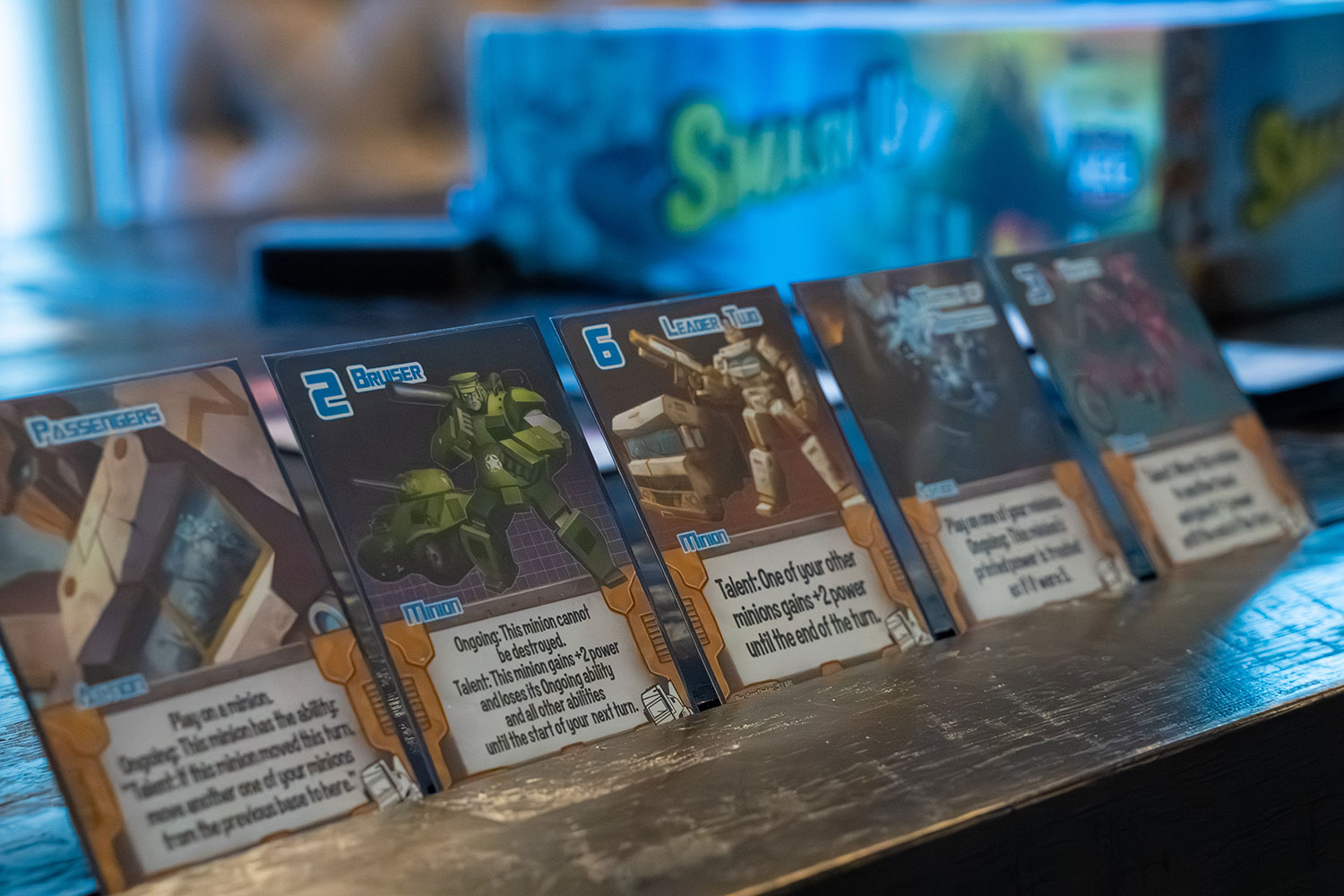
Smash Up isn’t a difficult game to learn; learning to win is. The game gets significantly easier and faster once you actually know the factions by heart, but because there are dozens of factions, there is just so much to know. But once you’ve learned a couple, you should be able to pick up the way other ones work fairly quickly.
If there’s a silver lining to this complexity. Smash Up was one of the first games that helped my boys learn how to think critically about card games—it taught them how to look at a hand of cards, maximize their abilities, and manipulate game rules to their absolute benefit.
Talking to my oldest son about this review (he loves Smash Up), he said that with all the rule-breaking and manipulation, Smash Up is the game that helped make learning other board games so much easier.
Final Thoughts:
Despite all my gripes about the game, and the fact that the reading and mathing can fry my brain—to the point where I can only handle a couple of games in a row before needing a break—Smash Up holds a very special place on my shelf.
Why? Because my boys absolutely love playing it. They love choosing from all the factions with the pop culture references. And more importantly, they love the feeling of outwitting everyone else when they’ve discovered a way to manipulate the cards to their advantage in a way no one saw coming.
For those reasons alone, I own just about every expansion out there.
Final Score: 3.5 Stars – With all the mental gymnastics required, I have to be in the right mood to suggest Smash Up myself. But if my boys ask to play, I will sit down every single time. I’ll pick the factions I personally enjoy, try out some zany new combinations, and just focus on having fun with my decks and my boys, win or lose.
 Hits:
Hits:
• Fun theme, factions, and artwork with pop culture references
• Surprisingly well-balanced tactical mechanics that allow for deep rule-breaking combos.
• A fantastic teaching tool for new gamers to learn how to maximize card synergies and manipulate rules.
Misses:
• So much reading…
• So much math…
• AP-inducing (Analysis Paralysis) for casual players due to the sheer volume of card abilities to track.

Source: Board Game Quest

