


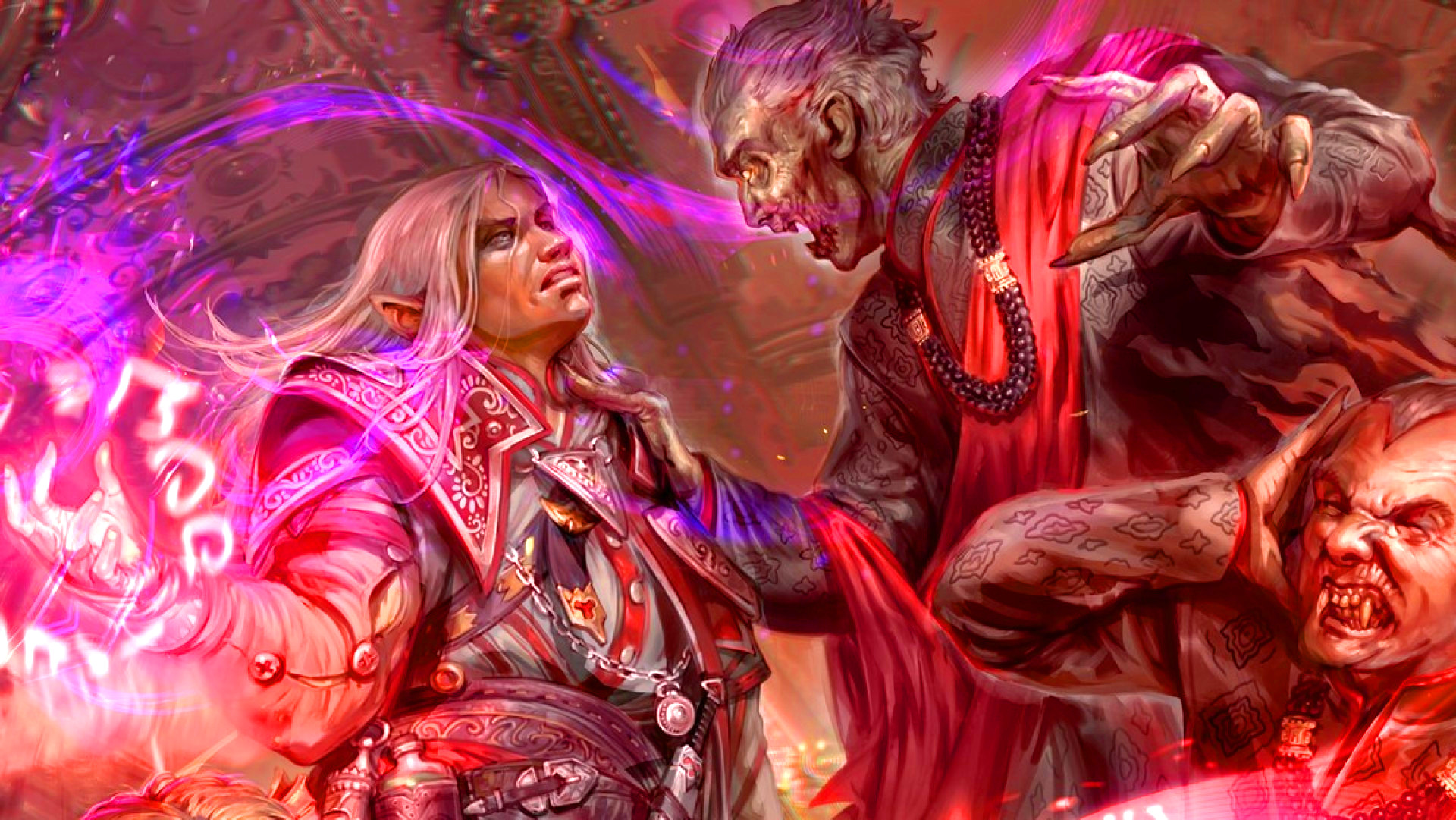

D&D rival Pathfinder has shared a fresh update about two hotly-anticipated new classes, the Runesmith and the Necromancer. I mainly say ‘hotly-anticipated’ because I am beyond ecstatic to play a Necromancer. I also say it because the comments on the PaizoCon stream from this weekend was full of gleeful capital letters and text-based screeching.
Both classes will be available in Impossible Magic, which will release on July 30. This is a partial remaster of the older sourcebook Secrets of Magic, but Paizo promises that it prioritizes brand-new content first and foremost.
There’s magic items, archetypes, and spells galore, but naturally, the two full classes are the stars of the show. We first learned about them in late 2024, while Impossible Magic was properly announced at the start of 2026. In that time, Paizo has put the classes through rigorous public playtests.
The PaizoCon stream addresses some of the final tweaks each has seen since then. For the Necromancer, whose main thing is commanding undead allies (that can also be harvested for resources), designer Josh Birdsong confirms it’ll be an Occult caster. Some necromancy spells may still fall under arcane or divine, though. Plus, as Birdsong says, “a lot of spells that hadn’t been remastered but people were wanting for the necromancer have been remastered to also be on the occult spell list.”
Birdsong adds that major critiques from the Necromancer’s playtest have been addressed, too. For example, “thralls are going to have options to move”. “I will not say to what extent, but that’s going to be an option”. Birdsong confirms some limited opportunities to move “all your thralls at once” – and when asked if this means a thrall army is possible, he replies “I’m gonna ominously sip my tea”.
He also confirms his favorite Necromancer feat. Anatomical Quartering splits you into four forms – flesh, bone, blood, and spirit – and lets you make four strikes against different targets. Each attack counts towards your Multiple Attack Penalty, but the increase is applied after you’ve made your attacks.
Speaking of blood, a Blood Necromancer subclass has been confirmed. When one of your Blood thralls dies, you gain a hit point. As Birsong points out, this can be a life-saver if your Necromancer has been downed.
That’s enough about Necromancers for now. Onto the Runesmith. Birdsong says that while this class is a “jack of all trades”, the design team leaned more into its support capabilities, leaving the martial magic playstyle to the Magus (who gets some upgrades in this sourcebook, but not a total overhaul).
Runesmiths create magical effects by tracing and invoking runes, and their options have been “massively expanded” since first edition. “There’s so many to pick from”, Birdsong says. “We’re not gonna see quite the explosive damage numbers we saw in the playtest”, he adds, however. “We toned that down a little bit.”
Birdsong revealed one 17th-level rune during the stream. “This rune is a big area buff”, he says. It’s a 30-foot emanation that boosts the party’s AC and saving throws against magical effects, while also giving you resistance against magical effects. “That’s not just spells, but anything with divine, primal, occult, or magical traits”, Birdsong says. Plus, this rune can be invoked to create “a big burst of healing and a movement buff”.
There have also been hints that Runesinging, a hands-free alternative form of casting runes, has been “expanded” to be more reliable. Other than that, Birdsong is keeping tight-lipped about the hyped caster.
Want to talk more about tabletop RPGs? Join us for a chat in the Wargamer Discord.
 Source: Wargamer

