


“For me, the system really does frame how you’re going to experience the story.” In a recent Wargamer interview, Critical Role campaign 4 star Luis Carazo told me a little about his process as an actual play actor. There’s a tremendously deep creative and psychological background that goes into creating a character like Azune Nayar, but one key tenet? It’s playing more games than just Dungeons and Dragons.
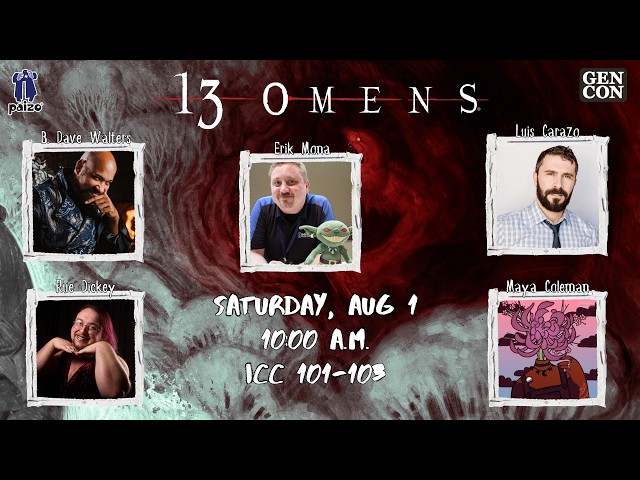
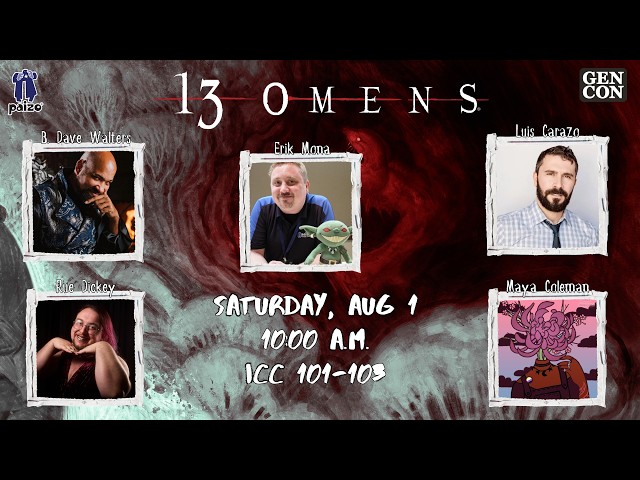
Carazo is no stranger to other systems, and his actual play credits pay testament to that. Before campaign four, he was best known for his roles in Candela Obscura, Vampire: The Masquerade’s L.A. By Night, Outbreak: Undead’s Rag & Bone, and Werewolf: The Apocalypse’s Vancouver By Night. He’s explored many more games through one-shots, too – just recently, Carazo took part in a Gen Con demo of 13 Omens, a new horror system from Pathfinder publisher Paizo.
Carazo says playing a variety of RPGs “helps me crack open the box that tends to form when I’m playing one particular system for a long time.” For him, “there’s certain systems that cause you to lean into different themes and different dangers”. He tells me social-driven systems like World of Darkness are “part of the reason I might be a pretty good Schemer”. Similarly, Outbreak: Undead presents “a survival horror system where the odds are stacked against you”.
These games, unlike D&D, have slightly higher stakes when it comes to things like death. “The mechanics of the system determine how dangerous the world is to a great extent”, Carazo explains. “In Dungeons and Dragons, death is not that dangerous when you have so many ways to avoid it or come back from it.”
Death is a little more dangerous in Aramán thanks to some homebrew choices from DM Brennan Lee Mulligan. However, Carazo says his diverse roleplaying experience helps him stay in a mindset that appreciates the stakes.
“Another system is definitely going to make you feel that the world is dangerous, because it makes you make harder choices more often. Playing in a survival horror setting changes your relationship to [your character’s] moral compass.”
All this helps build a character as richly conflicted as Azune. I ask Carazo what attracts him to this type of character.
“I was interested in someone in this sort of between state – culturally, identity-wise, self-esteem-wise – all these things in a grey area.” “I think that has something to do with my psychology background”, he adds. “I’m really interested in struggle and in people trying to make the most out of an impossible situation.”
“I think of the character in those situations in terms of the pressure put upon them – how that’s revealed, how we negotiate it, and how we might come to terms with parts of ourselves that are revealed and we may not like.” “I like digging into ‘who is the world forcing me to be? And who has the world denied me from being able to be?'”

Carazo also considers how the character exists within a specific setting. “How does this person, given what they’ve experienced, think the world sees them? What are the events and people that matter to them? How does he think those people see him?”
For Azune, the core realizations came quickly. “I have to be useful. I will never not be useful. That’s a core part of his identity”, Carazo explains. “The moment that was organically manifested in the game, it was like ‘of course this is who he is’.” “I have to remain useful, because something that becomes useless gets discarded.”
“He’s got a specific kind of arrested development”, Carazo continues. “He’s trapped in a sort of limbo of childhood adolescence, but there’s a very adult side to him as well.” “Early on, he would puff up his chest when he saw Kattigan and Teor for the first time to declare how grown up he was – which was in contrast with how grown up he actually is.”

Regardless of system, roleplay proves fertile ground for exploring such a complex character. “You’re discovering it as you go in its purest form”, Carazo tells me. “That makes it fundamentally different from approaching a prepared, scripted role.”
“You’re still meant to embrace unpredictability within those parameters as well, but the frame is different when you don’t even know what scenes are going to come up.” “It’s part of what makes it exhilarating and messy. I love it.”
Luis had many more table stories to tell me, so I’ll share the full interview on Wargamer’s YouTube channel very soon! Until then, want to chat more about Critical Role? Join likeminded nerds in the Wargamer Discord. Or, if you want to do some roleplay of your own, check out our quick guide to the DnD classes.
 Source: Wargamer

