



 Every year, I make a trip up to Milwaukee for Adepticon. It’s a game convention focused on war games and miniatures. My main goal in going, other than taking some painting classes, is to wander the dealer hall and look for new games to try out. Last year, I stumbled across Hametsu and absolutely loved it. This year, INX Incountry caught my eye.
The ultramodern war game genre feels like a pretty small niche (at least outside of video games). I’ve tried a few tabletop games, but they are usually overly complex for what I’m looking for. I want something fast and deadly. After trying a quick in-booth demo Incountry, I was definitely intrigued. However, they had sold out for the show (alas) but were kind enough to send me a copy to cover. Did it live up to the quick demo at the show? Let’s find out.
Gameplay Overview:
In terms of a miniature war game, Incountry is really streamlined. The starter set comes with two factions, cards, a rulebook, and a handful of tokens. The minis need to be glued to the base but are more or less already assembled. The rulebook is small and concise, so it’s pretty easy to get to the table.
The general gameplay is that each player starts with a team of 3 units. The starter set features the Lion and Dire Wolf factions. The Lion are more of a guerrilla resistance force that’s more numerous, while the Dire Wolf are your smaller Spec Ops team.
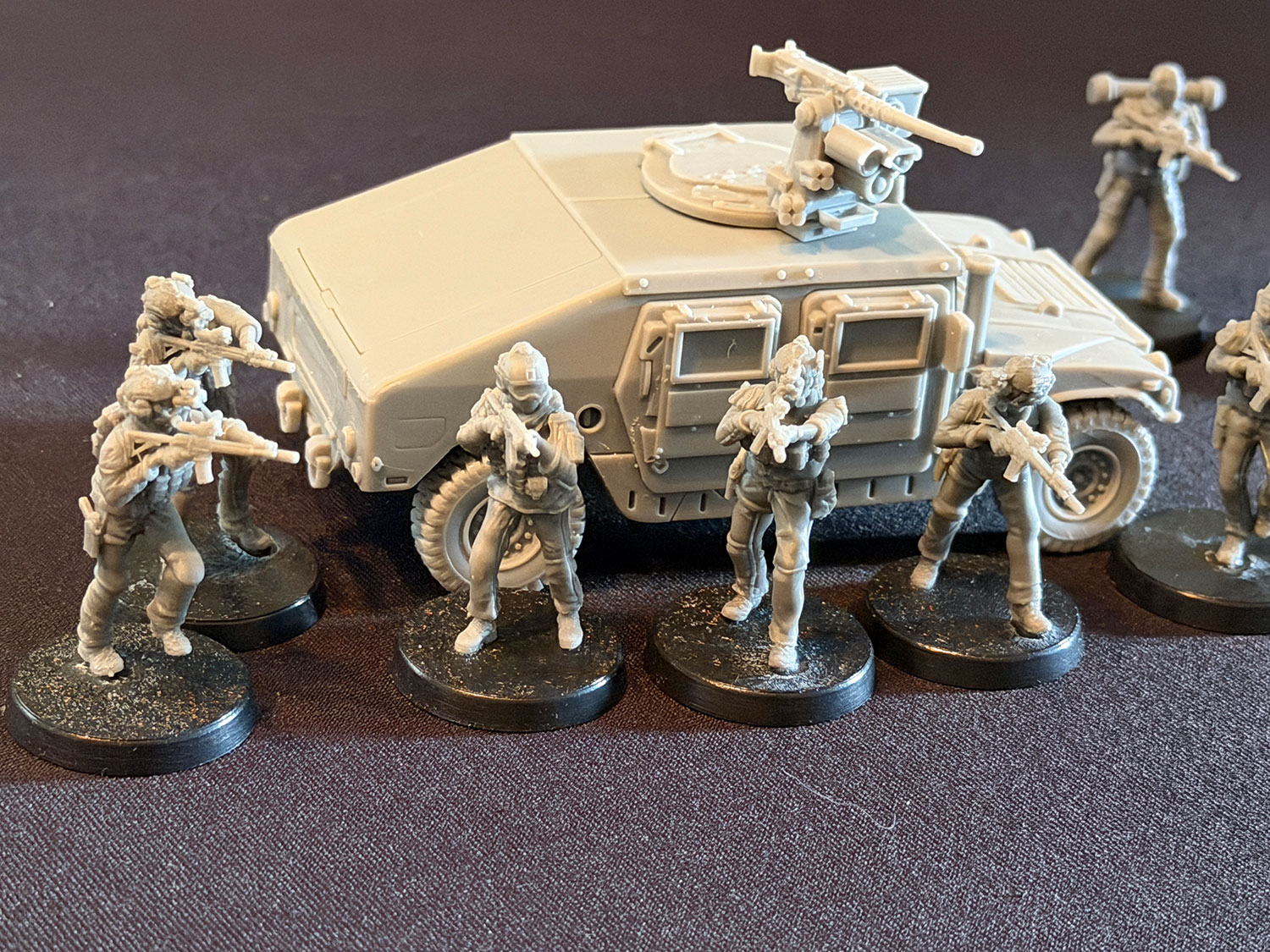
The starter set comes with a handful of missions that ease you into the game. But the basic game flow is that each player starts a round by choosing a command card. This will determine how many control points you have and your initiative score. Lower initiate goes first in a round.
Players then take turns assigning control points. Control points can be spent to either issue a unit a priority order, remove a unit’s suppression token, or bring an asset card into play. For the action phase, it first starts with the player with initiative, and alternates players activating priority units. Once all priority units have acted, the rest can take a turn.
When a unit activates, it can first move up to its speed. Then, they can either shoot at a target or gain a reaction token (basically overwatch). To take a shot, they roll a number of d10s (usually two) and compare it to their gun’s attack value. Each number equal to or below is a hit. You add that number to the weapon’s damage value, and it gives the damage number to the target.
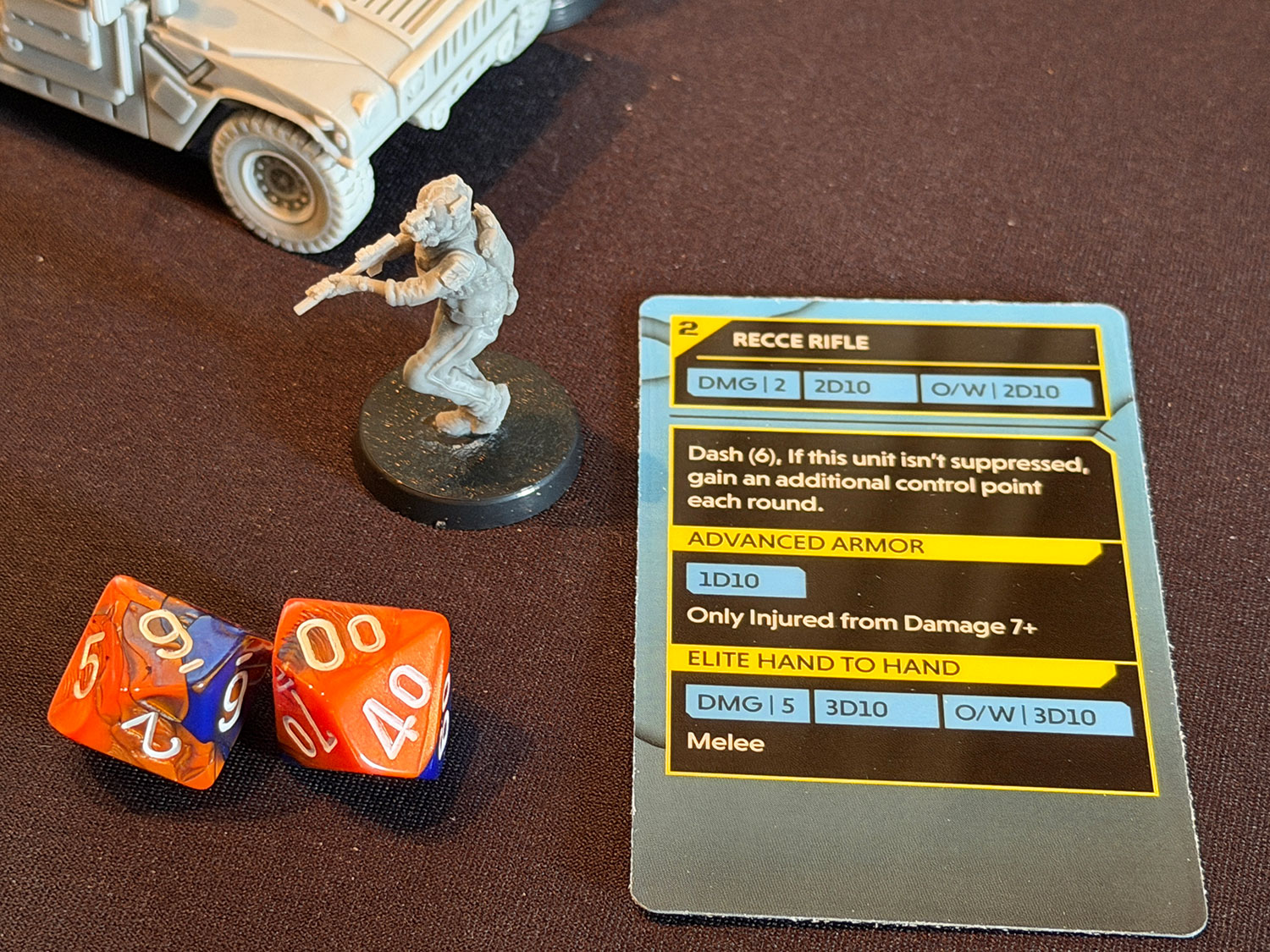
Each unit also has a defensive value. If the damage is higher than that value, it’s killed outright (headshot). If the number is lower, it can try to make an armor save by rolling a d10 equal to the damage or higher. Succeed and the unit’s armor protected it. Fail, and the figure is gone.
There are a few other rules like suppression, morale, and leaning out (more on that later), but that’s the basic flow of the game. Most scenarios will go until either one side is eliminated or a number of rounds have passed.
Incounty is also a mini-agnostic game, so even if you don’t want to buy the minis that come from the publisher, you can still play with any 28mm miniatures you own. In fact, the rulebook is even free to download if you just want to check it out.
Game Experience:
Despite my overly wordy explanation above, Incountry is a pretty easy game to play… especially in regard to it being a skirmish game. There are plenty of minis games with thick, rules-heavy books that really send you deep into the weeds. Incountry skips a lot of that for something more streamlined. The game wants to get you into the action quickly, and when you do, it’s deadly.
I like that there are no health points to keep track of. If a soldier gets hit, they go down. Is that like real combat? Thankfully, I don’t actually know, but the game says it’s designed for accuracy from people with firsthand military experience, so that’s kind of interesting.
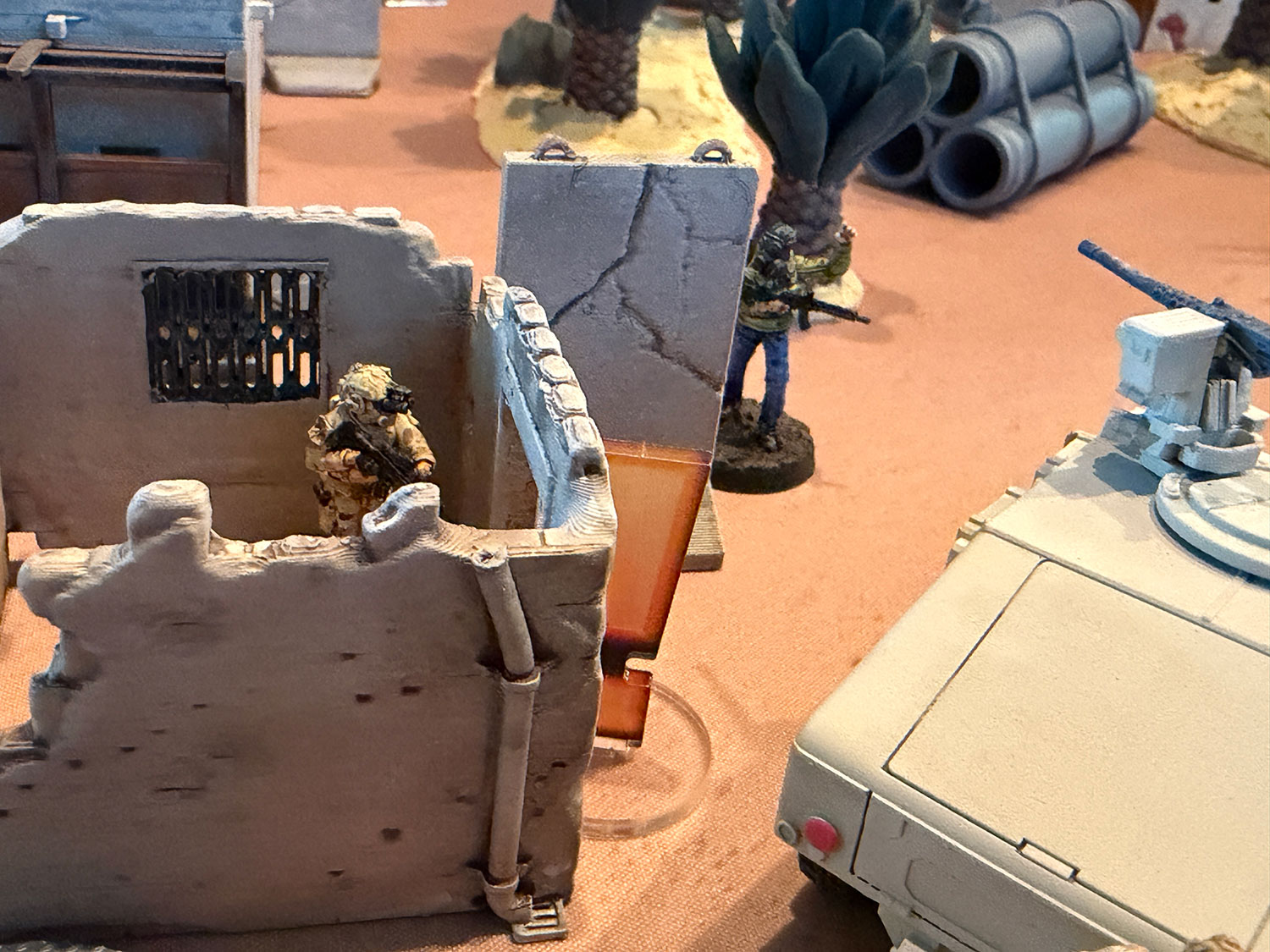
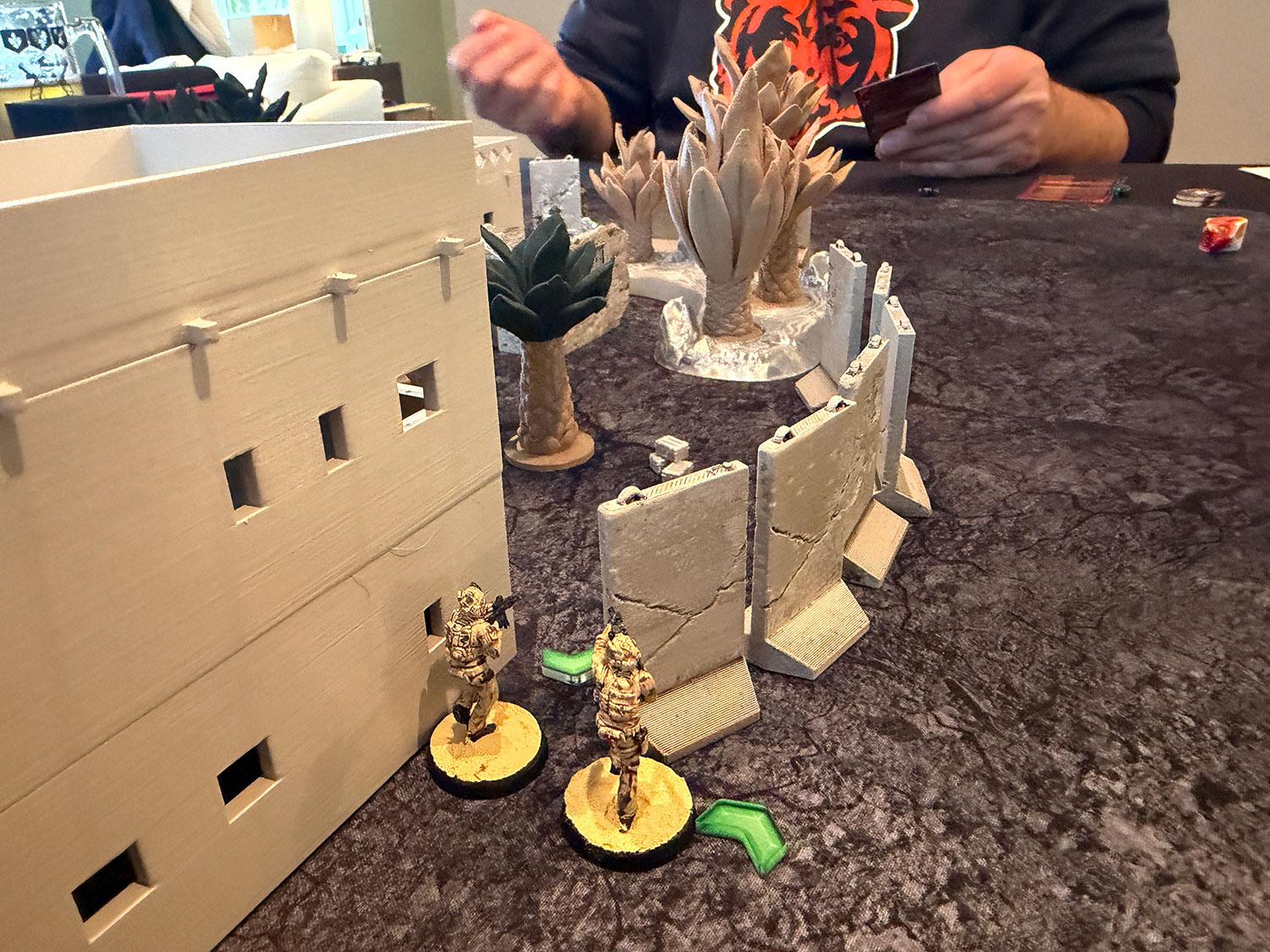
One of the really good mechanics in the game is the lean token. Instead of having to move around a corner to shoot, you can instead place a lean token next to you. This lets you draw a line of sight from your lean token to the enemy (and vice versa). What that means is that you can lean out and shoot but still get the benefit of cover if you are getting shot back. In a game without much margin for error for survival, that can be a game-changer.
The missions in the rulebook 5, in total, have some nice variety to them. The starter one is pretty much just a straight-up death match, but they quickly move into different themes, including controlling objectives, trying to escape the board, and even a somewhat asymmetric mission where one side is defending and the other is attacking. But in general, though, games take about 30-45 minutes, with actions happening pretty much in the second round (Or even the first). That’s partially because the game is played on a 2’x2′ map. You can play on a 3’x3′ one, but you start closer to the center.
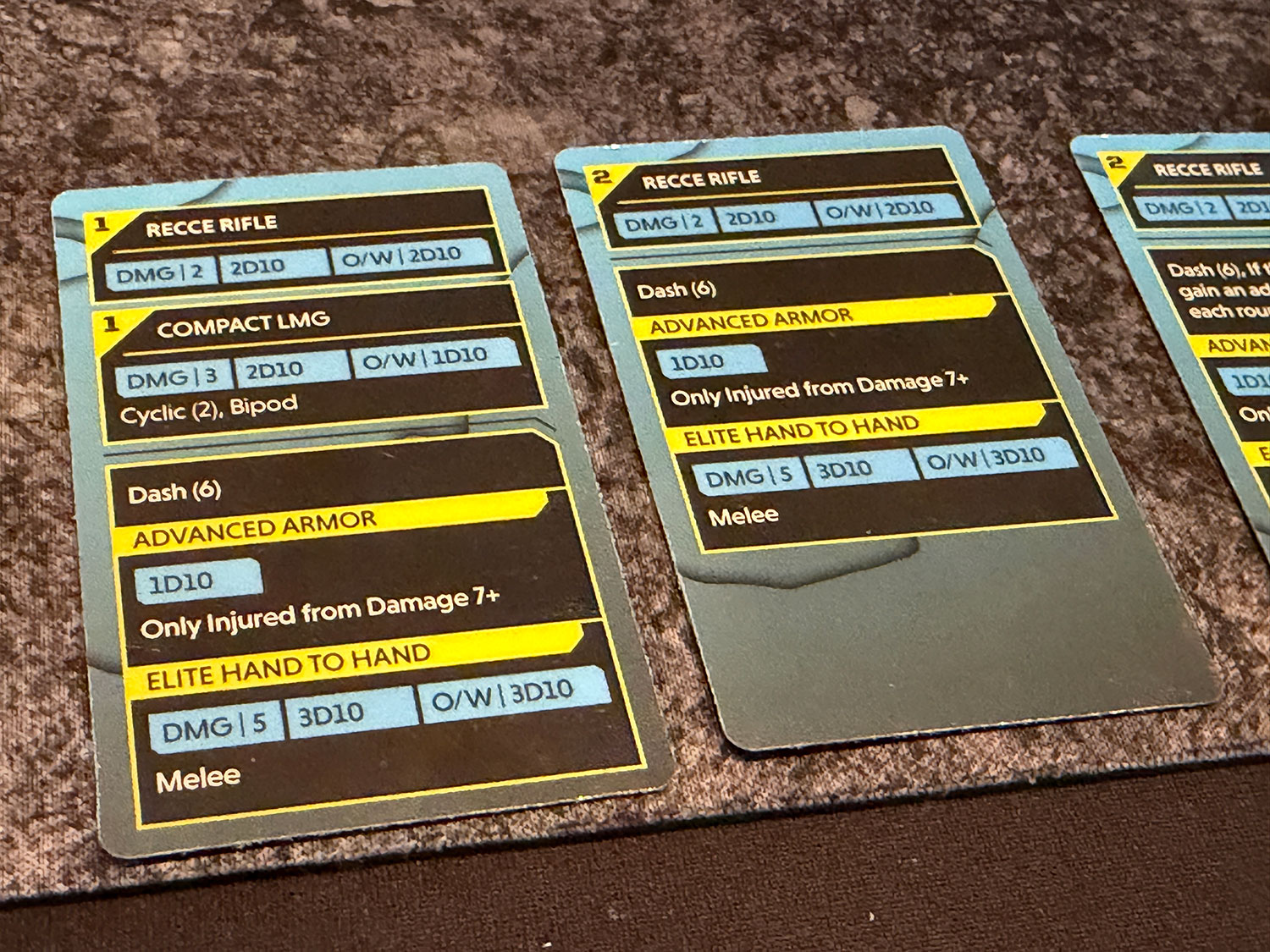
While I love the rules light and fast-paced nature of the gameplay, I also need to set expectations that this is definitely an indie production. While not inherently a bad thing, it does lack some of the polish you might expect from a game from a more established publisher. The rulebook, while short, can be vague in quite a few places. And there is also a major errata to combat rolls that you wouldn’t know unless you spent time on the company’s Discord server. We had quite a few questions playing from setup to rules clarifications, which I think a little more playtesting of the rulebook would have cleaned up.
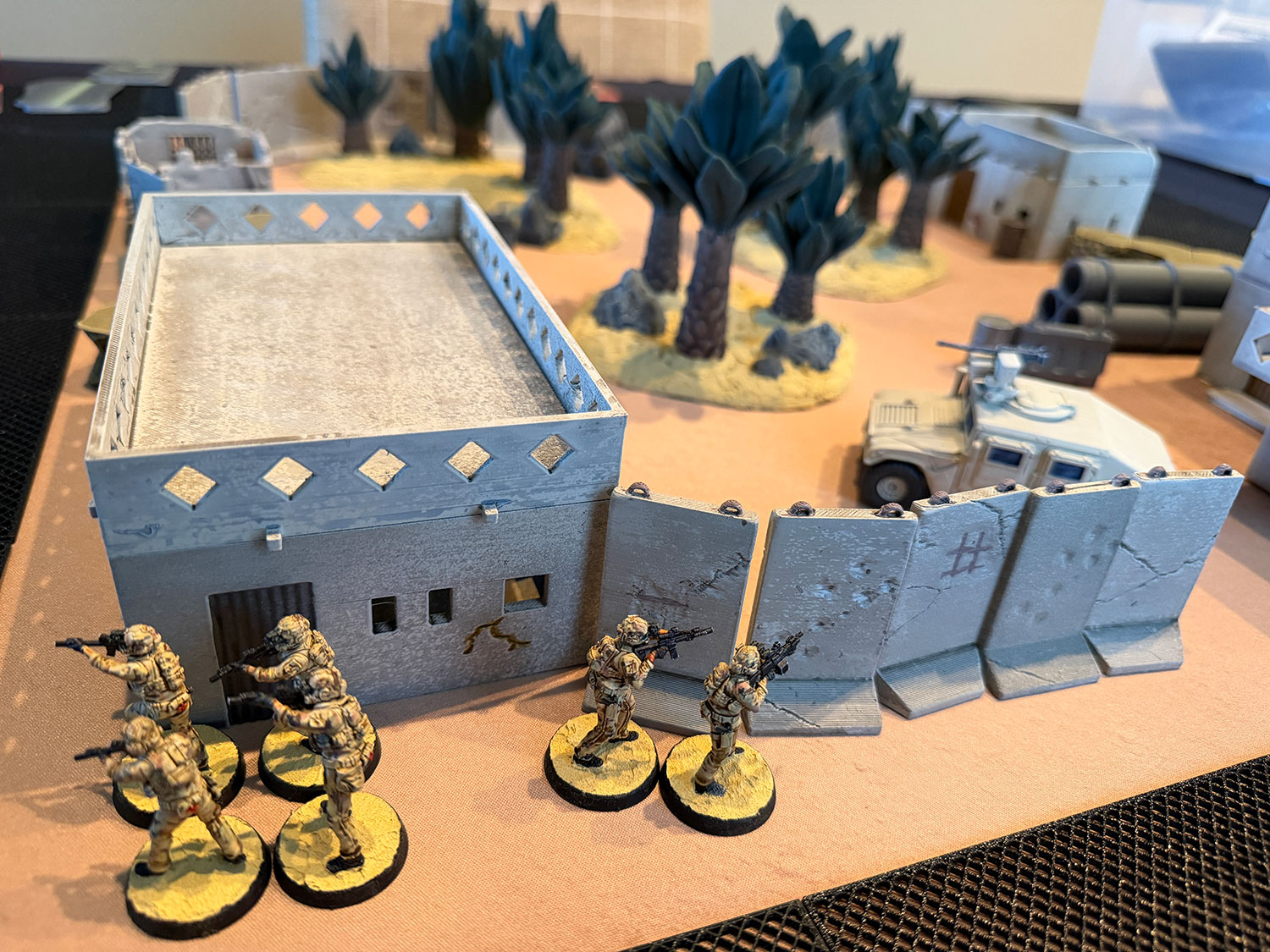
Yet even those speedbumps to learning didn’t dissuade us from enjoying the game. While the core set only comes with some minis and tokens, I’ve quickly moved on to blinging out my game. I’ve painted the minis, added some 3d printed terrain, and quickly filled up a box with things to fill out the battlefield. I’m really enjoying Incountry and love that I now have an accessible, ultramodern skirmish game that can scratch that Call of Duty vibe. I really hope they continue to develop and put out products for the game, as I’d love to see more factions, solo play, and even a campaign system.
Final Thoughts:
In the world of skirmish games, Incountry is definitely hanging out in a niche. Sci-fi, Fantasy, and superheroes seem to dominate the genre, so I love that there are publishers out there exploring new territory. There are very few ultramodern skirmish games, and Incountry is probably the best I’ve played so far. Is it perfect? Of course not, but even with a rulebook lacking the usual polish, we’ve had a ton of fun with this one. I’ll be traveling deeper down the rabbit hole (fox hole?) as there are other factions and rules for armored combat that I look forward to checking out.
Final Score: 4 Stars – A great ultramodern skirmish game that, with some more rules polish and expanded gameplay, can really make a name for itself.
 Hits:
Hits:
• Fast-paced gameplay
• Easy-to-learn rules
• Lean out token is a great mechanic
• Combat is frequent and deadly
Misses:
• Rulebook could use some TLC
• Major combat errata you may not know about

Source: Board Game Quest

