


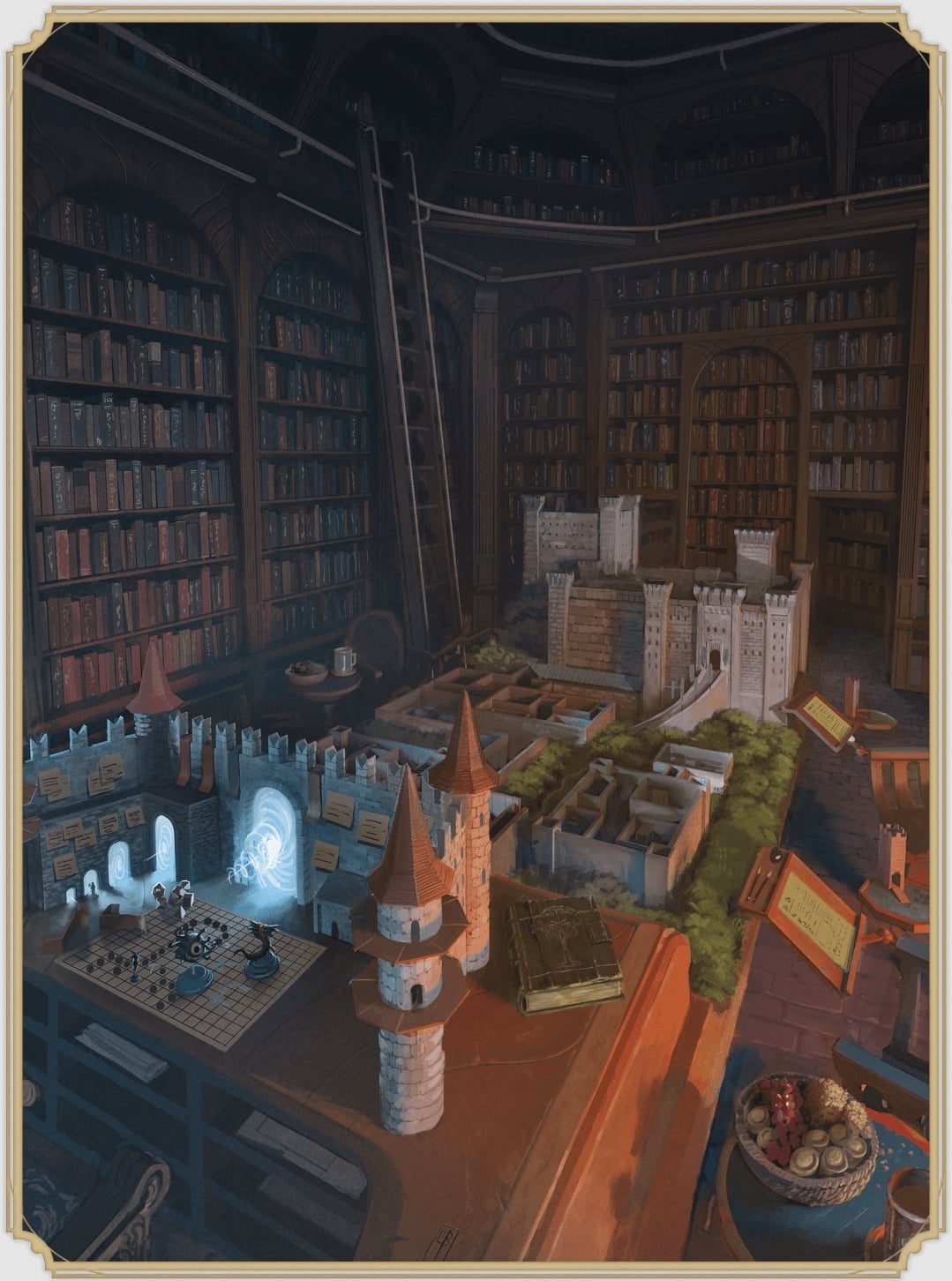
Immersion is one small part of a D&D game, but if you want your table to feel transported, here are some things you can try.
Immersion in D&D doesn’t have to mean you transform your whole living room into a D&D style tavern. Or that you dress up in costumes or anything else. When I say immersion, I just mean that sort of magical feeling you get when the D&D world feels real, and you can kind of transport yourself to another place for a little while when you have a really good session.
And with a bit of practice, this doesn’t have to be a once in a blue moon type feeling. You can work on drawing players in and catching that feeling on purpose. Here are a few things to try.
Make The Beginning Of The Session Feel Distinct

Another way to put this might be “make it clear when game time is starting” – and no shade to anyone. But, as humans, we like to talk with each other. We’re playing with our friends, and these days, this might be the first time you’ve seen them in days, if not weeks. Or months.
And we want to talk to our friends. Nothing wrong with that. But it can keep you from feeling transported to a magical fantasy world. The easy fix for this is to allow time for tabletalk and book keeping and other stuff. All you really have to do is make it clear that the game is about to begin. You can use this as an opportunity to “square the circle” and draw a clear boundary between real life and the world of the game. Use a little narration or even a change in the lighting/ambient sounds to add a little extra sensory detail to signal to the body it’s stepping out of the material world (for a little while).
Sensory Details (But Not Too Many)
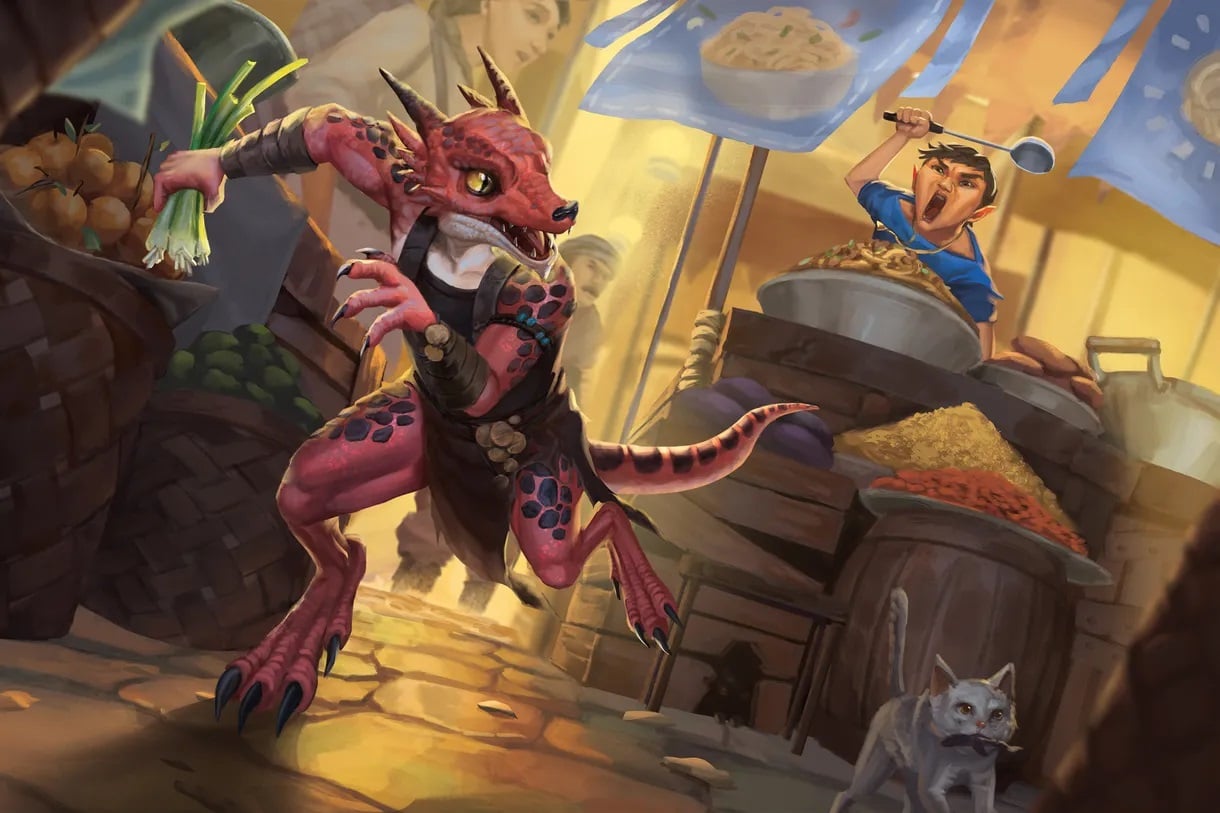
Speaking of sensory details, this is another great way to capture that experience of “it felt like we were there!” Your description is the window to the world, and giving your players details to imagine can help them feel like “oh, we’re in another world.”
Don’t belabor it. It’s enough to talk about the scent of fresh bread wafting through from the local bakery. Or the chill in the air as winter takes its first nip from the end of autumn. Try to catch two or three senses in a little framing narration, and you’re building your players a road of imagination to your world.
Ask The Players What Their Characters Perceive
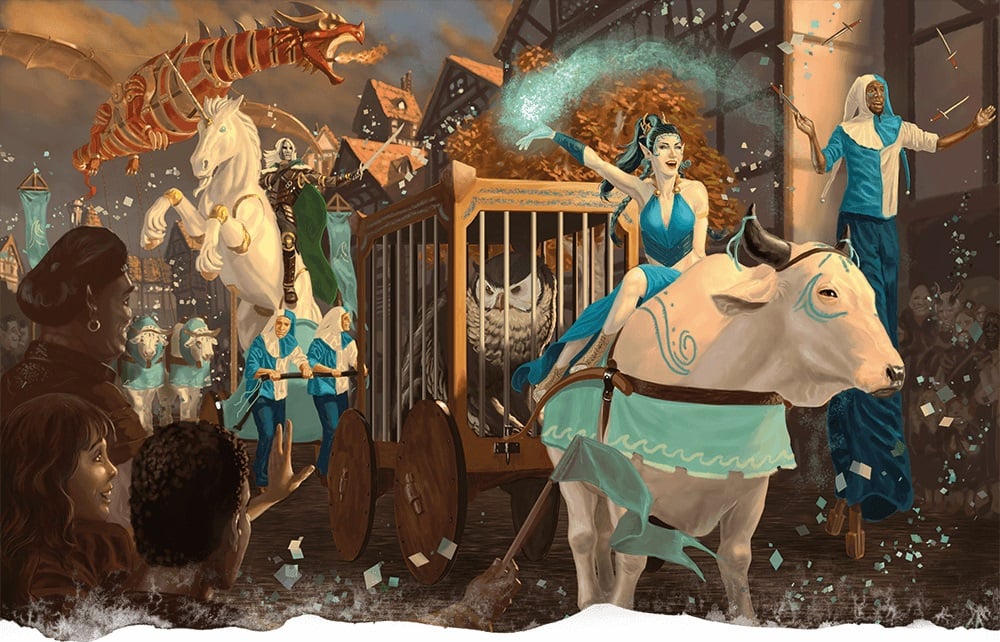
Another good way to draw the players into the world of your game is to ask them what their characters notice. After you narrate a little, maybe the party is approaching a busy market, and you describe the sounds of the merchants hawking their wares, and the gentle patter of the light rain just beginning to fall, you can then turn to one of the players and ask them something that gets them in the scene. Make it specific. Something like, “What’s the first thing that catches Thalgor’s eye as he scans the area?”
You can even use this to color in the results of a perception check. Suppose the party was about to be ambushed, but the eagle-eyed rogue noticed. You might ask something like, “How does Luna come to know the party is about to be ambushed by six kobold assassins?” The answers get the players thinking in terms of the world, and that draws them in.
NPCs With Their Own Little Lives
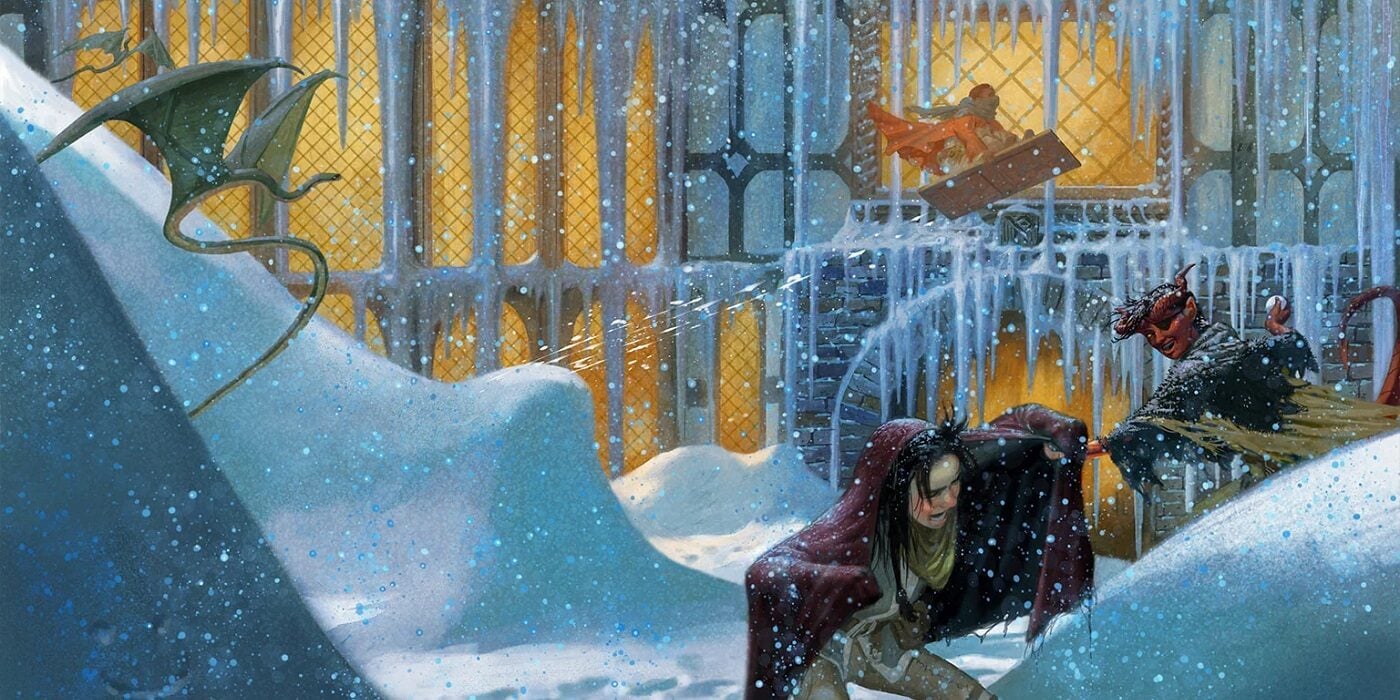
If you want to create the sense that the world is real, aka create some immersion, then one thing you can do is create the feeling that the NPCs out there aren’t just waiting for the PCs to come along. If they encounter the alchemist outside of the shop, or spot two NPCs on a little date or whatever, it can do a lot to convey to the players the idea that the village they’re in has a life all its own. And that might make them want to fight all the harder to keep it safe.
Let The PCs Feel The World Turning

Finally, there’s the sense of change. You can show the world changing, turning, in all sorts of ways. The way winter slips into spring. Or how festivals come and go. But it gets even more immersive if you pepper in these changes with news happening in the wider world. Two kingdoms that were once at war make an uneasy peace. Strange lights are sighted in the mountains once again, after being dark all summer.
This works especially well if you can come up with events that happen to show the passage of time without it being related to whatever the plans of the main villain are. You want to imply the existence of the larger world enough to get your party to imagine it. Once you have them wondering, the immersion comes even easier.
How do you create immersion in your games?
Don’t Miss:


Source: Bell of Lost Souls

