


What are the best MTG Arena decks? Grinding up Magic: The Gathering Arena’s Standard ladder is tough, so there’s no shame in looking up a tournament-winning deck. This guide tracks the best MTGA decks every month, based on the latest tournament results.
On MTG Arena, the meta is constantly moving. With the busy MTG release schedule constantly adding stacks of fresh cards that unlock new winning strategies, the best MTG Standard decks can swiftly rise to the top or plummet into obscurity.
Each month, we review which decks are performing best, crunch down exactly how they work, and explain the top decklists below. You can also find crucial info in our FAQ section to help you understand how these decks win games.
The biggest changes to the meta come when a new MTG set drops (most recently that was Edge of Eternities), when there’s a big change to the MTG banlist, and just after rotation. Right now, we’re experiencing the full trifecta, leaving things in a very muddled up spot.
Below you’ll find the decks that have rallied the best so far, making use of strong new cards to replace those that have been removed from the game. However, it’s quite likely more archetypes will be perfected with time, so be sure to check back when we’ve updated the page.
The best MTG Arena decks in Standard are:

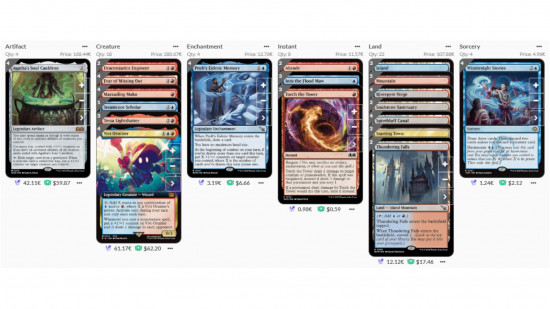
Izzet Cauldron
A pretty new deck enabled by Final Fantasy’s heart-throb Vivi Ornitier, Izzet Cauldron has swiftly proven itself to be a format-ruining menace, making up well over 50% of the field in Standard tournaments.
The deck operates by combining the black mage with Agatha’s Cauldron – an artifact that gives all creatures the activated abilities of any cards exiled under it.
The aim of the game is to exile Vivi with your cauldron, giving every single creature the ability to make mana equal to its power, without even having to tap. With this ridiculous surge of power your creatures will pay for themselves, and you can dig through your deck, drawing with ease until you find exactly what you need.
Prior to rotation, one of the splashiest ways to win with this strategy was exiling Voldaren Thrillseeker and sacrificing your whole board to blast your opponent in the face. Now that’s no longer an option, but the archetype seems perfectly able to win through pure combat damage.
Another fun trick is getting a Draconautics Engineer in your cooking pot so you can use your board to create a load of dragons, buff them up and give them haste for the win.

Dimir Midrange
Left up on top after everything else got hit by bans, and nearly untouched by Standard rotation, Dimir Midrange is better than it has been in years. Yet, at its core, it’s changed little since Lost Caverns of Ixalan.
This deck is pretty straightforward. It runs evasive fliers like Spyglass Siren alongside value cards like Enduring Curiosity and the MTG planeswalker Kaito, Bane of Nightmares to create card draw from attacking.
And with the blue/black color pair, you get the privilege of playing all the best single-target removal and counter spells in Standard. This deck is much stronger now that aggro isn’t such a runaway train, and while it can’t hold a candle to cauldron, will be in a fantastic spot if WotC introduces an emergency ban.

Izzet Prowess
Cauldron is not the only Red/Blue deck on top of the meta. Despite being a primary target of the latest bans, Izzet Prowess is still going strong.
Final Fantasy has given it much greater staying power, with both Vivi Ornitier and Astrologian’s Plane providing creatures that gain counters – rather than a temporary buff – whenever you cast non-creature spells.
The rest of the deck is mainly just the cheapest little non-creature spells you can run, and otters. Drown your foes in otters!

Mono Red Aggro
It didn’t take red long to see a resurgence. The current variant is pretty burn-focused. It uses spells like Burst Lightning and Lightning Strike, alongside creatures such as Sunspine Lynx, to provide enough reach to go through most deck’s defences.
Old favorites like Emberheart Challenger and Screaming Nemesis have been joined by Nova Hellkite for a deck that looks to hit hard and fast, but will crumble if the game goes long.

Esper Self-Bounce
A form of the popular self-bounce deck has made it through rotation and come out the other side. This version uses all three Esper colors, relying on white and blue for those all-important spells that pop other cards back into your hand and black for removal.
While this deck was struck with two very significant bans, and can no longer force opponents to pitch away cards, the core remains in tact. Little fliers swoop in from the skies, recycling your removal spells as they go.
The deck makes use of one of the best Edge of Eternities Standard cards, Cosmogrand Zenith, as a source of value. At first glance, this looks like a nonbo (+1/+1 counters and tokens not being great with self-bounce).
But because you’re constantly reusing your spells, you’re always casting two per turn, allowing you to quickly build up a powerful board. And Cosmogrand generates so much value, it doesn’t matter if you lose some of it to your own effects.

Azorius Control
Powered by powerful new card draw spells like Consult the Star Charts, and aided by the less frenzied pace of Standard, Azorius Control is one of the best decks again.
I suspect you already know how this deck functions. You efficiently counter or remove important threats, clog the board with beefy blockers, and look to win the long game.

Simic Midrange
It’s damn refreshing to see a Midrange deck that doesn’t feature black. This archetype runs plenty of ramp, but not so much in the way of interaction.
+1/+1 counters are key to the strategy, turning any little dork into a game-ending threat. To help you out with that you have Bristly Bill, Spine-Sower and the new card Ouroboroid.
Between the pair of them, your board can very quickly get very scary. At a certain point, you’re simply asking your opponent: do you have a board wipe? If they don’t, they’re going to lose.

Best MTG Arena decks FAQ
If you’re relatively new to Magic: The Gathering and are here for a helping hand to grab some wins, some of the terminology here may seem like daunting jargon (and it is) so let’s explain some of it.
What do MTG Arena deck names mean?
MTG Standard deck names are generally made up of two components:
- Colors – The first part tells you which MTG colors are in the deck (for example Mono Red or Blue/White).
- Archetype, mechanic, or theme – The second part either describes the strategy ‘archetype’ it uses to win games (e.g. Aggro); the main in-game mechanic it uses (e.g. Burn or Life Gain) or a distinctive theme to its cards (e.g. Rabbits or Vampires). If the deck is driven by a single powerful card, that card name might be used here instead.
Both halves of the deck names can get complicated, though. Players often refer to decks with more than one color by their in-universe lore labels, like Gruul or Azorius, rather than the straightforward colors. We explain every single one of these in our guide to MTG color combinations.
And when it comes to labelling decks’ strategies and themes, there’s very often more than one commonly used term to indicate a specific deck’s distinctive playstyle or win conditions – so you might see the same deck referred to by slightly different names by different players or websites.
It’s easy to identify these doppelgängers, though – just look at the cards in the decklists. They may vary slightly – every deck has variants – but the core deck concept remains the same and builds on the same cards.
What are the main MTG Arena deck archetypes?
Magic: The Gathering has a huge range of strategic interactions and options in it – but generally, your deck needs to follow a single, coherent strategy to win games. Fans have grouped these winning strategies into six main ‘archetypes’, based not on which cards they include, but on how they set out to win games.
You can find full details in our guide to MTG deck archetypes – but here’s a short summary of the six types and how they play:
- Aggro – Win fast with aggressive damage, mostly using creatures.
- Control – slow down the opponent while you spin up powerful cards.
- Midrange – Use the best available mid-cost cards to outmaneuver both aggro and control.
- Combo – Set up and then play a specific, game winning card combo.
- Combo-Control – Play control and then win with a combo.
- Aggro-Control / Tempo – Disrupt the opponent with quick control cards, while chipping away life with cheap aggro.
How do I build the best MTG Arena decks?
To build a Magic: The Gathering Arena deck, you’ll need to collect all the cards necessary for the deck list (click on the images above each deck in our guide to see the cards you need), then navigate to the ‘Decks’ area in the game client, create a deck, and add all those cards to it.
How do you get the cards you need? Well, you’ll either need to collect the cards from Arena booster packs for the sets they came in, or else directly ‘craft’ the specific cards you need using MTG Arena Wildcards – effectively tokens you can exchange for the exact Common, Uncommon, Rare, or Mythic Rare card you want, depending on the type of Wildcard.
Unless you’re lucky enough to find exactly the cards you need in boosters, you’ll need to earn a stack of Wildcards to craft the best decks. You get Wildcards by opening boosters, competing in events, and winning games to beat your daily and weekly challenges – so if you’re short on Wildcards for the shiny new Arena deck you want to build, the best thing to do is get playing with the decks you already have!
And that’s our guide to the strongest MTG Arena decks right now! If you’re lacking the cards to craft one of these decks above, you might be able to gain a few free wildcards with our list of all the MTG Arena codes that still function. Alternatively, behold the priciest rare Magic cards on earth in our guide to the most expensive MTG cards.
Source: Wargamer

