Earlier this year, Games Workshop provided Wargamer with a stack of Legions Imperialis review samples. Had the plastic not been so delicate, I would have rolled around in them like Scrooge McDuck in a giant vat of money. Reader, I have been very excited about this one.
Legions Imperialis marks the return of a classic Warhammer 40k spinoff game, Epic, which saw teeny-tiny infantry and tanks duke it out in the shadow of cities and Warhammer Titans.
Legions Imperialis is set during the Horus Heresy era, which will disappoint die-hards of the original Epic games – don’t expect to see models for the Xenos Warhammer 40k factions – though it is a return to the setting of the very first Epic scale wargame, 1988s’ Adeptus Titanicus.
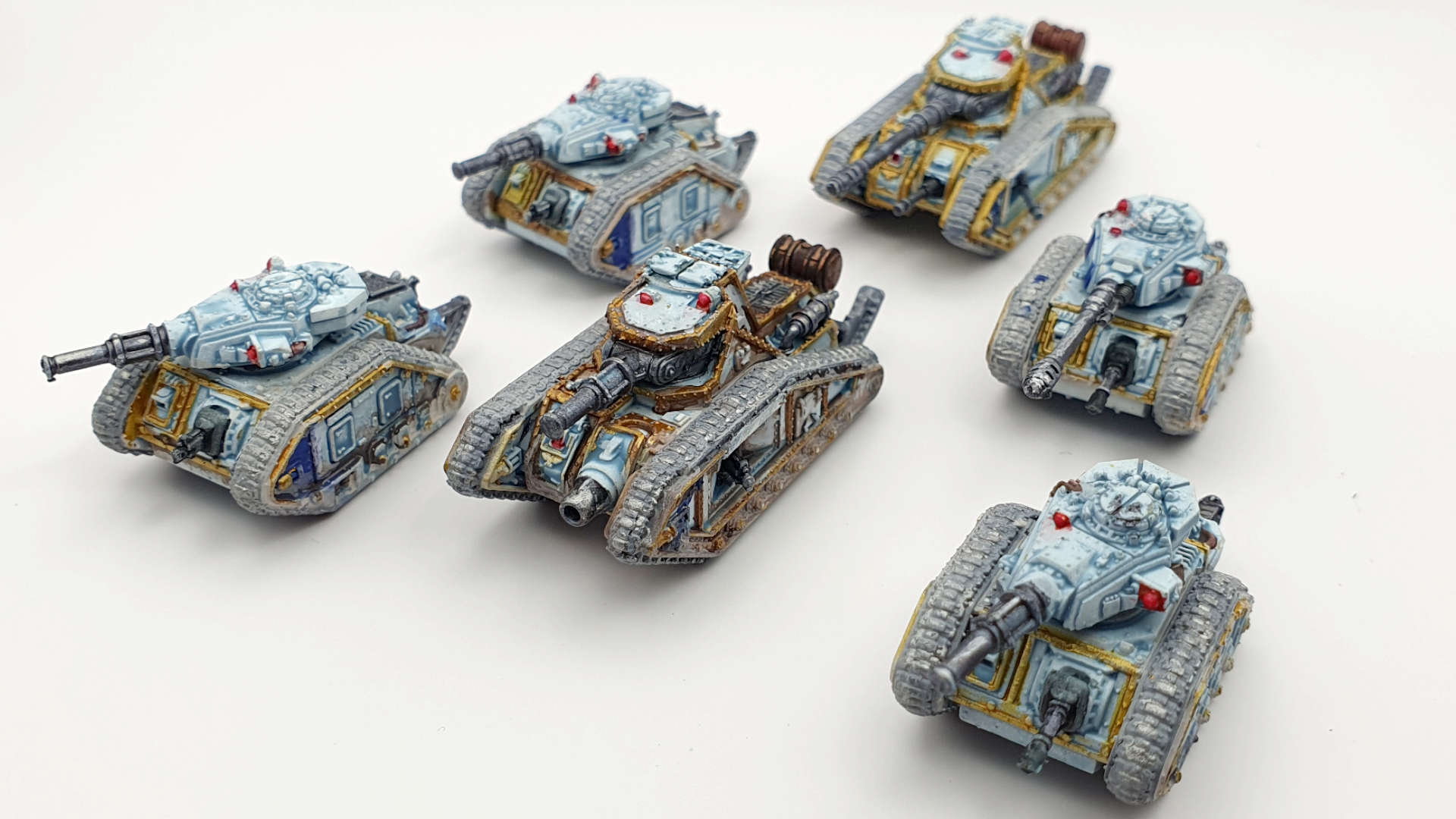
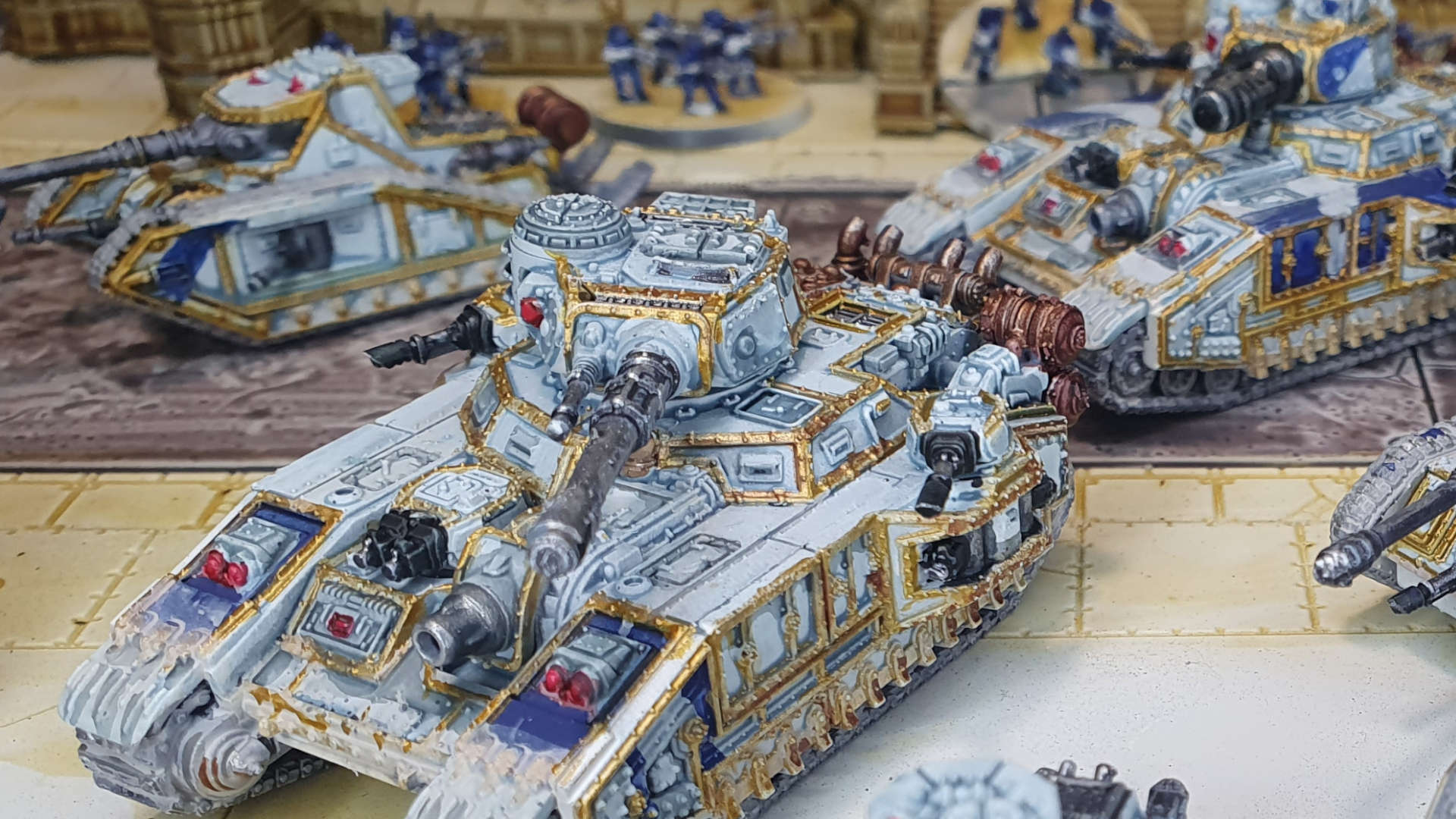
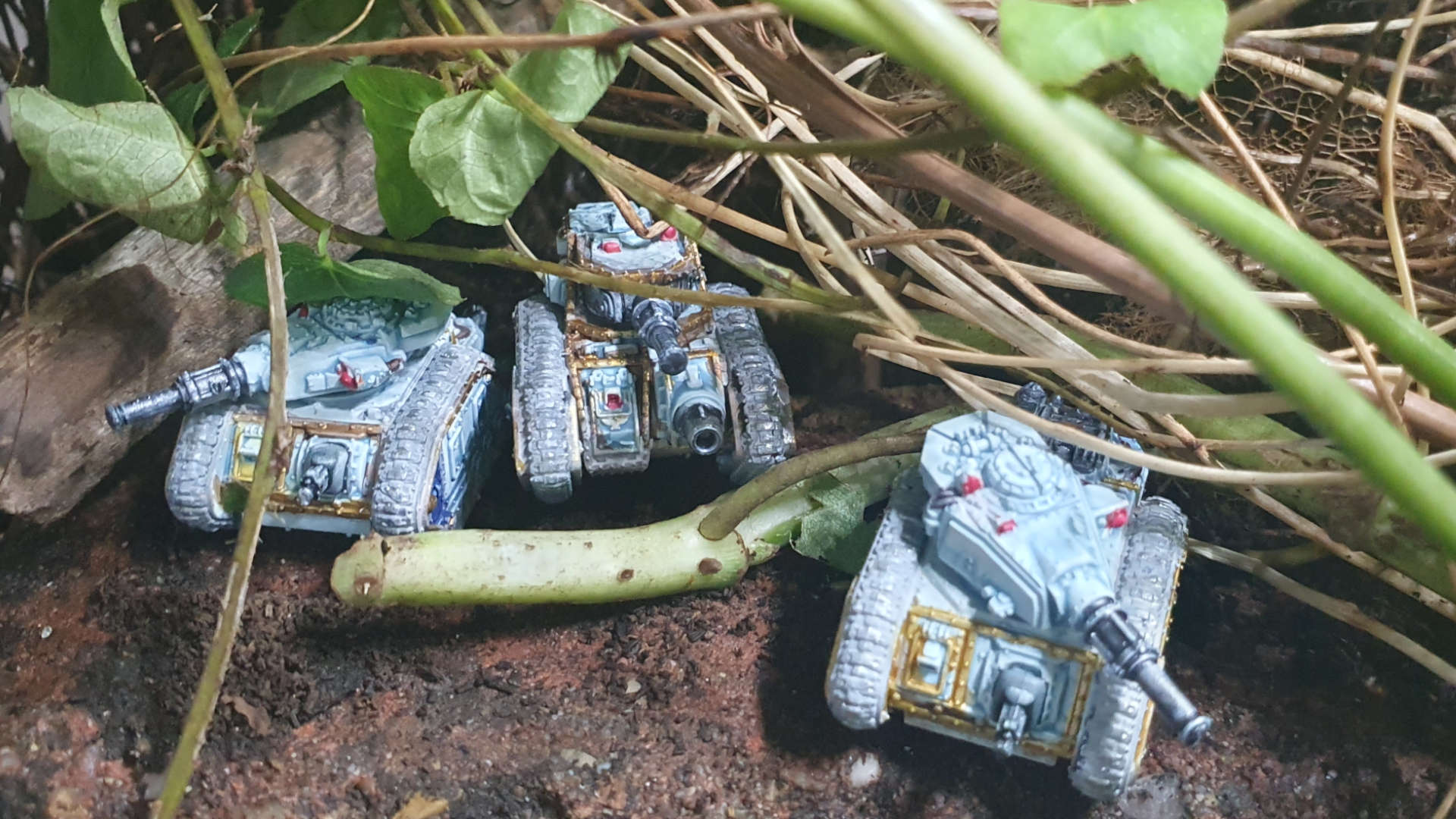
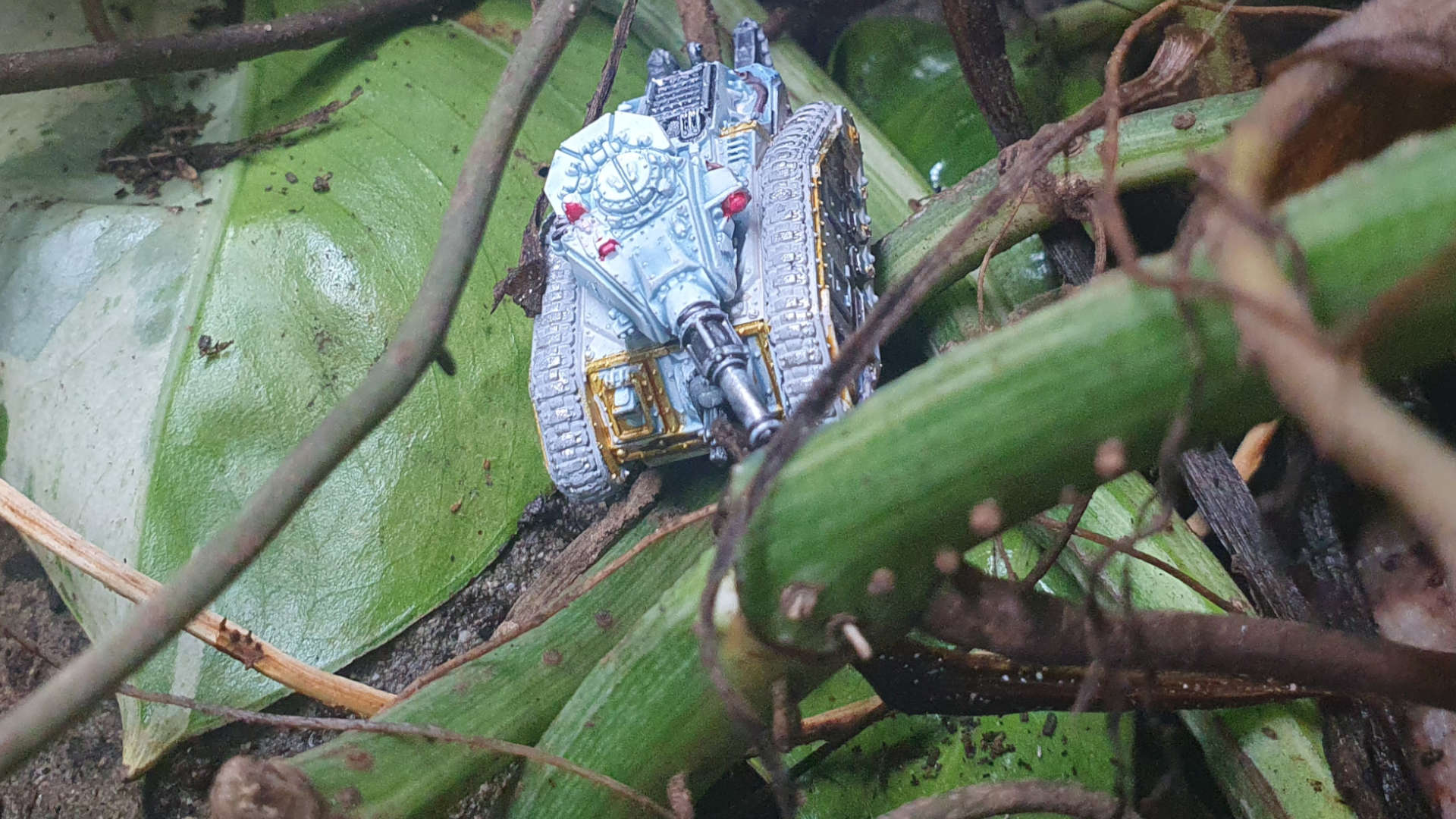
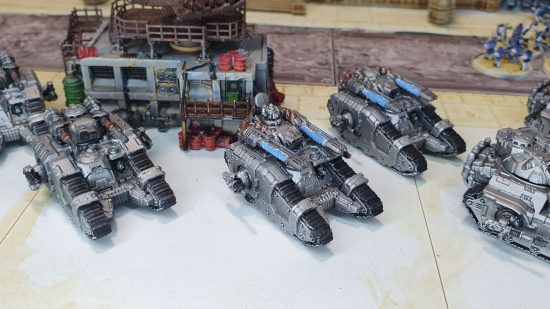
I’ll start by talking about the models. Every tank in this box is a diminutive masterpiece. I can’t overstate how tiny, adorable, and charming these micro-warmachines are once they’re built. I want to fill a cereal bowl with tiny Leman Russes and eat the damn things, they’re that cute.
Putting them together is not quite so joyous. The tanks are all multi-piece kits that fit together perfectly, but seating small pieces into place – like attaching the sponson guns to their housing on the Predators – was at the very limit of my manual dexterity. Beware pieces flying off when you cut them off the sprue – if they make an expedition to the great carpet desert, they’re not coming back.
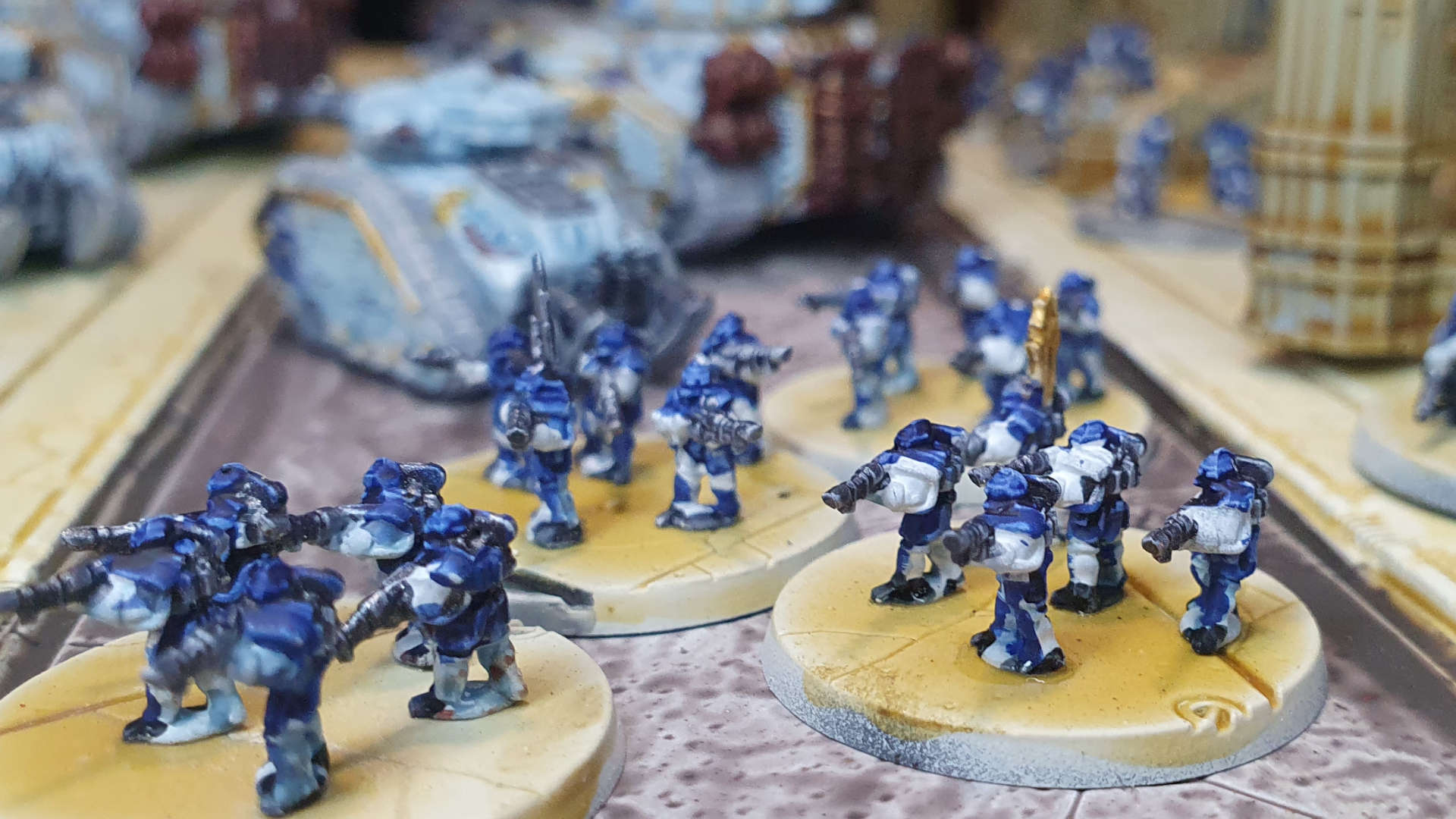
The level of detail on infantry is similarly impressive, at least when they’re being viewed from a birds-eye view. There are areas – such as between a Marine’s gun and his torso – without detail, where an undercut has been intentionally filled in on the mold, presumably to make casting easier. When placed on a tabletop these will only be visible to military snipers, bald eagles, and Legolas, Woodland Prince of Itihlien.
The Legions Imperialis starter set contains two new Warhound Titans with a new plastic weapon sprue – there’s two each of the Ursus claws, Natrix shock lance, Volkite eradicator, Incisor-pattern melta lance, and two missile pods that can be built in one of two configurations.
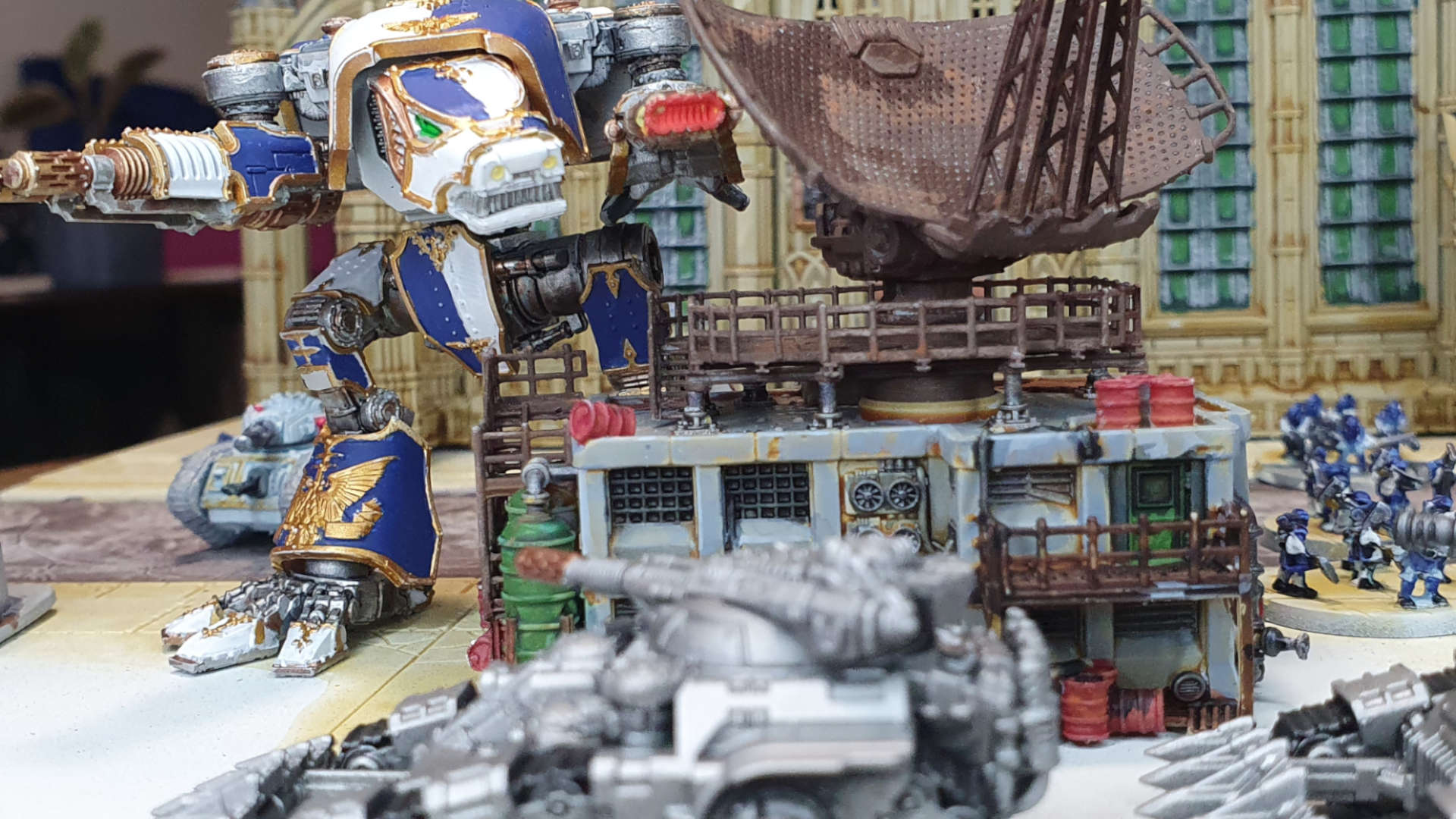
The Warhound remains a Very Good Boy, but seeing it in scale alongside infantry and tanks emphasizes the sheer size of the beast like never before.
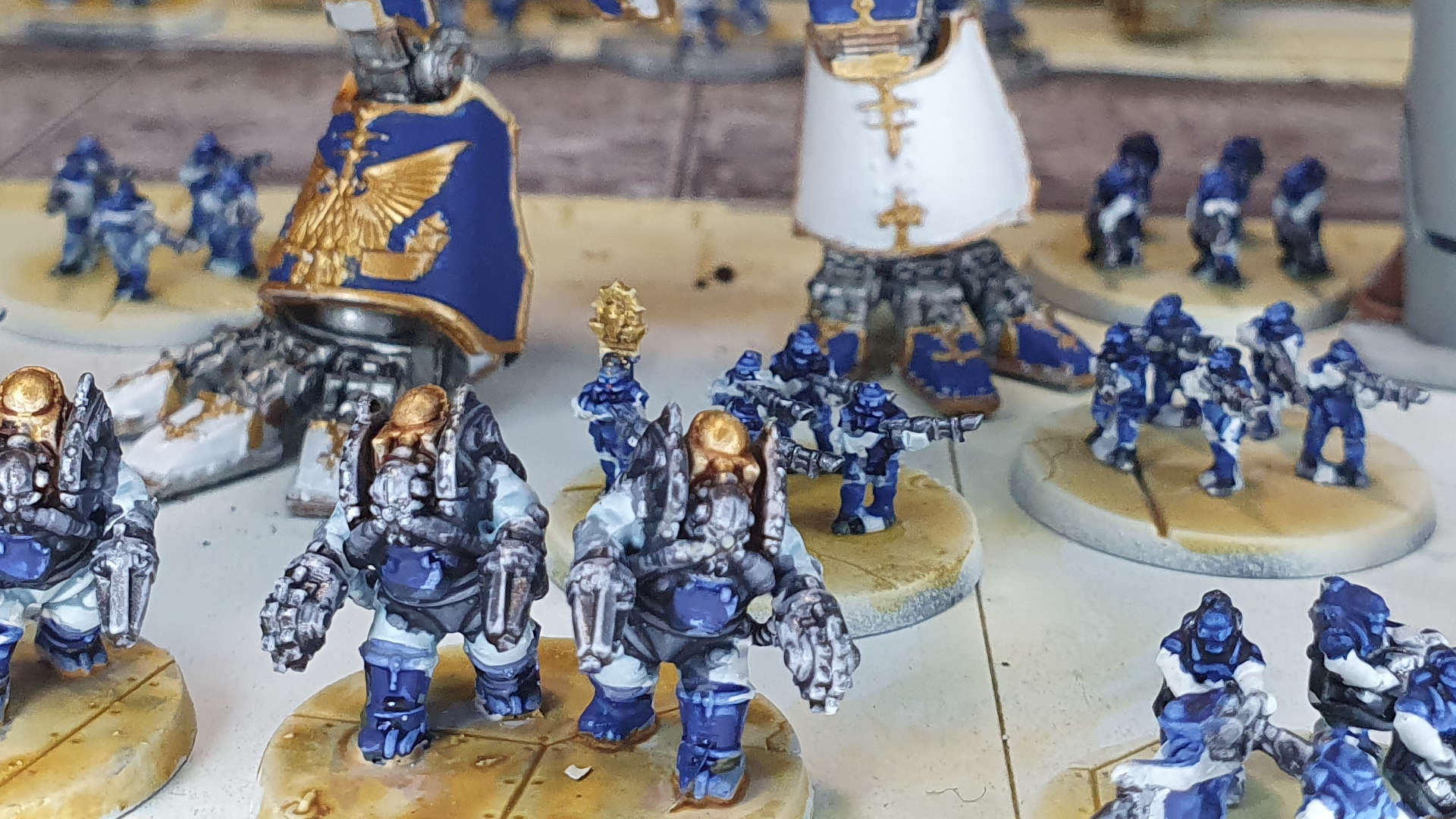
By points values, you’ve actually got a small starter army in this box – there’s enough models to for the recommended smallest size of 1,500 points. ‘Tournament legal’ armies must be composed of at least 70% models from a primary faction. Find a friend and swap either the Solar Auxilia or Space Marine half, pick up a box of Baneblades or Kratos heavy tanks, and you’ll be sorted.
While the box comes with rules, minis, templates, tokens, dice, and decals, it’s missing terrain. This surely keeps the box price down, but it is a big omission from a gameplay point of view, which we’ll get to soon.
At the time of writing I haven’t been able to playtest Legions Imperialis; the sweet curse of getting early access to a game, while living hundreds of miles away from anyone else with the same review embargo. I’ve got a game planned with an – as yet – unsuspecting friend this very evening. (Surprise, Chris!) For now, this review assessment comes just from reading the book.
Legions Imperialis is a wargame about command and control. It stands quite distinct from Warhammer 40k, which is a wargame about using abilities and calculated risks to wear down your opponent faster than they wear you down, or Horus Heresy, which is a wargame about playing two dozen games of rock-paper-scissors at once.
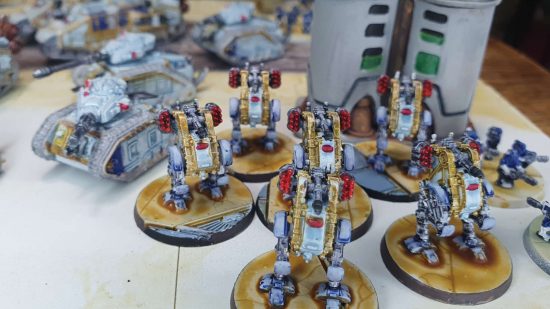
Your force is made up of Detachments – four to ten bases of Tactical Marines, or four to eight Leman Russ, or one to three Imperial Knights – which are grouped into larger Formations. Different Formations offer different mandatory and optional detachments, and sometimes come with a little buff. The Legion Demi-Company is good at holding objectives, while the Solar Auxilia Pioneer Company gets to deploy forwards up the battlefield.

The turn starts with both players secretly assigning orders to all their units. Those could be to March quickly across the board, Advance in good order and shoot, Charge into combat, or First Fire, sacrificing movement to get shots off earlier in the turn and potentially unlock powerful ranged weapon abilities.
Orders are all revealed at once, and then the turn proceeds through the resolution phases for Movement, First Fire shooting, Combat, and Advancing Fire shooting, with players taking it in turns to pick an eligible order and resolve it. An order that allows you to shoot can be sacrificed to make less accurate Overwatch fire in response to enemy movements.
So the turn starts with both players second guessing their opponents, trying to balance your own goals against what you suspect your opponent might do. Then it turns into a game of chicken, as you make choices about which Detachments to activate and how to use their preselected Orders, in light of your opponent’s own choices.
The special abilities for units are almost all direct buffs or restrictions on that unit’s ability to move around the battlefield, survive damage, or inflict damage in melee or at range. There are very few aura abilities, very few activated abilities, and no Command Point system.
Weapon stat lines are relatively simple, with a range, number of dice, ‘to hit’ value, and armor penetration value. A bevy of weapon traits help to characterise guns and melee implements ranging from a Solar Auxilia lasrifle all the way up to Warmaster Titans’ Suzerain Class Plasma Destructor.
A Light weapon cannot damage a tank, an Anti-Tank weapon loses its armor penetration against infantry (reflecting its low rate of fire against an entire infantry platoon), weapons without an AP value cannot drop Titan Void Shields unless they have the Shieldbreaker trait, and so on…
It’s a standard rock-paper-scissors system that is even further emphasised by the Tactical Strength of different unit types. When opposing players have models in range of an Objective, you’ll tally up the Tactical Strength of each player’s units – if one player has twice the Tactical Strength of their opponent, they’ll claim it. Each Infantry base is worth five TS; Cavalry and Walkers three TS; Vehicles two; Knights one; Titans nothing.
This is the most realistic distinction between ‘scoring’ and ‘non-scoring’ units I’ve ever seen in a GW game. Superweapons are all well and good, but boots on the ground are the only way to control territory. But those infantry are very fragile, with rubbish saves and a single wound.
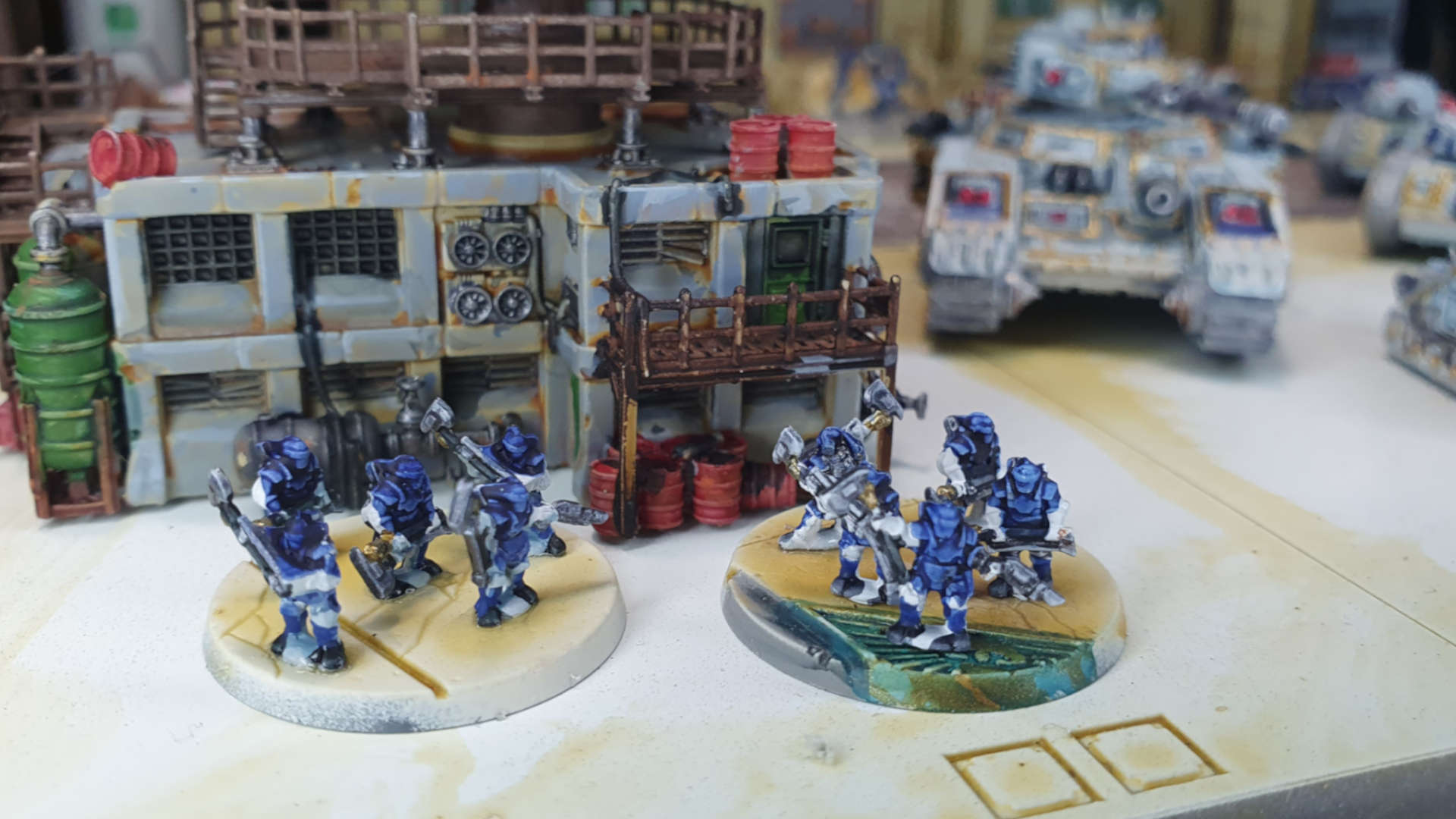
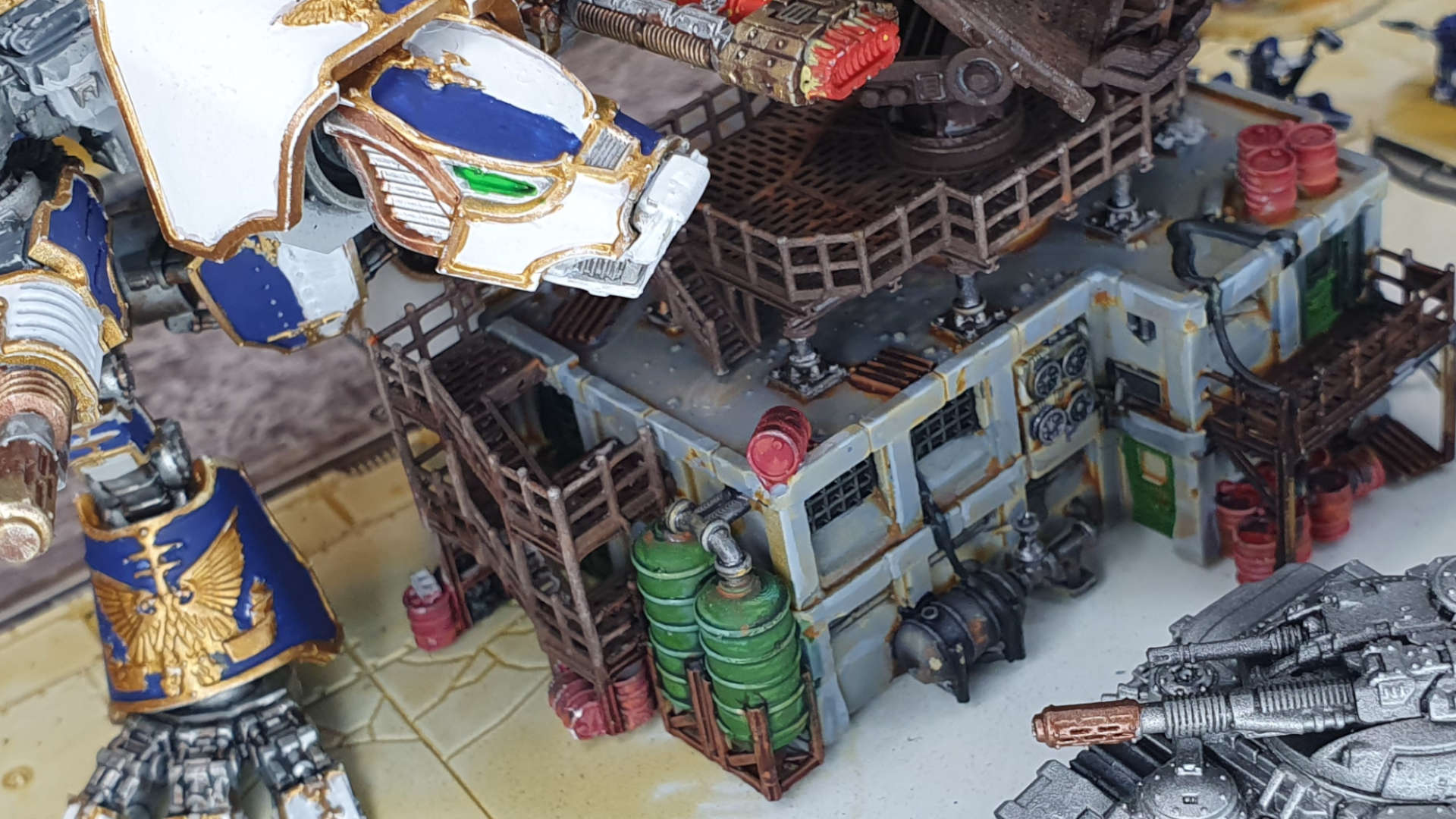
To keep them alive you must exploit cover, whether it fully blocks enemy line of sight, provides an Obstruction or Difficult Terrain that imposes a -1 to hit modifier and a grants a cover save, or best of all, is a building they can garrison. Detachments in buildings have 4+ cover saves, get a bonus to win close combat, and inflict a massive -2 to hit modifier against enemy attacks.
It’s an enormous upgrade in survivability, and I suspect that garrisoning buildings will be integral to the game. This may be motivated reasoning – I did write a guide to Legions Imperialis terrain unprompted, when you couldn’t even buy the official kits, so I’m obviously obsessed with tiny war dollhouses. But I think not.
The role of garrisoning buildings adds yet more delicious, rock-paper-scissors conundrums to the weapon loadouts. Buildings can be damaged, but they’re hard as nails and only vulnerable to weapons with special traits like Destroyer or Bombing Run, or being shoulder-barged by Titans. Weapons that Ignore Cover, like Flamers or the frag missile of a Missile Launcher, are another tool for rooting out entrenched infantry.
If a Detachment loses a close combat, or loses half of its models to enemy shooting, it needs to pass a Morale check or Flee, running headlong from the enemy. Once a Formation has lost at least half of its starting models it becomes Broken, and its Detachments can only receive the Advance and Charge orders. This is another piece of command and control gameplay: losing models strips you of both assets and the flexibility in how you use them.
One of the game’s few aura abilities is ‘Inspire’, which allows units within range of the Inspiring unit to use its morale in place of their own. Another is ‘Solar Auxilia HQ’, which negates a penalty affecting many Solar Auxilia units that limits them to only ever receiving the Advance order. I fully expect the Mechanicum’s programmed behaviour to be controlled via the Order system, too.
The morale and break point system both encourage large units. So do the army lists. Additional models for a unit are always cheaper than buying a new unit. Support infantry – like Terminators and Assault Marines – are more expensive when bought as individual units than when they’re added as semi-autonomous upgrades to a Tactical Detachment.
The unit selection in the core book is lopsided: there are no Light Tanks or Artillery, despite there being Formations with slots for them. The army lists is every model in the first wave of Legions Imperialis miniatures, plus the complete back catalogue of (era-appropriate) models for Aeronautica Imperialis and Adeptus Titanicus.
Given the number of additional units we’ve seen for both the Solar Auxilia and Legiones Astartes, expect army books, or a campaign book, soon. I’d have preferred that the rulebook and army list in the box were separate, so that once the army books come out I don’t have to heft around 100 defunct pages in my rulebook, but I imagine this is another cost-saving measure.
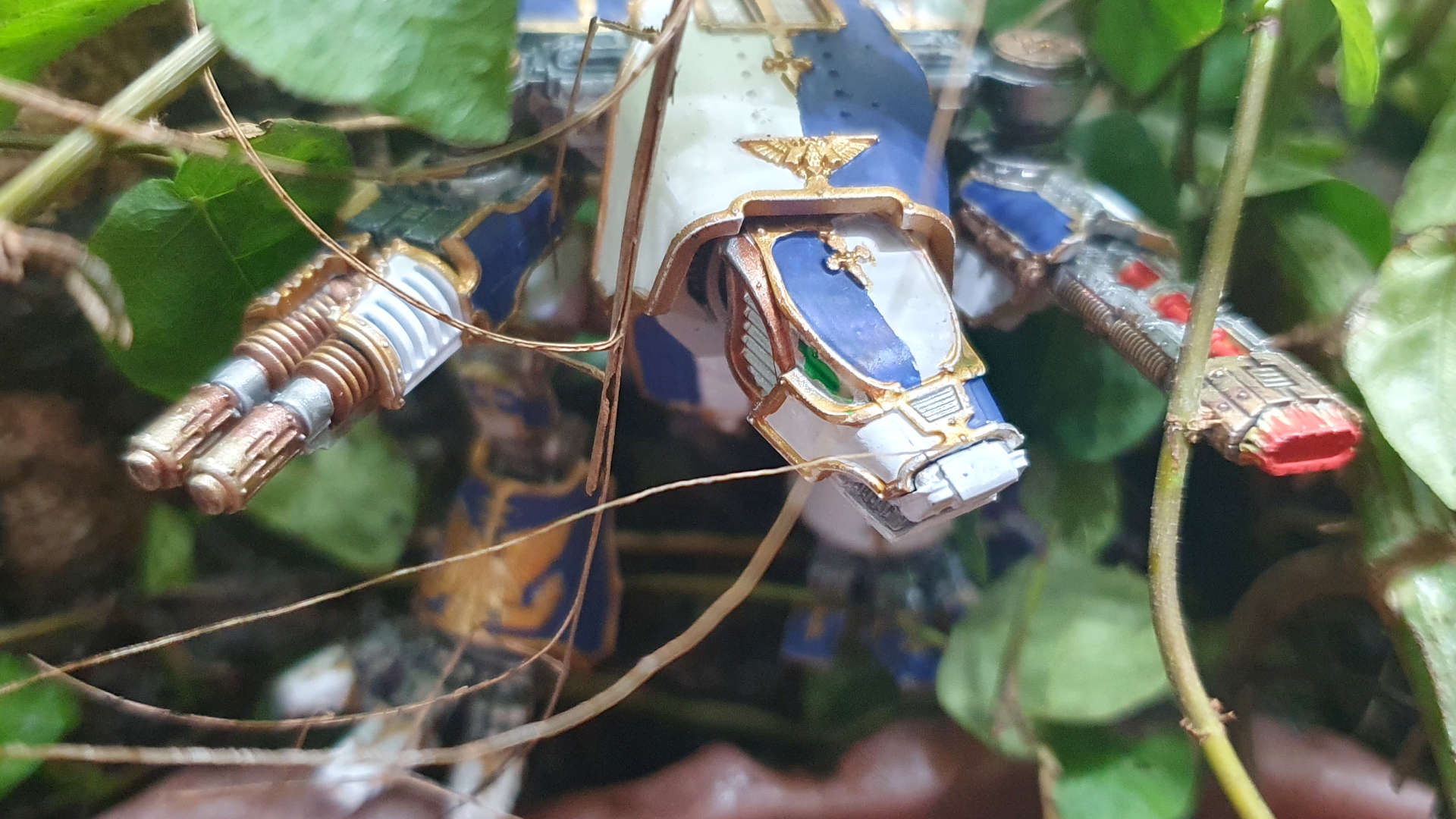
Titanicus players will be disappointed to learn that there’s no way to field a Titan Legion or even a Knight Household as your primary force. Between their inability to claim territory and invulnerability to whole classes of weaponry, I don’t think they would work well in the main engine. Nothing stopping you fielding a maniple as part of a massive, 6,000-point aside game, though.
If I can see an obvious misstep, it’s in the special rules for each Space Marine Legion. None of these are offensively bad or obviously overpowered, and you can take Formations from multiple Legions in the same army to complement one another. Some of them are just quite restrictive.
White Scars get bonuses to any Jink saves they might have, reflecting their greater skill at mobile warfare. At the moment this only provides a bonus to Air units – it will presumably benefit Jetbikes and Skimmers once the models are released. Iron Warriors Infantry and Walkers are superb at holding objectives, but their tanks get nothing.
The book hints at future Legion-specific Formations, which may give you reasons to take the Detachments that aren’t supported by your Legion special rule. For now, Legion soup is the special of the day.
Not perfect then. Nevertheless, I am very optimistic about Legions Imperialis. The starter set is a very solid core to an army, at least once you’ve swapped some minis with a friend. And the rules are refreshingly different from all of Games Workshop’s other games.
If, like me, you’ve gorged on Horus Heresy books and want to recreate world-shattering conflicts like the massacre on Istvaan V, the planetary tank war of Tallarn, or the dreaded Siege of Terra, this should be the game for you.
Source: Wargamer