


The Campaign for North Africa is an infamously arcane war board game, which takes longer to play than the WW2 campaign it depicts. Andy and James, a pair of friends from England, have completed the six turn tutorial, playing weekly for two entire years, and Stockholm syndrome is fast setting in.
I caught up with the pair, who document their efforts through the podcast ‘War with a Mate‘, as they prepare to embark on the full campaign… of 50 turns. They say they fully expect this game to be a “permanent fixture” in their lives for decades, more set in stone than their jobs, their co-workers, and the places they live. James says, “20 years feels like a good estimate, and I can’t think of anything I’ve kept consistent since I was ten.”
Completing The Campaign for North Africa seems not only to be a test of endurance, grinding out turns, but also a battle of wits. Decoding the rulebook is a battle in itself. Written in 1978, it has painstakingly detailed rulings for everything up to and including the amount of water required to cook pasta, but also some frustrating vague patches.
“It mentions at one point in the rules… you can’t air transport live camels, but you can transport, by air, dead camels,” explains Andy.
“Now, there’s only one unit that uses camels in the entire game – part of the Saharan detachment. But there’s no way to determine if an individual camel is dead, and even more so how you would load that into an aircraft, or why you would load that into an aircraft. So it’s just a small part of the rules in this vast sea of words that we spend ages trying to decipher, and we still don’t really know what it means.”
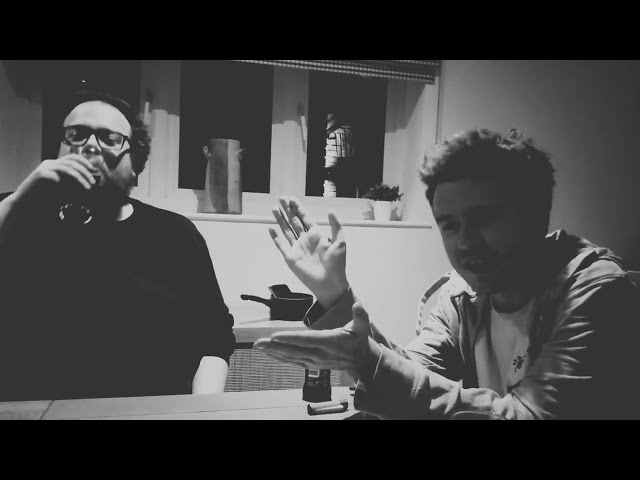
As they describe their adventures individually rolling one-on-one plane battles to simulate dogfights with 100+ aircraft, or being unable to press an attack because the truck with all their bullets broke down, one question is in the forefront of my mind.
And when I ask if they’re actually enjoying themselves, Andy’s answer is rather diplomatic. “The amount of work you have to put in to get the small nuggets of fun aren’t quite congruent,” he says.
He describes how the short flashes of action are broken up by tens of hours of admin and logistics preparation, and says that most of their time with the game is spent doing spreadsheets. “It shouldn’t be fun, and it’s not”.
Andy and James often joke about having Stockholm syndrome for the Campaign for North Africa.
“We’ll get to some of the combat sections of the game, and it feels like it’s the most fun we’ve had in weeks,” Andy says. “But in reality, if you were to put that in a vacuum, it’s not a very exciting aspect of the game.”
“I was complaining up until the last turn that I wasn’t having fun”, he adds, but says that in the hiatus, he finds there’s a bit of a hole in his week.
James notes that the slow pace and the painstaking work required does make it satisfying when he can see the fruits of his labor.
“You might have a plan, and then you’ve spent a month getting all your trucks in the right place, and then it does feel good when those come off because you’ve been thinking about it for, like, a month,” he says.
On the flipside, when those plans don’t come together, it is devastating. Andy describes flicking through the rules at his desk or on the bus to double check he hasn’t made an error and says that a turn where “one of the plans I had hinged on a rule that didn’t quite exist” was the closest either of them came to quitting for good. “I do remember just walking away from the board and saying a few choice words to myself,” he says.
James says if the “accountability tool” of the podcast hadn’t kicked in, they both might have given up long ago. But what began as a way to keep the challenge going has wildly outperformed their expectations, getting close to around 30,000 listeners – they say, mostly from Australia.
Right now the duo is preparing for the long haul of the full campaign, and it seems while the two-year ‘dry-run’ has helped clear up plenty of rules confusions, there’s still a lot of unfamiliar territory left to explore. James says, “The Commonwealth has this whole production system, but you have to plan it two months in advance, and because a turn is a week, our six turn practice didn’t even get to that. So there’s this whole branch of systems that I just haven’t even touched yet, which is a bit daunting.”
Meanwhile, the Axis, controlled by Andy, don’t see the Germans join until about turn 27, so that’s a lot of unfamiliar units to dig into.
I’ll leave you with one detail I found delightful. In this ridiculous game which takes a decade or more to complete, the Axis gets a once-per-game torpedo strike ability. “I’ll need to really pick my moment for that,” Andy says. “It’s once in the whole game, so that really has to count. If I use that and it doesn’t pay off, I will be in tears.”
Join the Wargamer Discord to hear more about this board game, and others that are probably more fun!
 Source: Wargamer
