


Finding a way to connect with your army’s lore and miniatures helps keep it relevant no matter the edition.
Rules, like editions, come and go. Painted miniatures are forever. It’s a simple truth that if you have a 40k army, some day many, if not all, of the models within it will see their rules change or even have their profiles entirely removed from the game. Like death and taxes, this is an inevitability.
If you’re chasing the meta and swapping armies regularly, well, that’s just part of the fun, isn’t it? For the rest of us, though, it’s probably helpful to stop thinking of your army as just a vehicle for the deployment or rules and more of an art project with which we sometimes play a game.
Find Your Angle
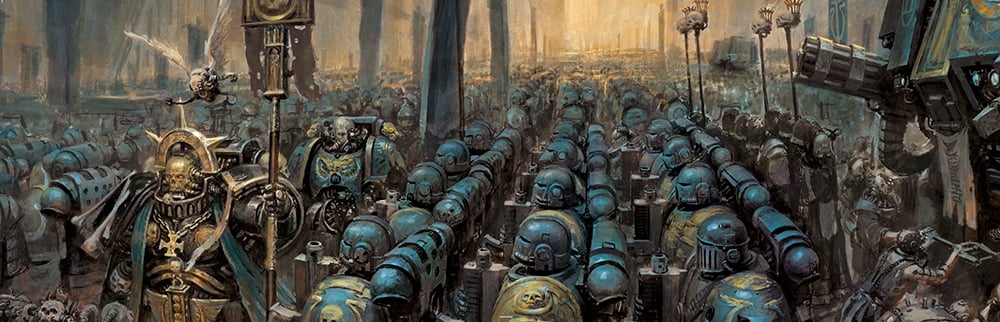
One of the best ways to stay in love with an army you’ve painted is to find an angle or hook that makes it truly your own. After all, it’s a lot easier to give up on your nameless, generic collection of Space Marines than it is to give up on your personalized Chapter, inspired by the regiment your grandpa served in during the Korean War. Or a warband led by a character inspired by your old D&D character accompanied by a retinue inspired by the rest of the party from that old campaign. The trick, of course, is finding a way to ground that in the 40k universe (or whichever setting your army is based in).
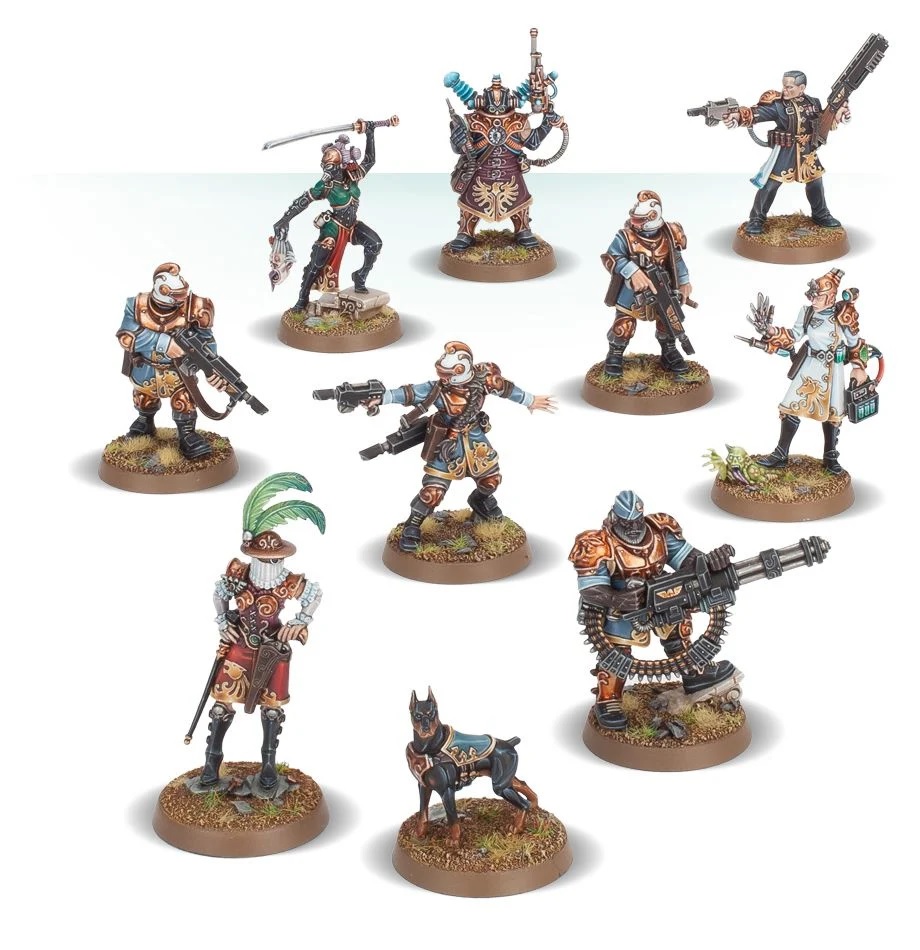
Fortunately, 40k is a setting full of purposefully unanswered questions, unexplored star systems, and countless armies spread across an entire galaxy waiting for you to zoom in and give them some details of your own. Campaign books like the recently released Operation Imperator are incredible resources for personalized world building. With 40k’s main releases currently focused on Armageddon, it might seem like the limitations of the conflict are limiting, but these kinds of constraints are one of the best things to inspire your own force taking part.
For Ork and Space Marine players, this is going to be easiest, of course. My own growing Blood Angels army was inspired by the idea of 5th Company Captain Sendini’s command of Operation Imperator. The army I’m building around him is readily grounded in the published material around the release of the Armageddon box set. Led by Captain Sendini, my army represents elements of the Blood Angels 5th Company supported by squads drawn from the 2nd Company (and eventually the Death Company). Easy enough!

The Devil & The Dedication Is In the Details
But what if you’re a T’au or Aeldari player? Those armies aren’t taking part canonically in the conflict for Armageddon. Well, sure, but the Fourth Armageddon War is an enormous campaign, and so many billions of Orks and Imperials duking it out just about any faction has a reason to be there.
Maybe your T’au are a small reconnaissance force who’ve landed on a remote part of Armageddon in order to observe and gain access to a specific resource they require. The Farseers of a Craftworld might have foreseen an opportunity to manipulate the skeins of fate by interfering in a particular theater of war on Armageddon and dispatch a picked force to do their bidding. Either way, win or lose your game, your army now has a little history and something to build on in the future.

Did your T’au win the day but get mauled by Orks in the process? Maybe you’ll build them out with heavier crisis suits next time as they’ve learned the need for better armor. Perhaps your Aeldari were successful enough that they’ve become a special force at the disposal of their Farseers, and as you expand the army, you’ll add more psykers to it.
There are so many tools to further put your stamp on an army. Detachments, enhancements, and of course, Crusade rules are all super helpful. But at the end of the day, your army gains a story through play, and even if their rules change, that story and the love you put into painting it remain.
What’s the most memorable event in a game you’ve played? Use that to expand your army’s narrative.
Don’t Miss:

Simon Berman has been a wargamer since 1993 and has worked in the tabletop games industry since 2008 as a staff writer for the first three editions of WARMACHINE and HORDES. These days he’s the General President of the Brush Wielders Union, a worldwide organization of miniatures painters of all skill levels, a freelance games writer who has contributed to a number of roleplaying games like Eclipse Phase, Dune: Adventures in the Imperium, and The Hammer and the Stake. He runs his own small-press publishing company, Strix Publishing, and paints more miniatures than he can keep track of. Simon lives with his wife in Tacoma, Washington along with a number of cats and a pack of savage wiener dogs.

Source: Bell of Lost Souls
