


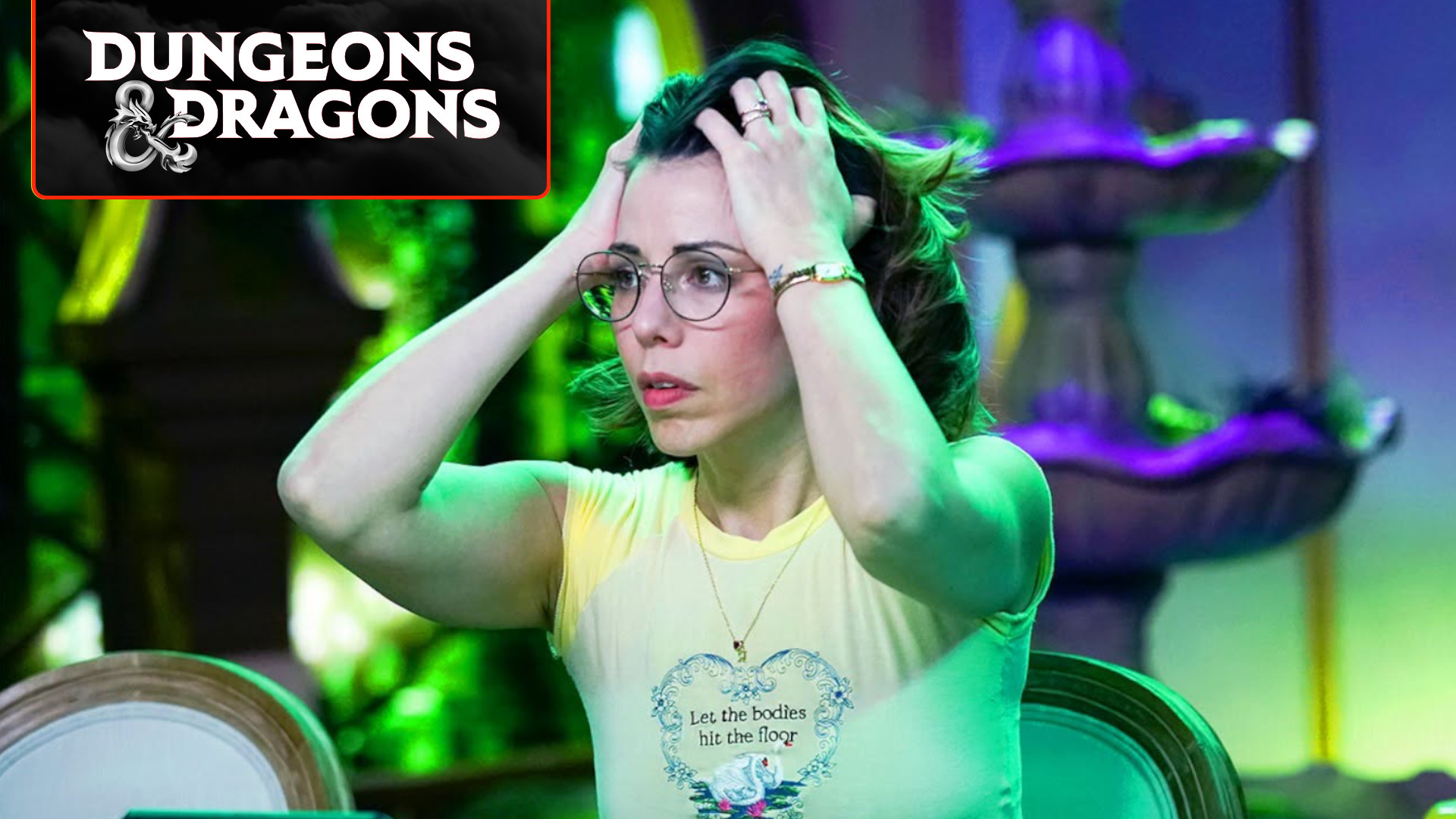

After some resurrection shenanigans and more than a few NPC murders, Brennan Lee Mulligan has finally pulled his finger out. The axe has dropped, and the first player-character has expired. Teor Pridesire is dead.
A death is a dramatic moment in any D&D campaign, but Teor’s is tinged with debate and controversy. The cast is playing Dungeons and Dragons, but right now, Critical Role fans online are playing a game of their own – the blame game. Who is responsible for Travis’ character dying?
Some have argued that Teor was killed not by undead, but by the Dungeon Master. BLM has regularly bent the rules of D&D in campaign four, with one of his most prominent homebrews being the ‘cinematic level up’.
At level four, players got to choose when their characters leveled up, often mid-scene in a dramatic fashion. For level five, Brennan was in control. The level ups all came at a similar moment in the story arc, but the specific moment was out of the player’s control.
For Teor, that level up would come mid-fight in Obrimis Manor after landing a critical hit on Raimond Davinos. However, BLM ruled the level up would take place at the end of Teor’s turn rather than immediately. In many, many Reddit threads, this has been lambasted as the decision that killed Teor Pridesire.
Some have argued if Teor had access to Extra Attack on an earlier turn, he might have killed Raimond before he could down Cyd – Teor’s only ally in the fight. Others have claimed Travis himself didn’t have enough time with his level-five abilities to understand the optimal plays that might have saved him. As Travis lamented post-death, “I should have summoned the Steed sooner”.
I’ve been playing D&D for over 10 years, and I’ve spent several of those years as a Dungeon Master. Based on that experience, I say this next sentence with confidence. Players are responsible for what’s on their character sheet.
Dungeons and Dragons is tremendously unbalanced when it comes to mental labor. Dungeon Masters are responsible for worldbuilding, managing NPCs, and shifting the narrative on the fly based on player decisions. Players, in contrast, are only responsible for themselves.
Because of this, a general courtesy exists at experienced, effective D&D tables. In exchange for all their efforts behind the DM screen, players honor their Dungeon Master by taking care of their own character sheets.
They don’t expect their DM to know how many spell slots they have left. They don’t ask their DM to suggest optimal spells to prepare. They learn what their class abilities mean, and they don’t expect the DM to remind them every session.
Travis Willingham knew a level up was on the horizon, even if he wasn’t sure when it would arrive. He has been playing Dungeons and Dragons professionally for more than a decade. He would be expected to know what Teor could do as a level-five Paladin, and the strategy behind his turns was entirely in his hands.
Well, not entirely. Responsibility for Teor’s death also lies in the hands of the other players. The party agreed to split while delving a dungeon that, as Brennan has made clear before, could be extremely difficult for characters at their level. Hell, Julien had a chance to rush in and provide backup – but he didn’t, because Matt Mercer made the narrative choice to prioritize his character’s personal goals.
Blame, then, could lie with anyone and everyone at the table. But casting blame at all is pointless, because Teor’s death is not a failure. That’s one of the best parts about D&D. This is not a videogame where dying equates to losing.
In dying, Teor has added stakes to the campaign. Travis got to roleplay a ‘blaze of glory’ death and even grant a boon to a fellow PC. Teor’s death creates emotional choices for his companions. It also has the potential to completely shake up the story – what happens when the Tachonis family casts Speak With Dead on his corpse and asks him to spill the beans?
If the cast’s faces in this episode are anything to go by, everyone was enjoying themselves. Travis even says he has a back-up character ready. Everyone knew what they were signing up for.
Want to talk more about Critical Role, or just your favorite DnD classes? Join the conversation in the Wargamer Discord.
 Source: Wargamer

