


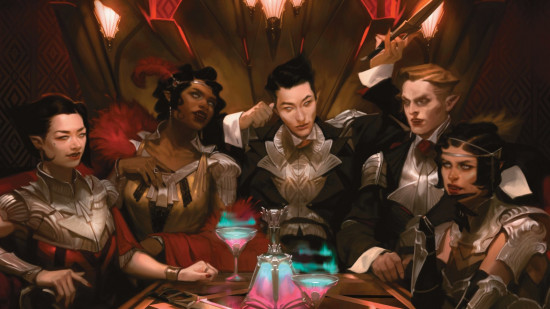
You can’t have a gothic horror adventure without also having a grand ball, can you? Ravenloft: The Horrors Within certainly agrees, adding the level four adventure Grand Masquerade to campaigns in Barovia. But if you’ve glanced at the Masquerade and thought the ballroom looked a little shabby, not to worry – this guide is packed with systems and GM advice to add glamor and mystique to grand gatherings and social adventures in your games of D&D!
The Grand Masquerade in Ravenloft: The Horrors Within uses exactly the same format and mechanical system as The Boreal Ball adventure in the Dungeon Master’s Guide. The evening is broken up into three time blocks, during which the players get to interact with NPCs and accrue Renown Points if they make a good impression. Between block two and block three, the ball is interrupted by a fight, granting more RP if the players win. At the end of the night a major NPC appears and gives the player a reward or a penalty depending on how many RP they got.
It’s a bare bones system, so let’s make like a Necromancer and flesh it out. The following optional systems give you tools and DM advice to make your ballroom adventures more exciting and easier for all the D&D classes to play an active role in the proceedings. I’ve made shameless use of ideas stolen from some of the best tabletop RPGs out there (looking at you, Blades in the Dark), and the weirdo puzzle videogame The Sexy Brutale.

Establish the degrees of freedom
Society balls give the players personal access to characters who may be important to your campaign’s plot, and who may have the wealth, influence, or magical power to make life easier or much harder for the players depending on how the evening goes. It’s important to work out how with the players how much freedom they want to poke the dragon, and the consequences they’ll face if things go wrong.
As an example, suppose the Rogue tries to wander away from the ball to get into the Duke’s personal study. As the DM you could:
- Simply not let them, block their way with the guard, and turn them back;
- Set a ‘timer’ based on the number of skill checks they’re allowed to make before a Steward appears and escorts them back to the party;
- Let them do whatever they want to as long as they keep passing skill checks.
If they get caught red handed, the consequences could be:
- Brushed off in a conversation;
- Losing Renown Points for the party;
- Turning the party into wanted outlaws with a price on their head.
The way you handle this has an impact on the tone of the story, and long term consequences. Some players want a gritty game where the stakes are high, luck and audacity are rewarded, and they can substantially alter the plot; some players want to follow the intended story and don’t want to risk serious consequences for their characters outside combat. Agreeing on a settlement with the players in advance, so everyone has shared expectations, will ensure no-one comes away disappointed.
As a general rule, when you give the players a lot of freedom, it’s a good idea to give players “off-ramps” from very risky choices, and plenty of information if they’re going to attempt something stupid. Conversely if you want to limit the scope of what players can do and use a lot of GM fiat to reign them in, make sure whatever they can do within the boundaries you set is very rewarding!

Player motivations
Connect the individuals and events at the ball to your wider campaign. If it’s possible, use NPCs that the players know about, or which come from organizations they already know. What happens at the ball doesn’t stay at the ball – it will have consequences afterwards (even if this is just to adjust a ‘faction reputation’ tracker you have going).
You can use connections to the wider campaign to give the players additional goals while they’re at the ball. For example:
- The ball venue will soon be used as the site of a coronation, political rally, exhibition of treasures, symposium of mages, or similar exclusive or important event. Attending the ball is the only chance the players will have to scout the venue in advance.
- The ball is being hosted by an NPC the characters need information about – this is a perfect opportunity to meet their friends and allies, and rummage through their stuff!
- The ball is a rare opportunity to make contact or build trust with an important NPC or a representative of a faction.
- A covert hand-off of documents or magic artefacts is going to take place under cover of the ball – maybe the players need to intercept it, or maybe the players are doing it.
- An important NPC fears they will be assassinated, and wants the players’ protection at the ball.
- A pair of star-crossed lovers from rival factions plan to elope during the ball, and they’ve enlisted the players to help them.
Tasks that require the players to act in secret, or to go against the main goal of the ball (which is for rich people to have fun and show off), are more difficult to achieve. They also give more opportunities for characters with different skills to shine.
If the Wizard needs to inscribe runes in five locations without being noticed, the Thief can support their poor stealth skills and help them spot security measures, the Bard can handle face time with the guests at the party to cover for the others’ absence, and the Fighter can distract the guards by staging a drunken fist-fight.

Upstairs, downstairs
Society balls can’t exist without the hard work of the servant class – and some characters in the party might fit in better with the servants than with the toffs. Not every member of the party needs a legitimate (or even illegitimate) invitation to the ball: others could sign on as event staff, befriend the permanent helpers, or disguise themselves and enter via the servants entrance.
Characters pretending to be support staff will have their own challenges to contend with – not least being expected to carry drinks, park carriages, or clean up after drunken guests. They will also have a degree of social invisibility, access to behind-the-scenes areas of the building, and can interact with staff who may know more about the venue than the guests.
Showing who actually makes everything happen for the nobility is a great opportunity for world building, and characterizing the NPC hosting the ball, so use the opportunity.

Time to party
Balls cram a lot into a short space of time, and the heroes need to as well. But you don’t have to follow the normal flow of time. You can fast-forward to get to the good bits, or skip backwards and forwards to make everything unfold more smoothly.
You don’t need to narrate or have the players play through every single event that happens. Instead, focus on specific moments when the most exciting things happen: a suitor challenges her rival to a duel; a drunken party guest tumbles down the stairs and knocks over an ice sculpture; an Azer ambassador sets light to the drapes; the players enact their audacious attempt to pickpocket from a fey queen. In between these moments, everything else is lost in the swirl of the night.
To keep the session running smoothly, and to prevent the players getting mired in preparations for what they think might happen, make use of flashbacks. These let the characters act more confidently in a scenario that they can’t progress through with their usual set of powers and abilities, where they won’t know what’s important until they actually encounter it.
You can give each character a flashback budget for preparations they made before the party. A Rogue making a hasty exit by jumping off a castle wall might flash back to the moment she parked a hay cart underneath it; a Wizard who sees something sinister etched in the feast silverware might flash back to preparing Read Magic that morning; a Bard who wants to make a good impression with a countess could flash back to learning about her favorite cologne from her maid, and sprucing himself up with some before he made it to the ball.
You can also use flashbacks to to run more complex social adventures. First, break the ball up into time blocks, and give each NPC their own timeline, noting how they move between locations, when and where they meet to share gossip, collude, do deals, or commit whatever covert acts they may get up to. As the players encounter these events or learn about them second hand, you can then fill out a public version of the timeline, just like revealing a map.
As the night moves forward, the players don’t have to declare what they’re doing during every time block. This creates gaps that the players can flash back to, once they’ve got a bit more information to work out what would have been useful.
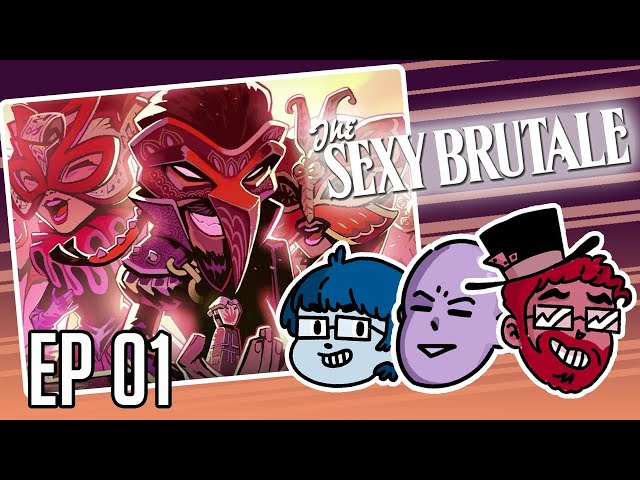
The idea of a rich timeline that you have to first uncover and then manipulate appears in a lot of videogames. I recommend checking out The Sexy Brutale, as it’s a great well of inspiration for the kind of strange goings-on that you might encounter in a gothic mansion packed with rich weirdos.
Although flashbacks are a common trope in heist stories, and usually represent careful planning, they don’t have to – they’re just an editing technique. The players could have done the right thing through sheer luck.
When a fight breaks out in the ornamental garden, the Cleric might be in the perfect place to help because they were in a long conversation with a wood elf diplomat who loves the roses; when the Sorcerer investigates the ashes in the fire grate in the study and realizes that the villain must have received a magical message through the smoke earlier that evening, the party Rogue can tumble out of the wardrobe where they hid to eat a stolen pie and just happened to overhear everything.
This is just scratching the surface of what’s possible in ballroom adventures, let alone social encounters! If you use any of these tricks in your campaigns – or have your own techniques that you really recommend – please come and share in the Wargamer Discord community.
 Source: Wargamer

