


My favorite (extended) weekend of the year is Thursday through Monday at the beginning of November. The first Tuesday of November can be wonderful or horrible (wonderful this time around, TYVM), but the weekend that follows never fails to reward me with a beautiful bounty of boardgaming benefits. Why? The San Diego HistCon, known colloquially as SDHC. Those four letters fill me with excitement for months in advance, exhaust me for four or five days of non-stop gaming, and then leave me with a warm afterglow from the sheer gluttony of playing historical games more-or-less nonstop with some of the most amazing people you can sit across the table from. This past weekend was no exception. It took me over a week to even have the energy to describe how much fun I had, but now I am ready to explain why, if you love games that explore all sorts of historical themes through board games, SDHC needs to be on your bucket list.
First and easiest: San Diego is a beautiful place. Admittedly, when I attend a con, it really doesn’t matter to me if it’s in paradise or hell, as long as I can get from my hotel to the gaming space and back without getting wet. I’ve attended Origins in Columbus, Ohio, and BGGCon in Dallas[1] and never stepped outside from the moment I entered the hotel/convention complex until the moment I left, and I have nothing but good things to say about both conventions. But SDHC is held in the Point Loma neighborhood of San Diego, which is basically a beautiful marina with a few dive bars and fish restaurants attached, so that the short outdoor walk from the hotel to the venue is almost always warm and sunny, and offers tasty food and fun beverage options galore as well as beautiful vistas of San Diego Bay, with sailboats and even the occasional aircraft carrier.

Second: Intimacy. The event is capacity-limited. This is a blessing and a curse, depending on whether you are one of the 150 or so lucky people to get a ticket in the first hour that tickets are up for sale. The event takes place in the San Diego Portuguese Sailors Hall, which essentially has a hall the size of my high school gym that gets jammed full of game tables, a bar in the back (sadly, not open for business) offering cool bench seating for gaming events, and a conference room that can fit about 6 more game tables. This is not a vast convention center, and the result is that you can get to know almost everyone at the con, and certainly can explore every game being played with a quick walk around the venue. It can get noisy (it took my voice three days to recover from the loud teaching I had to do), but it’s never crowded.
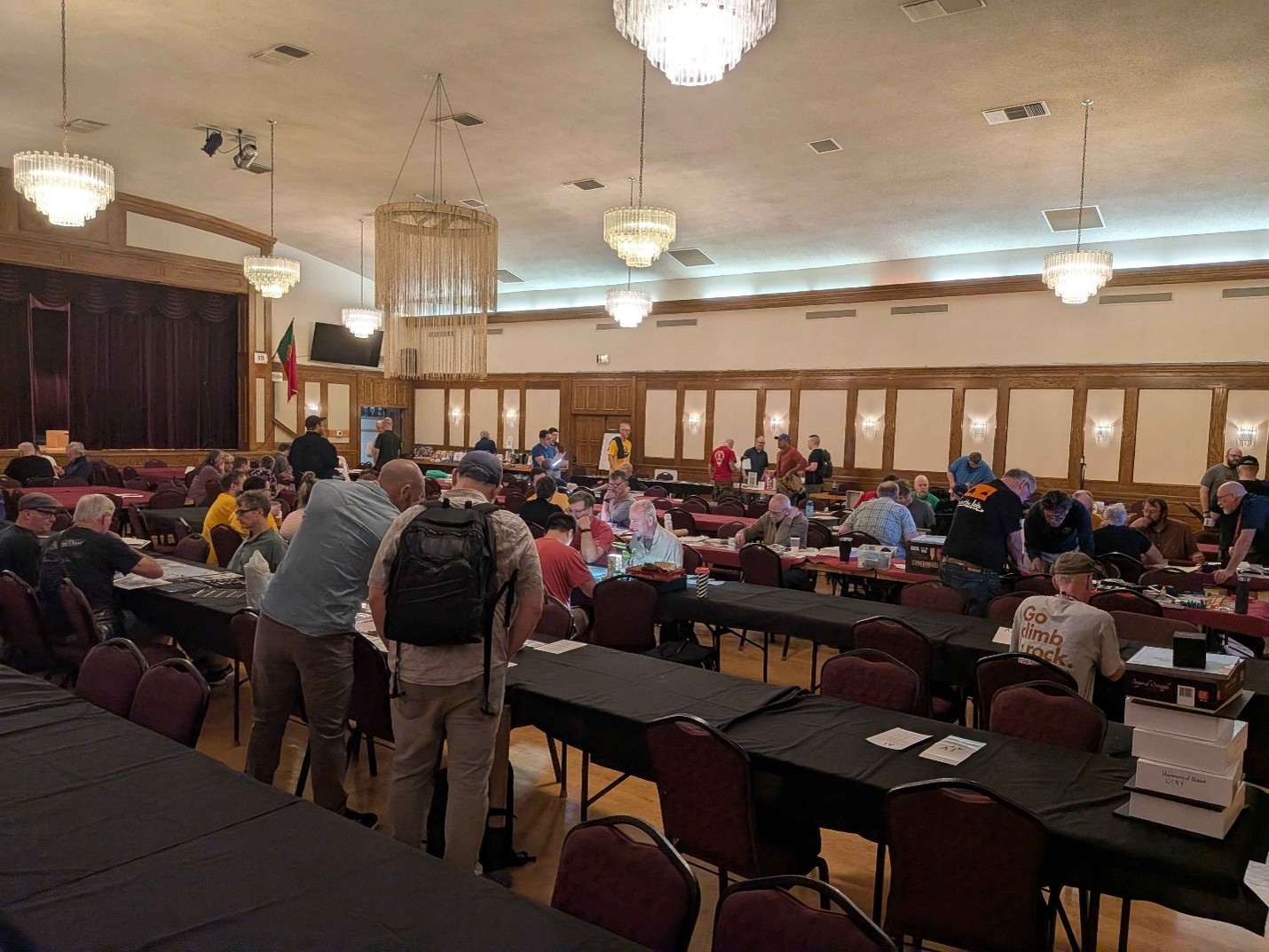
Third: No Nazis. I know this is a weird thing to emphasize, but I have been playing historical games, especially historical war games, since I was in high school in the 1980s.
From long experience, I can tell you that if you’ve ever talked to the type of crusty old wargamers who call themselves Grognards,[2] it doesn’t take that long for some of them to offer up something like “You know, Hitler really had a lot of good ideas too.” Once I hit my 20s and 30s, that wore thin, and I was very reluctant to dive back into that world when I was first being coaxed to attend SDHC. But I was assured, and it turned out to be 100% true, that somehow SDHC has managed to attract all of the other wargamers.

Indeed, through this year’s SDHC, I saw about ten tables across the four days of gaming, dedicated to (two different) games about the Weimar Republic,[3] in which the goal for all (in the Spielworxx game, Weimar: The Fight For Democracy) or all-but-one of the players (in the GMT game, The Weimar Republic Political Struggle in Germany: 1919-1933) is to prevent the Nazis from taking control. These games help explore how evil can permeate the workings of democracy if political actors aren’t willing to forgo the tempting advantages of working with the devil for private advantage, and I heard nary an apologia for authoritarianism at any of the tables where this theme was being explored. Or anywhere else, for that matter.
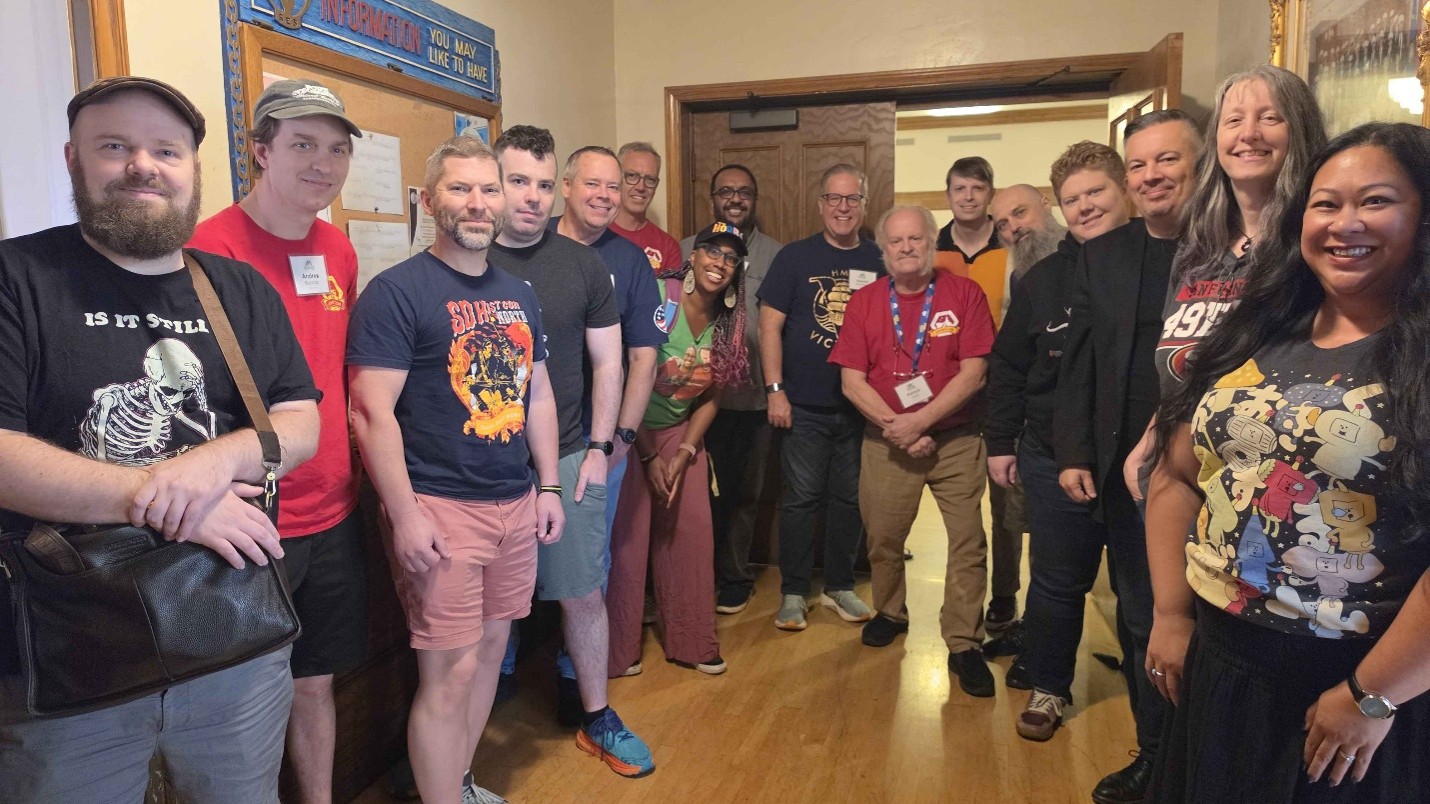
Fourth: Lots of Game Designers. I will admit to having a fairly large streak of “fanboi” in me when it comes to wanting to hang out with board game designers, but if you come to SDHC, you would almost have to work hard to NOT play with them. I’ve been at a table where everyone has published a game[4], and none of us had published the game in question, only for the actual designer of the game to come up to us and get grief from everyone for silly critiques like why there isn’t a hot pink player faction. The insights you get from the casual table talk about the intricacies of the design of the game you are playing, especially if they are just learning it for the first time, are amazing. Plus, most game designers just really love games, so they bring a ton of joy to playing something when they are not being paid to do it. It’s not the best reason to go to SDHC, but it’s unique, I think, to have such a concentration of design talent in a room where their focus is mostly on having fun with games, and not being in sell mode.
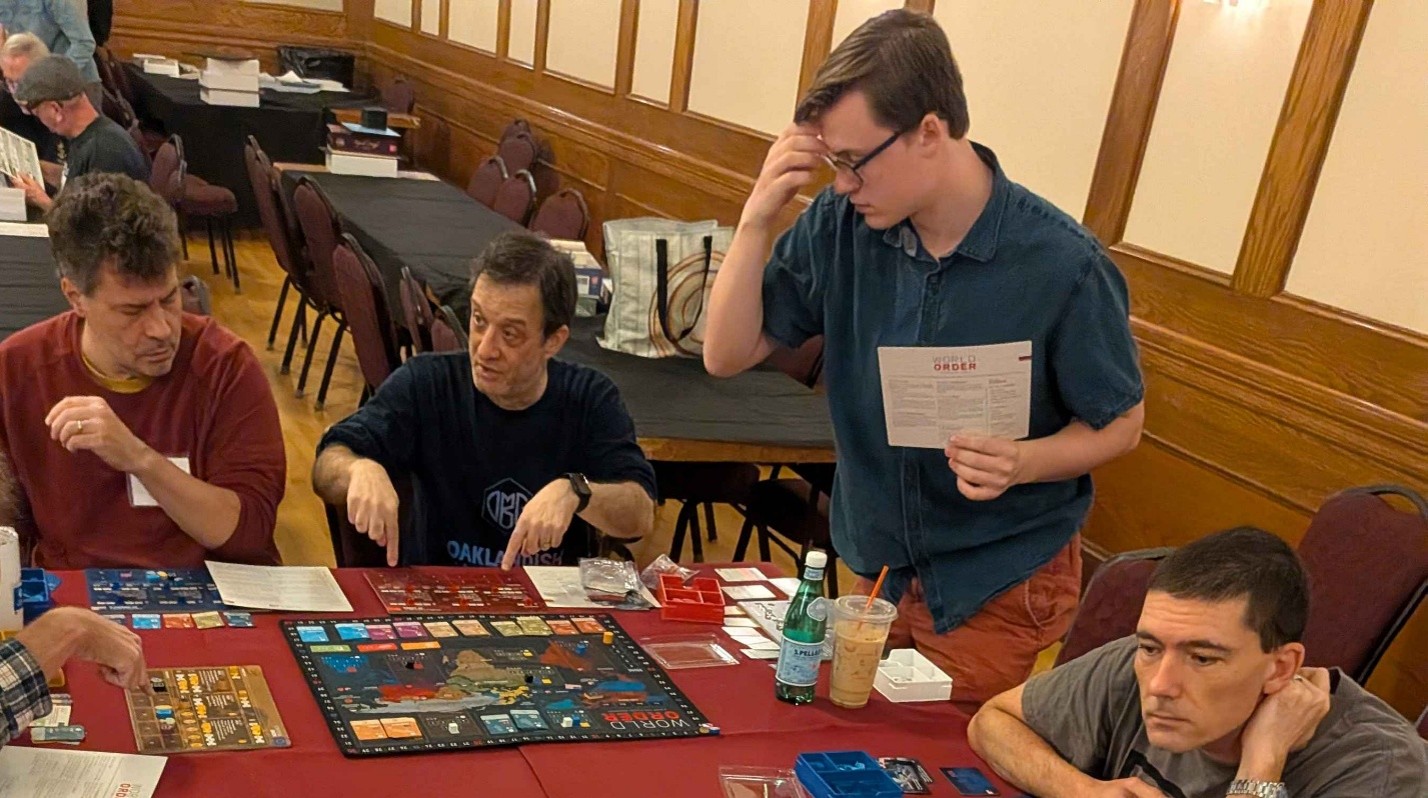
Fifth: Amazing, Hard-to-Table Games with Great Folks. This is the best reason to attend SDHC, which is that the gaming content is off the charts. If you like playing these sorts of games, you know that within our hobby, the large, sprawling map and the need for four or more players can often make it really difficult to get some of the best wargames actually played. The rulebooks can often be a real barrier, and locating enough wargamers in a sea of Euro fans can often be difficult.[5] SDHC offers the chance to find a full house of opponents for games that might be hard to ever get tabled at home, a lot of people who have learned the rules well enough to teach you that game you’ve always wanted to learn, and then a recognition that we all want to play hard, but when the game is over, we’re friends again, and we should get a beer and talk about when we’re going to play again.
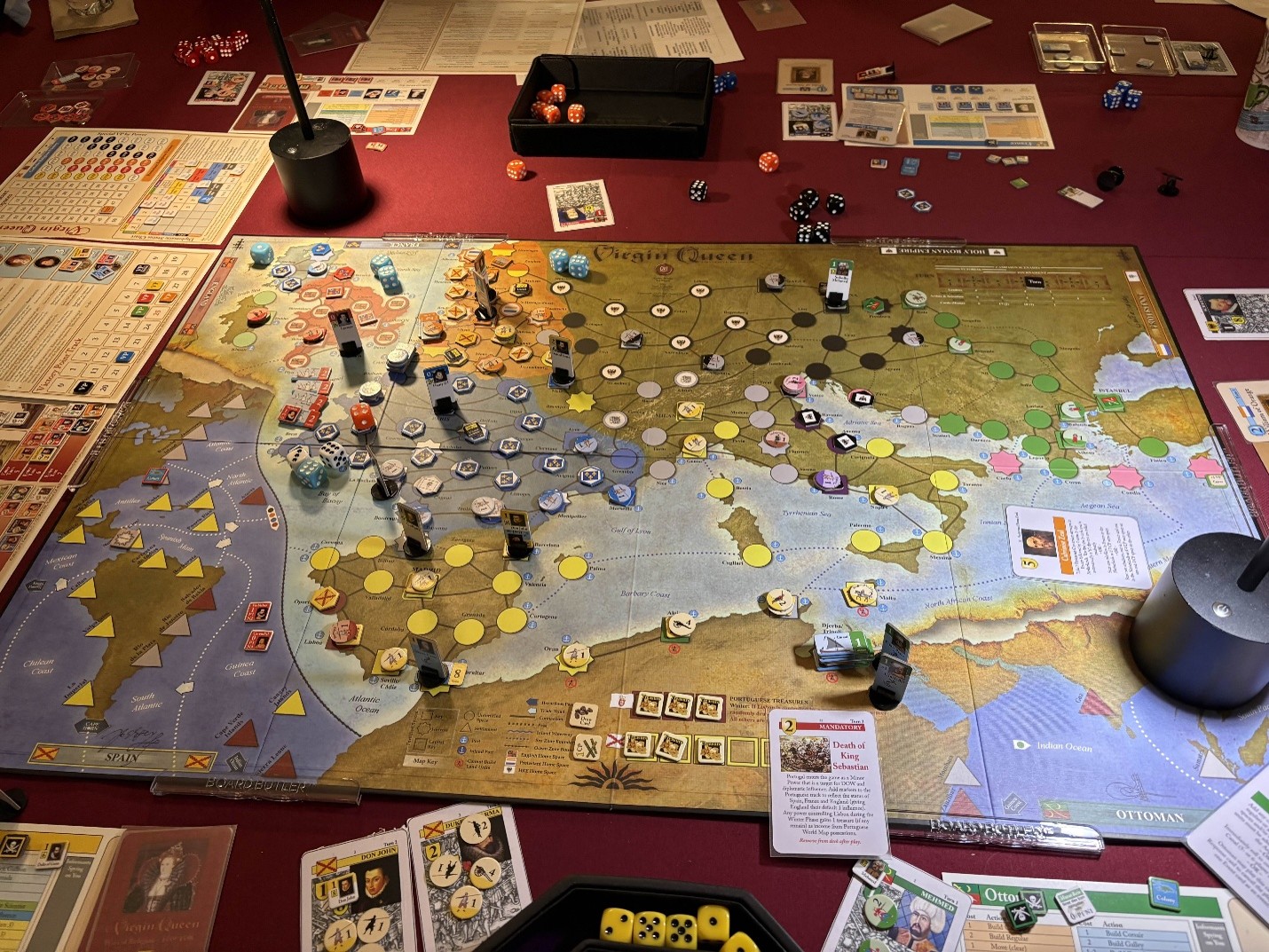
As readers of BGQ know, I am a big fan of GMT’s “Here I Stand” (HIS) designed by Ed Beach, which requires 6 players and can last between 3 and 10 hours (and occasionally, even longer). Not the easiest sell for game night at my local meetup. Not only was it easy for me to find 5 other folks eager to devote most of last Saturday to the game, but we had so many folks on the waitlist that we had two tables running simultaneously, and we also got a third table going with HIS’s sequel game, Virgin Queen.
So what’s the downside of this amazing weekend? Well, the intimacy means it’s hard to get a ticket. The con pre-sells tickets to folks who have contributed to past editions by running games or presenting a seminar, and then the rest of the tickets go on sale on a Saturday in August at Noon Pacific time. This year, they were sold out before 1 pm. The folks who run SDHC have begun trying to figure out how to add a satellite space to boost the capacity, but in the meantime, there is also SDHC North, which takes place during the summer in Minneapolis. Yes, apparently San Diego North means Minnesota, but in any event, this second version of the con sells out more slowly. I’ve never had the good fortune to attend this because of my jet-set lifestyle (It’s hard to break up my luxury summers in Europe, don’t you know), but many of the same folks who make the SDHC experience so rich are also in attendance in the Twin Cities.
So, does this event sound fun to you? I’d say get onto the SDHC mailing list ASAP and then act quickly in August when signups take place. There is also a Discord that gets set up around the same time, and I recommend active participation there too, as a lot of the preplanning of what games will be played takes place between August and November. If you’re lucky enough to snag a ticket, come with an open heart, a mind for strategy, and a love of history, and you’ll absolutely rock out for a long weekend of historical and alt-historical nerdosity.
As a bonus sixth reason to attend: the SDHC is run by a non-profit 501(c)(7) charitable organization. No one is making money off of it—indeed, as I understand it, the organizers are the primary donors, so if anything this is a money-losing labor of love.
[1] That said, if you do go to Dallas, I recommend checking out Daly Plaza and the Kennedy Assassination walking tour, because standing on the Grassy Knoll or seeing the Book Repository makes a lot of that history much more tangible.
[2] It’s a French word for crusty old soldier, but now it’s come to mean a crusty old wargamer. It was the term used in the Napoleonic era for grumbly veterans of the Old Guard, who would complain about everything but still showed up to support Napoleon through to the end at Waterloo.
[3] Public Service Announcement: Weimar rhymes with Try Hard if you drop the D at the end of hard. Don’t say Weemar unless you want to be mocked by your Poly Sci teacher like my friend Mark Morris back in the Spring of 1986.
[4] I am including my extremely small catalog in this, but everyone else had designed games that sold WELL!
[5] To be clear, I love Euros too. I’m not quite an omni-gamer, but I really like crunchy low-luck Euros AND well-done historical games even if they use a lot of dice.
Source: Board Game Quest
