If there’s one fanbase that can match the passion of tabletop gamers, it’s horror movie fans. I speak as a card-carrying member of both parties. Horror takes dedication. You learn the names of all the obscure actors. You stack your shelves with limited-edition steelbooks for movies no one else has heard of. You still show up to see the 13th entry in a slasher franchise, no matter how bad the last one sucked.
It’s the same kind of fervor that drives card collectors to chase a TCG’s rarest, shiniest foils. Combine those two fandoms, and you’ve got a money-making match made in heaven (or should that be hell?) Enter the Hellbreak TCG, a new collectible card game launching in January 2027.
A horror movie card game, stuffed with references and Easter eggs, is an easy way to get money out of my pocket. But Hellbreak is more than a cash grab in a Halloween costume. It’s an engaging game in its own right, made by genuine horror nerds.
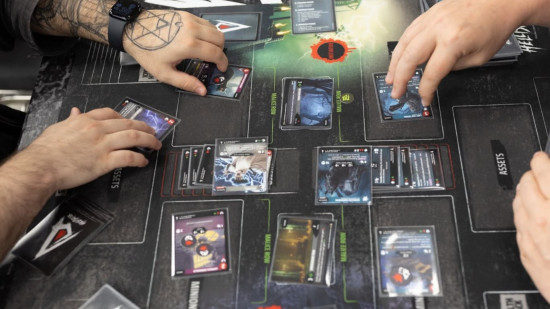
Combine the alternating actions of Star Wars Unlimited with the character-focused decks of MTG commander or Flesh and Blood, and you’ve got Hellbreak. It’s a snappy game (sometimes literally, if you’re playing the Jaws deck) with more than a few trendy design tricks up its spooky sleeves.
You play a famous monster, sending minions into iconic movie locations to battle a rival. An initiative bid determines who acts first each round, while also adding resources to a vault that decide what cards you play and how they behave. Location cards, which you vie for dominance of, further shake up your playstyle. Empty your opponent’s health stack of cards with your savage attacks, and you win.

I’ve tested several of Hellbreak’s preview decks, and I’ve been delighted by how much personality each has. Dracula’s scheming deployment of vampiric brides feels distinct from Jaws’ brute force, or the Headless Horseman’s scare tactics. Hellbreak has made a fantastic first impression, to the point where I genuinely fear for my wallet.
However, it takes more than a pleasing gameplay loop to keep a TCG going. I’m keen to see how publisher Spinmaster plans to keep its monstrous creation alive. I sat down with design manager TJ Spalty at Essen Spiel this year to pick his brain about Hellbreak’s design philosophy – and plans for longevity in an ever-more-crowded TCG market.
WG: How will Hellbreak feel familiar to existing TCG fans?
TJ: Players have a strong desire to connect with characters – we’ve seen the success of the Commander format for Magic, for example. What we wanted to do is give the players the opportunity to assume a role. Central to our design is the core monster card, which starts on the table and allows you to be that character. Players love to create a story through their deck construction, and the monster card effectively lets you choose your main character.
But we also know these horror characters are multifaceted, they’re all about transformation. We wanted to innovate by making double-sided cards, and their flipping back and forth is very much core to the gameplay.
We also wanted to make Hellbreak accessible to horror fans while still maintaining a strong strategic element. One area we feel really strongly about is the action structure. You alternate actions rather than alternating turns, which for folks arriving to this game for the first time, means no downtime and fewer constraints. You worry less about needing to know when you can and can’t respond, for example.

How have you captured the identity of the monsters revealed so far? For example, Dracula, Jaws, The Bride, Jason, the Headless Horseman, or the Death Angel?
One thing that’s core to what we’re doing is a top-down design process inspired by the properties themselves. We want you to feel as though you are Dracula or the Headless Horseman.
For example, the Headless Horseman’s core mechanic is about terrifying your opponent’s characters, which means returning them to your opponent’s hand. The Bride wants to engage with cards in your crypt, because that’s where she came from as a reanimated corpse. Thematic design is central to our game, and it’s directly inspired by these movies.
Why did locations feel like a fitting mechanic for a monster TCG?
The landscapes where these films are set are so important, and we wanted them to be a persistent element of the game. That way, you feel as though you’re inhabiting places that are core to these films, rather than duking it out in some random battlefield.
It gave us an opportunity to create some interesting gameplay decisions, while also personalizing your core monster. The deck you build isn’t just your monster. A Jaws built around Amity Harbor feels different from a Jaws that sits on the throne of Castle Dracula.

The initiative bidding mechanic feels really unique – what does this add to the experience?
First-player advantage is a significant challenge in many trading card games, so we wanted to give players an opportunity to control that decision. So we made a bid for initiative, but we layered in several other considerations.
You’re not only looking at the card’s Blood cost to decide initiative; you’re also considering our resource system, the Vault. When you bid with a card, you tuck it into your Vault, adding resources there.
Players get to build their Vault in different ways depending on the play patterns they want to pursue. They may want to hoard Blood so they can afford to play cards faster, or they may focus on Malice, a secondary resource that allows cards to become Ready faster. There are a lot of fun decisions there.
Tell me about the art direction for the TCG. What was your biggest priority for card visuals? Is all your art human-made?
We wanted to evoke these characters in a way fans recognize but that also feels novel. These are new visions of these characters, but we wanted to capture them in all their glory. We have a dark, haunted, painterly style that we use to woke them, rich illustration that brings these properties to life in lovely ways.

Something else that was core to our art direction was the inclusion of Easter eggs. There will be elements of these films that you discover on a third, fourth, or fifth look at the cards. We were very conscious about including small nods to the films that fans would recognize and be excited about.
And human-made art is a pillar of our art direction. These are custom illustrations by talented, working human artists. We also worked with some of the biggest names in horror illustration out there right now, and that’s been a joy.
Collectability is often as important as playability for TCG plans – what different card rarities and treatments will you offer? How do you plan to keep collectors engaged?
From a mechanical perspective, we have five levels of rarity: common, uncommon, rare, legendary, and infamous. You’ll find any of those in our booster packs.
We also have various chase cards, and that includes alternate art of many iconic monsters. Foremost among those is our Demented series, which, on a set-by-set basis, offers a new, innovative look at these characters with a united, thematic art style. They play around with the card frame in interesting ways, and they look spectacular. Finally, we have some amazing textured foil cards – these are our ultimate chase cards.

How will you keep players invested in the game, e.g. regular set releases and competitive events?
Organized play is another pillar of Hellbreak, as we recognize this game relies on its community to exist. That means delivering special experiences for players at local game stores. We have built out a full organized play schedule that includes competitive events that ladder from ultimate and regional championships all the way up to an ultimate Hellbreak world championship.
But we’re also planning casual play sessions, which are lower stakes an integrate fun new rules. We’re also very much in the development stage for a multiplayer rule set, which we’ll be debuting later next year. There’s lots of fun things in the works for players who want to engage at a competitive level, or just want to enjoy letting their monsters mash it up at a local game store.
Tell me about your big-picture hopes for the TCG? Are there any monsters you’d really like to see on a Hellbreak card?
I have so many goals for this game. First and foremost, I want to get it into the hands of the players. That’s the biggest sign of success for me personally – exciting and attracting horror fans, who may have never played a TCG before, and core TCG players who love intriguing gameplay and deep decision-making.
Plus, as a horror fan, I can assure you there are several properties I’m excited to work on in future. I’ve already had the joyous experience of getting to bring my all-time favorite horror movie to life in a future set. And we have so many exciting properties in the pipeline already lined up, and they’re going to make this environment all the more rich. It’s like when you’re a little kid mashing action figures together. This is the ultimate monster sandbox.
Want to learn more about the world’s top TCGs? Our guides to MTG sets and this year’s MTG release schedule can help. Or, join us in the Wargamer Discord to discuss your favorite decks.
 Source: Wargamer