


SNEG Games is a specialist videogame publisher dedicated to finding old, out of production titles, and making them playable again on modern systems. It’s resurrected over 100 games so far, and is responsible for the Warhammer Classics line, letting new players experience some of the best Warhammer 40k games of all time (and also Fire Warrior). When I ask studio co-founder Artem Shchuiko about the challenges the studio has faced, he surprises me by saying that the 2006 RTS Warhammer: Mark of Chaos wasn’t just difficult to restore, it was “without a doubt” the most challenging game the studio has ever worked on.
“It wasn’t cursed in one spectacular way”, Shchuiko says, “it was more like a tangled ball of yarn we had to unwind thread by thread, with almost daily ‘surprises'”. The studio was working with almost nothing: “we had neither the source code nor any of the original developer tools; everything had to be recovered by reverse-engineering the game itself”.
The “first knot” was actually accessing the data in the game’s data archives. “The archive signature is literally the string ‘Good luck!'”, Shchuiko says, “as if the developers left a wink for whoever would try to datamine it someday”. The archives were encrypted, and decrypting each file required knowing its name and location in the data structure; the problem was that “the archives didn’t store the names”.

“We combed the entire executable for filenames”, Shchuiko says, looking for any hints in the accessible parts of the game data, but that wasn’t nearly enough. There was one place where the filenames were guaranteed to be exposed – they’d be loaded into memory while the game was being played. So SNEG’s developers “literally played through missions with a tool dumping assets on the fly, until the whole chain was untangled”.
With the keys to the game data SNEG could begin to understand the causes of the many issues that rendered it difficult or unpleasant to play on modern machines. The game’s UI was built for 4:3 monitors and the ability to scale the resolution was hardcoded off.

“Making it work on modern displays meant intercepting the engine at roughly 150 places where it asked for interface texture sizes.” Doing this cascaded into new bugs: “the higher resolutions then broke fonts and internal buffers that had been sized for the old screens, so those needed fixing too”.
And then there were “the legacy bugs like the save-game issues that had haunted players for years”. Shchuiko explains that “fixing those without source code means reverse-engineering the cause, patching the game in memory, and then lots of testing”.
If you’re interested in learning more about how SNEG restores old games – and how the problems often begin well before the team even looks at the code – check out my extended interview with Shchuiko on Wargamer’s sister site PCGamesN.
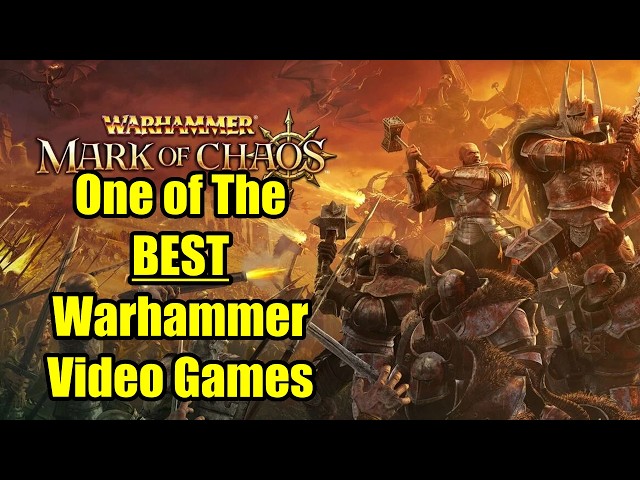
The restored Mark of Chaos: Gold Edition released to GOG in March 2020, and then to Steam under the Warhammer Classics label earlier this year. It’s something of an underrated gem, having been overshadowed by Total War: Warhammer. If you want a quick overview of it, YouTuber ‘The Great Book of Grudges’ has a good video, which you can watch below:
Do you have fond memories of Mark of Chaos from your youth? What other retro gems from the Warhammer Classics range do you rate? Share your thoughts in the Wargamer Discord community!
 Source: Wargamer
