



As readers of ICv2 know better than just about everyone else in the industry, comics and its adjacent fan cultures are a business. We’re here to make money. Yes, most of us could probably find more dependable ways to do that if we didn’t also love this stuff, but at the end of the day, if people don’t find some way to make ends meet working in comics, there won’t be much of a business or an art form left to talk about.
But we also need the magic. We (professionals and fans alike) need to feel like this is something more than just another day at the office. Fans can sniff out when creators’ professionalism tips over into uninspired hackwork, and when business models designed around our shared passions start to become extractive and exploitive. When that magic goes away, what are we really doing anymore?
The tension between preserving authentic passion and making a buck, honest or otherwise, has always been present. Today, partly because it feels like we’re all living inside a giant casino, it is more acute than ever. Here are a few stories from recent days that bring this to mind.

Dark Horse the latest publisher to unionize. Employees at Dark Horse Comics, now part of Embracer Media’s IP and Licensing Business Unit, recently announced their intention to form a union as local chapter of the Communication Workers of America (see “Dark Horse Workers Unionize“).
Dark Horse’s recent turmoil has been fairly well documented, from disruptions related to the Embracer acquisition, to fallout from the Diamond Comic Distributors debacle, to layoffs and hiring freezes, to the departure of founder/CEO Mike Richardson. Under those circumstances, it seems reasonable for workers to want some say in policies directly affecting their work and livelihood, even if there is only so much juice to be squeezed from that particular lemon.
But that’s not all that’s at work. The Comics Journal ran a piece about this on Monday which quoted DHWU spokesperson Riley VanDyke as follows: “It’s kind of an open secret at this point that the company leans upon the passion tax, the idea that you are going to do cool shit, so they’ll pay you less and you’ll just have to take it.”
Interestingly, there are other industries where workers could fall prey to a “passion tax,” but at least one of them, movies and TV, managed to put sentiment aside and form strong unions like SAG-AFTRA, the Writers Guild, Directors Guild and IATSE to protect against employers exploiting creators’ natural desire to see their names in lights.
Considering how often we hear about stagnant page rates, creator burnout, and the virtual requirement for many people in the comics business to have outside means of financial support, both the need and the desire for unionization makes sense, even more so at the bigger companies where the stakes are higher.
Still, every time this issue comes up, there’s a faction of both fans and people in the business who chime in with sentiments like “isn’t the industry small and close enough that we can settle this between ourselves, without unions and lawyers?” Apparently not, especially when everyone is fighting for scraps.

The Con grind. Another corner of the industry that has become more nakedly transactional is comic conventions. This isn’t a new trend: we saw the rise of shows built around photo-ops and elite tier packages for the past decade.
What really seems to have accelerated in the past few years, though, is the rise of branded creator blocks in artist alley and on the show floor. I was trading messages with Heidi MacDonald over the weekend, who observed that shows like FanExpo have normalized charging for autographs to such a degree that anyone involved in the production of comics, not just artists and top-name writers, now have a signature fee.
This is another issue where we have to set aside our expectations from a more innocent time. Working conventions is a grind. Creators don’t sit behind tables for a whole long weekend just for handshakes and attaboys. Conventions don’t have the budget for endless mid-tier guests. So if there is sufficient demand for a creator signature, or, especially, if the presence of that signature creates some kind of greater financial value for the fan, then yeah, charge what the market will bear.
That also suggests a natural evolution of individual artists into collectives where a dedicated team handles the business and logistics side. And so, big stretches of artist alley are now the province of Essential Sequential or Felix Comic Art, complete with upscale branding and a price structure that accounts for both current market conditions and the overhead implicit in this kind of business structure.
Unfortunately, it also drains some of the charm and variety from show floors. It turns what used to be personal, informal connections between artists and their audiences into a regimented exchange of goods and services. It also puts pressure on creators who don’t opt in to this kind of arrangement. Fabrice Sapolsky (FairSquare Graphics, Noir is the New Black) just posted a bittersweet review of his experience at FanExpo Denver, where he observed a marked decline in revenue from previous years.
“I’d say, there’s something deeper at play here and that I thought Denver could escape: brand culture,” he writes. “These days, cons tend to favor brand focused artists. If your name is associated with a big corporation character, your chances are higher to attract curiosity and buyers. It’s a path that I decided a long time ago was not for me.”
Sapolsky, like others resisting the more commercial path, offers another example of folks in the industry paying the passion tax.

Stan the Mannequin. Probably the most obvious and sad example of cashing in on fan culture reared its head last week with the announcement that the owners of Stan Lee’s voice and likeness rights, Stan Lee Universe, struck a deal with ElevenLabs to license out Stan’s distinctive voice for all manner of AI-generated hijinks.
It has been widely pointed out that when Stan Lee was alive, he was an enthusiastic adopter of any technology or business plan that put money in his pocket, and he probably would have signed on to something like this with gusto. Probably there are fans out there looking forward to using Zombie Stan in their project, and I’m sure the companies involved are happy to take their money.
Nevertheless, Stan Lee was both a beloved icon to a lot of the world and also a consequential, and very real, figure within the comics industry. He had a long and accomplished life that, ultimately, came to an end, as all lives do.
In our celebration of the long-hoped-for commercialization of our passion-taxed industry, can we not also we acknowledge that there is something inherently distasteful about the idea that you can now put a quarter in dead Stan’s mouth and have him read you a bedtime story? And that furthermore, this is being soberly discussed as some kind of “innovative business plan?” That maybe some things that make money are nevertheless not the best idea?
Our industry continues to struggle against the myths and unrealistic expectations that hurt the financial security of many creators. But some of the value created among fans comes from those same myths, or at least from the charm of being part of something that’s not hyper scaled, not focus-grouped, not optimized within an inch of its life.
There’s no right answer here, just more questions.
The opinions expressed in this column are solely those of the writer, and do not necessarily reflect the views of the editorial staff of ICv2.com.
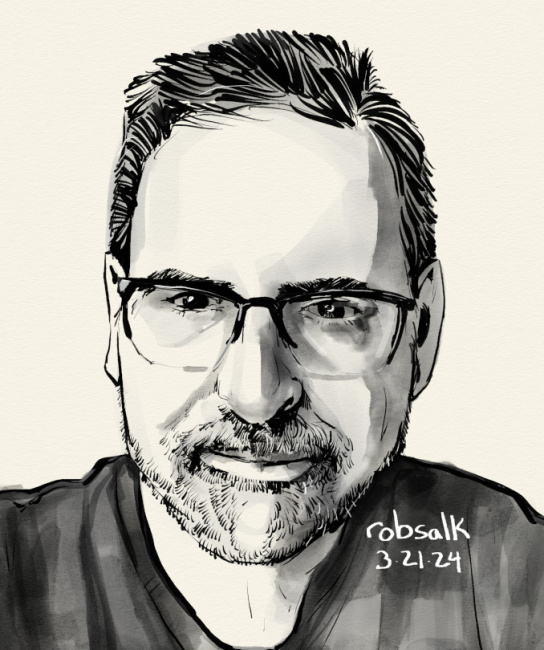
Rob Salkowitz (Bluesky @robsalk) is the author of Comic-Con and the Business of Pop Culture, a two-time Eisner Award nominee, and a proud longtime contributor to Eisner-nominated ICv2.
Source: ICV2

