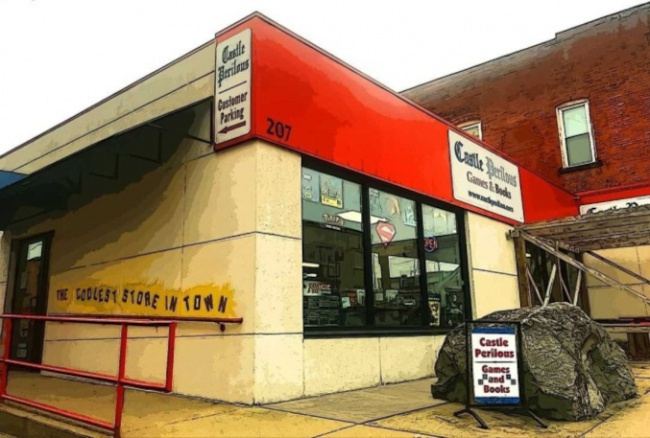

Rolling for Initiative is a weekly column by Scott Thorne, PhD, owner of Castle Perilous Games & Books in Carbondale, Illinois and instructor in marketing at Southeast Missouri State University. This week, Thorne reflects on his 36 years of owning Castle Perilous and the changes that have happened since he first started.
This past weekend the store celebrated its 36th anniversary. I figured I would take this opportunity to look back at some of the changes I have seen over the past three and a half years:
Credit Card Processing. This has changed significantly over the years. Through most of the 90s, cash was king (still is, but that is another topic). Credit cards were used during that era, but not debit cards (those came about much later). Back in the day, credit cards were run with a manual machine, not so fondly referred to as the “knucklebuster” because each machine contained a plate with the merchant’s processing information embossed on it (which would scrape the knuckles of a sales clerk as they ran a purchase on it).
When making a credit card purchase, the sales clerk would fill out a multilayered carbon (later carbonless) form summarizing the items purchased and total amount charged, have the customer sign the form, then insert the card into the machine and slide the imprinter back and forth, imprinting the merchant and customer information onto the form. Credit card processors would also mail out booklets, every so often, containing lists of hundreds of thousands of fraudulent credit card numbers, which the clerk was expected to check before taking the card.
The customer would get a copy of the form, the store kept a copy and a collection of copies from the day’s credit card sales got mailed off, usually daily, to the credit card processor. Happily those days ended in the late 90s when even small stores got access to electronic credit card processing.
Credit Card Use. Along with the change in credit card processing, we also saw an increase over the years in the use of credit cards themselves. Through the 90s, the majority of our sales were in cash and purchases were comparatively small to what they are now (in the $10 to $30 range). On an average day, we would use the knucklebuster 5 to 10 times a day. These days, 75% to 90% of our sales are made with credit or debit cards with average up to about $25. However, a $200 to $500 sale is not uncommon (unheard of until the advent of the trading card game). Additionally, it is common for high school students and younger to use their own credit cards, or more often, some form of phone-based payment.
Trading Card Games. Prior to Magic: The Gathering, and later Pokémon and Yu-Gi-Oh!, the game store served a very niche market: primarily young men aged 12 to 25, especially in college or military service. At the time Games Workshop’s business model targeted boys aged 10 to 12, who the company expected to play their games for about four years, then move onto other interests (like girls). Women did play but they accounted for about 10% to 15% of the customer base. TCGs, especially Pokémon, vastly expanded the typical game store’s customer base, bringing in many new customers and exposing them to the hundreds of other games available.
If you own or work at a store, what other changes have you noticed during your time there? Send comments to castleperilousgames@gmail.com.
The opinions expressed in this column are solely those of the writer, and do not necessarily reflect the views of the editorial staff of ICv2.com.
Source: ICV2