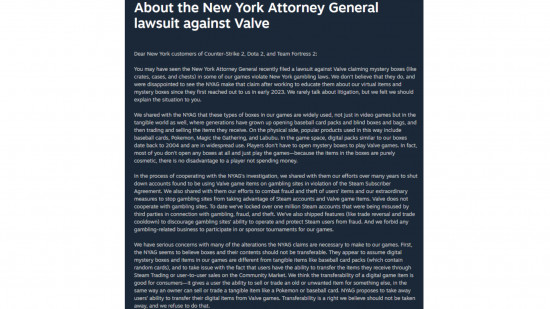
Valve has declared it will contest the lawsuit accusing it of “promoting illegal gambling” that was filed by New York Attorney General Letitia James last month. In a statement posted to Steam on March 11, the developer defended the inclusion of mystery boxes in games like Counter-Strike and Dota 2, in particular comparing them to real-life products like Magic: The Gathering booster packs.
“We shared with the NYAG that these types of boxes in our games are widely used, not just in video games but in the tangible world as well, where generations have grown up opening baseball card packs and blind boxes and bags, and then trading and selling the items they receive,” Valve’s statement reads.
“On the physical side, popular products used in this way include baseball cards, Pokémon, Magic the Gathering, and Labubu.”
The NYAG’s case, explained in a press release posted to her website on February 25, argues Valve is “luring its users… to engage in gambling in the hopes of winning expensive virtual items” which can then be sold online for money.
One of the arguments Valve makes in its defence is that the “transferability” of its digital items like Counter-Strike skins or TF2 hats is good for consumers, and that this is a right that should not be taken away. “It gives a user the ability to sell or trade an old or unwanted item for something else, in the same way an owner can sell or trade a tangible item like a Pokemon or baseball card.” Once again, it draws comparison to physical TCG products sold in booster packs.

However, a major distinction between Valve and Magic: The Gathering publisher Wizards of the Coast is that Wizards doesn’t own the marketplaces through which its items are resold. In fact, it takes pains to avoid any official acknowledgement of the secondary market at all. Conversely, you can sell Valve’s virtual items through its own Steam Community Market.
And James’ lawsuit alleges that Valve fosters third-party marketplaces that allow for the sale of its virtual items, something Valve says is a violation of the Steam Subscriber Agreement. In its recent statement, the developer also highlights the action it has taken against these sites in connection with fraud and gambling.
Here at Wargamer, we’ll be watching this case with interest, especially to see if the decisions made have ramifications for the TCG industry. You can have your say and let us know what you think over in the Wargamer Discord group.
 Source: Wargamer